


Daily Dose Of Jazz…
Eric Marienthal was born on December 19, 1957 in Sacramento, California but moved with his family to San Mateo, California when he was two years old. He was taught music while in school and picked up the saxophone in the fourth grade. His father bought him a $400 Selmer saxophone and enrolled him in Corona Del Mar High School. Throughout his education, he learned to play guitar, flute, clarinet and piano.
After graduating from high school he studied saxophone at the Berklee College of Music. By the time he left Berklee, Eric had achieved the highest proficiency rating given by the school. He began his professional career in 1980 with New Orleans trumpeter Al Hirt. Heading west he settled in Los Angeles, California and became a member of the Chick Corea Elektric Band. He recorded six albums with that band and two of them won Grammy Awards.
Marienthal has also written instructional books, including Comprehensive Jazz Studies & Exercises, The Ultimate Jazz Play Along, and The Music of Eric Marienthal. He has made instructional videos, Play Sax From Day One, Modern Sax and Tricks of the Trade. He occupies the lead alto chair of Gordon Goodwin’s Big Phat Band, playing alto saxophone, soprano saxophone, flute, and piccolo.
Grammy Award-nominated alto saxophonist Eric Marienthal continues to perform and record.

More Posts: bandleader,flute,history,instrumental,jazz,music,piccolo,saxophone
Daily Dose Of Jazz…
William Frank Reichenbach Sr. was born on December 18, 1923 in Washington, D.C. and started his musical career even before he graduated from the McKinley Tech High School. During World War II, he played in a band of the Navy before he toured with the big bands of Tommy Dorsey, Jimmy Dorsey, and Art Mooney. Later he worked in the jazz clubs of his hometown, where he accompanied Frank Sinatra, Patti Page, Teddy Wilson, and Zoot Sims.
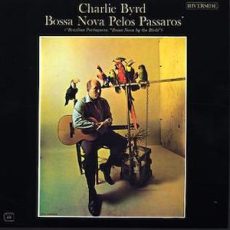
Charlie Byrd hired Reichenbach as an additional drummer for the Stan Getz album Jazz Samba, recorded in 1962. This recording provoked a wave of enthusiasm for bossa nova in the United States. That same year he replaced Buddy Deppenschmidt in the Byrd trio, and stayed as a member for twelve years. Departing from Byrd, he returned to work in Washington D.C., as the house drummer at the Blues Alley.
Drummer and percussionist Bill Reichenbach, who co-developed the jazz-samba drumming style, transitioned following a series of strokes in Los Angeles, California, at the age of 84 on May 16, 2008.
More Posts: bandleader,drums,history,instrumental,jazz,music,percussion
Daily Dose Of Jazz…
Louis A. Mitchell was born December 17, 1885 in Philadelphia, Pennsylvania and began performing in vaudeville revues and minstrel shows from around the turn of the century, playing drums and bandoline. After a move to New York City in 1912, he founded his own group, the Southern Symphonists’ Quartet.
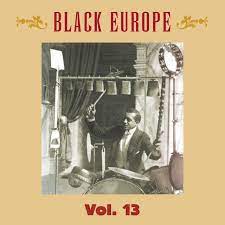
He sang and drummed for James Reese Europe in 1918, and the following year founded a new group, which he called Louis Mitchell’s Jazz Kings. By the end of the decade, Mitchell began touring the United States, as well as, Europe, concentrating on the United Kingdom and France. He did solo percussion shows in addition to ensemble programs, and his drum solos were greeted harshly by French audiences. Nevertheless, his ensemble spent five years as the house band of the Casino de Paris.
He recorded for Pathe Records in 1922 and 1923, with Sidney Bechet playing with him at this time, however, Bechet did not appear on the recordings. Louis remained in France until 1930, branching into restaurant and nightclub management in addition to music. He renamed one of his clubs Chez Florence due to the popularity of performer Florence Embry Jones.
Moving back to the United States in 1930 after the failure of The Plantation, his last club, but he played little in his last decades. Drummer and bandleader Louis Mitchell transitioned on September 12, 1957.
More Posts: bandleader,drums,history,instrumental,jazz,music
Daily Dose Of Jazz…
Bernard Flood was born on December 16, 1907 in Montgomery, Alabama and graduated from Alabama’s Tuskegee Institute in the Twenties. The following decade he went to New York City and became associated with a series of bandleaders in a slow and careful fashion. For the first two years he worked with Bob Neal, moved over to Fess Williams for about an equal length of time, before becoming involved with Teddy Hill in 1933 on through the middle of the decade.
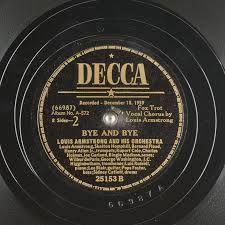
He was quickly in and out of the Luis Russell and Chick Webb outfits before joining up with Charlie Johnson. By 1937 the trumpeter was hitting high notes with Edgar Hayes as well as with Johnson, the former leader launching a terrific European tour. In 1939 Bernard became part of the Louis Armstrong big-band project, dropping out for a spring 1941 James Reynolds gig before rejoining Armstrong and remaining until 1943.
Military service called in 1943 and three years later he was discharged and began working with Luis Russell and Duke Ellington. Flood went on to start his own combo, and collaborated with Happy Caldwell in both the late Forties and early 1950s.
Retiring from full-time music in the early ’70s, Flood was available for gigs, but made no new recordings during this period. Suffering from diabetes Bernard lost both of his legs due to the disease. Trumpeter Bernard Flood, who was featured in the HBO documentary Curtain Call performing Wonderful World, transitioned on June 9, 2000 in Englewood, New Jersey.
More Posts: bandleader,history,instrumental,jazz,music,trumpet
Daily Dose Of Jazz…
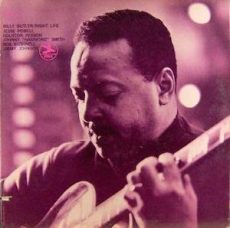
Billy Butler was born William Butler Jr. on December 15, 1924 in Philadelphia, Pennsylvania and began his career in the 1940s behind the Harlemaires. The 1950s saw him as a member of a trio led by Doc Bagby and accompanied keyboardist Bill Doggett.
Butler worked with Al Casey, King Curtis, Eddie “Lockjaw” Davis, Bill Davison, Tommy Flanagan, Panama Francis, Dizzy Gillespie, Benny Goodman, Johnny Hodges, Floyd “Candy” Johnson, David “Fathead” Newman, Houston Person, Sammy Price, Jimmy Smith, Norris Turney, and Dinah Washington.
He is credited as the guitarist on the 1961 Peppermint Twist, Parts 1 & 2 by Joey Dee and the Starliters at the Peppermint Lounge in New York City. He co-wrote Honky Tonk, an R&B hit for Doggett.
Guitarist Billy Butler transitioned on March 20, 1991 from a heart attack at home in Teaneck, New Jersey.
More Posts: bandleader,guitar,history,instrumental,jazz,music