

Daily Dose Of Jazz…
John Joseph Harold Holmes was born in Montreal, Canada on June 8. 1916 and began playing cornet at 10, briefly studying with C. Van Camp. After playing trumpet for a year in 1940 in a co-operative band, the Escorts, he took over its leadership 1941-50.
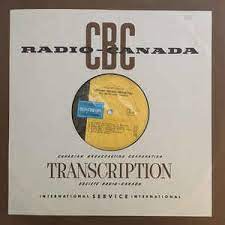
Under the name Johnny Holmes Orchestra, they played Saturday nights at Victoria Hall in Montreal, broadcasted on CBC radio, and occasionally toured Canada’s Quebec and Ontario. One of Montreal’s leading dance bands of the day, it boasted a healthy jazz quotient and benefited from Holmes’ ability to identify talented young musicians. His sidemen included, at various times, Nick Ayoub, Al Baculis, Percy and Maynard Ferguson, Bud Hayward, Art Morrow, and Oscar Peterson. Lorraine McAllister and Sheila Graham, in turn, sang with the band.
Retiring from music from 1951 to 1959, he reemerged and from 1959 to 1969 was heard on CBC radio in The Johnny Holmes Show, Broadway Holiday, and others. Holmes’ orchestras made several broadcast recordings between 1966 and 1973 for the CBC’s LM series. He continued to perform periodically until his final retirement from music in 1978.
Trumpeter, bandleader, arranger, composer Johnny Holmes, who wrote more than 40 songs and many arrangements for his orchestra and his radio shows and has no available recordings online, transitioned on June 11, 1989.

More Posts: arranger,bandleader,composer,history,instrumental,jazz,music,trumpet
Three Wishes
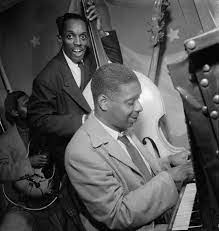
When the Baroness asked Jimmy Jones if he had the opportunity to get three wishes granted what would they be he responded with:
- “I’d like to be a better musician.”
- “Communicate my music.”
- “To hit a golf ball straight.”
*Excerpt from Three Wishes: An Intimate Look at Jazz Greats ~ Compiled and Photographed by Pannonica de Koenigswarter

More Posts: bandleader,history,instrumental,jazz,music,piano
Daily Dose Of Jazz…
David Matthews was born on June 6, 1911 in Chagrin Falls, Ohio but was raised in McAlester, Oklahoma. He attended the University of Oklahoma and Chicago College of Music.
He started out as an alto saxophonist with Ben Pollack in 1935, moved to Jimmy Dorsey then Benny Goodman through the rest of the decade. In the Forties Dave went on to play with Harry James, Hal McIntyre, then switched to tenor saxophone with Woody Herman, Stan Kenton and Charlie Barnet.
Matthews arranged for many of these groups, and continued working as an arranger in New York City and California well into the 1960s, with Duke Ellington among others. Occasionally he played with his own bands, including at Lake Tahoe in the 1970s.
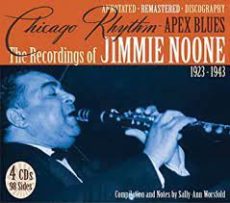
He made recordings with the big bands of Bud Freeman, Lionel Hampton, Jimmy Noone, Jack Teagarden, and Hot Lips Page. Saxophonist Dave Matthews, who was principally playing in the swing era, transitioned in 1997.
More Posts: bandleader,history,instrumental,jazz,music,saxophone
Daily Dose Of Jazz…
Erica Lindsay was born June 5, 1955 in San Francisco, California to parents who were both teachers and lived in Europe in the 1960s. She began her studies in composition with Mal Waldron in Munich, Germany when she was fifteen years old. She played clarinet, then alto and tenor saxophone. In 1973, she spent a year of study at the Berklee School of Music in Boston, Massachusetts and then went back to Europe, where she began her music career. She formed a local quartet and went on tour. Since 1980, she has lived in New York.
As a saxophonist she has worked with Melba Liston, Clifford Jordan, Dizzy Gillespie, McCoy Tyner, Reggie Workman, George Gruntz, and Pheeroan akLaff. Lindsay composed for theater, television, and dance productions and worked with poets and performance artists such as Carl Hancock Rux, Janice King, Janine Vega, Mikhail Horowitz and Nancy Ostrovsky. She leads her own quartet and is the co-leader of a quartet with Sumi Tonooka.
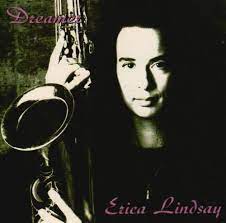
Erica’s 1989 debut album Dreamer was released on Candid Records, with contributions from Robin Eubanks, Howard Johnson, Francesca Tanksley, and Anthony Cox. The 1990s and 2000s saw her playing with Oliver Lake, Baikida Carroll, Howard Johnson, Jeff Siegel, Thurman Barker and the band Trace Elements. Their album Yes – Live at the Rosendale Cafe appeared in 2008.
Saxophonist Erica Lindsay is co-founder of the Artists Recording Collective recording label, a visiting Assistant Professor at Bard College and continues to perform and record.
More Posts: bandleader,educator,history,instrumental,jazz,music,saxophone
Daily Dose Of Jazz…
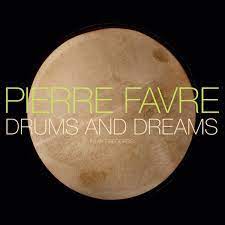
Pierre Favre was born June 2, 1937 in Le Locle, Switzerland. Not much is known about his childhood or his early music career.
He recorded the album Singing Drums in 1984 on the ECM label with Paul Motian and Nana Vasconcelos. He also appears on John Surman’s album, Such Winters of Memory released the year beore.
He has recorded with several well-known musicians, including Tamia, Michel Godard, Mal Waldron, Paul Giger, Jiří Stivín, Michel Portal, Irene Schweizer, Samuel Blaser, the ARTE Quartett, Barre Phillips and the London Jazz Composers Orchestra.
He has recorded six albums as a leader and drummer and percussionist Pierre Favre continues to explore his craft, perform and record.
More Posts: bandleader,drums,history,instrumental,jazz,music,percussion