

Daily Dose Of Jazz…
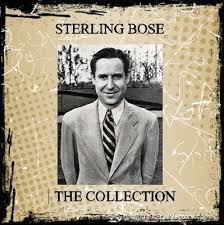
Sterling Belmont “Bozo” Bose was born on September 23, 1906 in Florence, Alabama and his style was heavily influenced by Bix Beiderbecke and changed little over the course of his life.
His early experience came with Dixieland jazz bands in his native Alabama before moving to St. Louis, Missouri in 1923. He played with the Crescent City Jazzers, the Arcadian Serenaders, and the Jean Goldkette’s Orchestra in 1927-28 after the departure of Beiderbecke. Following this he worked in the house band at radio station WGN in Chicago, Illinois before joining Ben Pollack from 1930 to 1933. He also worked with Eddie Sheasby in Chicago.
Moving to New York City in 1933, Bose had many gigs in the city during the 1930s to the mid 1940s, including time with Joe Haymes, Tommy Dorsey, Ray Noble, Benny Goodman, Lana Webster, Glenn Miller, Bob Crosby, Bobby Hackett, Bob Zurke, Jack Teagarden, Bud Freeman, George Brunies, Bobby Sherwood, Miff Mole, Art Hodes, Horace Heidt, and ending with Tiny Hill in 1946.
Following this period he did some further freelancing for the next two years in Chicago and New York, and finally moved to Florida in 1948, setting up his own bands there. Suffering from an extended period of illness in the 1950s, trumpeter and cornetist Sterling Bose, whose nickname was Bozo, eventually committed suicide in June of 1958. in St. Petersburg, Florida.

More Posts: bandleader,cornet,history,instrumental,jazz,music,trumpet
Daily Dose Of Jazz…
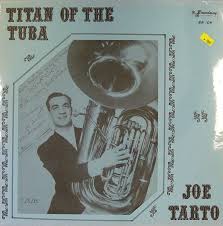
Joe Tarto was born Vincent Joseph Tortoriello on February 22, 1902 in Newark, New Jersey. He played trombone from age 12 before settling on tuba as a teenager. When World War I hit, he enlisted and played in an Army band where he was wounded, and received his release in 1919.
The 1920s saw him working with Cliff Edwards, Paul Specht, Sam Lanin, and Vincent Lopez, in addition to doing arrangement work for Fletcher Henderson and Chick Webb and playing in pit orchestras on Broadway. Throughout the 1920s recording copiously, he accompanied among others, Bing Crosby, The Boswell Sisters, Ethel Waters, Eddie Lang, Joe Venuti, Miff Mole, Red Nichols, The Dorsey Brothers, Bix Beiderbecke, and Phil Napoleon.
During the 1930s he spent two years playing with Roger Wolfe Kahn, then worked extensively as a session musician both on tuba and double bass. He also played with radio ensembles and in theater and symphony orchestras. He remained active as a performer into the 1980s, playing in Dixieland jazz revival groups in his last years. Tubist and bassist Joe Tarto passed away on August 24, 1986 in Morristown, New Jersey.
More Posts: bandleader,bass,history,instrumental,jazz,music
Daily Dose Of Jazz…
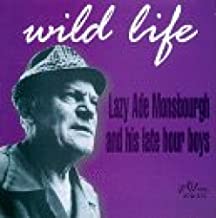
Ade Monsbourgh was born on Febrauary 17, 1917 in Melbourne, Victoria, Australia. He studied piano first before taking up reeds, valve trombone, trumpet and even recorder. He met pianist Graeme Bell early on and was part of his band regularly during 1944 to 1952. During his tenure with the band he recorded several times with Bell’s freewheeling band and toured Europe and Czechoslovakia.
He had occasional opportunities to lead his own dates, in addition to playing with groups led by Roger Bell, Dave Dallwitz, Len Barnard and Frank Traynor. His band, the Late Hour Boys, recorded prolifically for Swaggie through 1971.
During the 1992 Australia Day Honours, Monsbourgh was made an Officer of the Order of Australia (AO) for service to music, particularly jazz as a performer and composer.
Retiring from fulltime playing in the 1970’s, clarinetist Ade Monsbourgh, known as Lazy Ade or Father Ade, and who also played alto and tenor saxophone, trumpet, trombone and recorder, passed away on July 19, 2006 in Nathalia, Victoria, Australia.
More Posts: bandleader,history,instrumental,jazz,music,recorder,saxophone,trombone,trumpet
Daily Dose Of Jazz…
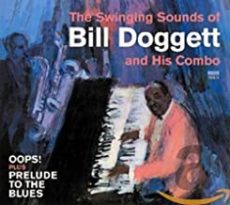
William Ballard Doggett was born February 16, 1916 in Philadelphia, Pennsylvania. During the 1930s and early 1940s he worked for Lucky Millinder, Frank Fairfax and arranger Jimmy Mundy. In 1942 he was hired as the Ink Spots’ pianist and arranger.
By 1951 Doggett had organized his own trio and began recording for King Records. He also arranged for many bandleaders and performers, including Louis Armstrong, Count Basie, Ella Fitzgerald, and Lionel Hampton. He also recorded with Fitzgerald, as well as Coleman Hawkins, Helen Humes, Willis Jackson, Illinois Jacquet, Louis Jordan, Lucky Millinder, Paul Quinichette, Buddy Tate, Lucky Thompson
Crossing over to rhythm & blues his best known recording is Honky Tonk, a rhythm and blues hit of 1956, which sold four million copies (reaching No. 1 R&B and No. 2 Pop), and which he co-wrote with Billy Butler. The track topped the US Billboard R&B chart for over two months. He also worked with the Ink Spots, Johnny Otis, and Wynonie Harris.
Pianist and organist Bill Doggett continued to play and arrange until passing away of a heart attack on November 13, 1996 in New York City. He was 80.
More Posts: bandleader,history,instrumental,music,organ,piano
Daily Dose Of Jazz…
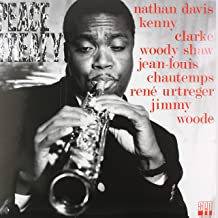
Nathan Tate Davis ws born February 15, 1937 in Kansas City, Kansas. He apprenticed in the Jay McShann band before heading off to college to receive his degree in Music Education. After being discharged from military service post World War II, he traveled extensively around Europe before settling in Paris, France in 1962.
Moving back to the States he went on to attain a Ph.D in Ethnomusicology from Wesleyan University and was a professor of music and director of jazz studies at the University of Pittsburgh from 1969, an academic program that he helped initiate. During his tenure he was founder and director of the University of Pittsburgh Annual Jazz Seminar and Concert, the first academic jazz event of its kind in the United States.
Nathan helped to found the university’s William Robinson Recording Studio as well as establish the International Academy of Jazz Hall of Fame located in the school’s William Pitt Union and the University of Pittsburgh-Sonny Rollins International Jazz Archives.
Retiring as director of the Jazz Studies Program at Pitt in 2013, Davis also served as the editor of the International Jazz Archives Journal. One of Davis’ best known musical associations was heading the Paris Reunion Band from 1985 to 1989, which at different times included Nat Adderley, Kenny Drew, Johnny Griffin, Slide Hampton, Joe Henderson, Idris Muhammad, Dizzy Reece, Woody Shaw, and Jimmy Woode.
Over the course of his career he worked with Eric Dolphy, Kenny Clarke, Ray Charles, Slide Hampton, Kenny “Klook” Clarke and Art Blakey. He toured and recorded with the post-bop ensemble leading Roots which he formed in 1991. As a composer, Nathan created various pieces, including a 2004 opera entitled Just Above My Head.
Tenor and soprano saxophonist, bass clarinetist and flutist Nathan Davis, who recorded eighteen albums as a leader, passed away on April 8, 2018 in Palm Beach, Florida, at the age of 81.
More Posts: bandleader,educator,flute,history,instrumental,jazz,music,saxophone