

Daily Dose Of Jazz…
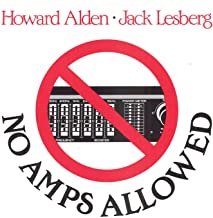
Jack Lesberg was born February 14, 1920 in Boston, Massachusetts. He had the misfortune of playing in that city’s Cocoanut Grove on the night in 1942 when 492 people lost their lives in a fire. His escape was memorialized by fellow bassist Charles Mingus.
Jack performed in the New York City Symphony under Leonard Bernstein in the 1940s. Lesberg continued to tour in the 1980s and performed in Menlo Park, California in 1984. Jack played with Louis Armstrong, Earl Hines, Jack Teagarden, Coleman Hawkins, Sarah Vaughan, Urbie Green, George Barnes, Ruth Brown, Tony Bennett, Johnny Hodges and Benny Goodman among others, He went on several international tours.
Double-bassist Jack Lesberg, who co~led two sessions and twenty-one as a sideman, passed away from Alzheimer’s Disease in Englewood, California at the age of 85 on September 17, 2005.

More Posts: bandleader,bass,history,instrumental,jazz,music
Daily Dose Of Jazz…
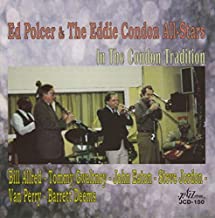
Ed Polcer was born February 10, 1937 in Paterson, New Jersey. He started leading jazz bands while attending Princeton University. While there studying engineering, he was headed toward a promising career as a professional baseball player. During that time, he was asked to play at the wedding of Princess Grace and Prince Rainier in Monaco, as well as a concert in Carnegie Hall. He chose music over baseball.
When cornetist Bobby Hackett recommended him to Benny Goodman, he abandoned his engineering and purchasing day jobs and joined Goodman’s small band. Other musicians in that band included John Bunch, Bucky Pizzarelli, Slam Stewart, Al Klink, Zoot Sims, George Masso, and Peter Appleyard.
While in his 20s and 30s, Ed played with Teddy Wilson, Bobby Hackett, Kenny Davern, Dick Wellstood, Gene Ramey, Sonny Greer, Joe Muranyi, Herbie Nichols and Joe Venuti. With his wife, singer and actress Judy Kurtz he managed and co-owned with Red Balaban, Eddie Condon’s Jazz Club in New York City from 1977–1985. Sharing the bandstand with him at the club were such musicians as Vic Dickenson, Herb Hall, and Connie Kay.
He was instrumental in giving several younger musicians, such as Scott Hamilton, Warren Vache, Dan Barrett, and Mark Shane a showcase of their talents. He served as musical director of several jazz festivals, including the North Carolina Jazz Festival, Colorado Springs Jazz Party, and San Diego Jazz Party. In the 1980s he served as president of the Long Island, New York-based non-profit International Art of Jazz, which promoted community and corporate involvement in jazz, presented jazz programs. He played for five U.S. Presidents, including the Congressional Ball at the White House for President Clinton in 1994, and played in Thailand with the King of Thailand, a jazz clarinetist and enthusiast.
He has been awarded the New Jersey Jazz Society lifetime achievement award, named a Jazz Legend by the San Diego Jazz Party, and honored by the Atlanta Jazz Preservation Society for unyielding commitment to the preservation of our beloved American art form of jazz. Cornetist, bandleader, festival director, club owner, and mentor Ed Polcer, who has a melodic mellow-toned sound with an unforced delivery, recorded ten albums as a leader and fourteen as a sideman, remains active.
More Posts: bandleader,cornet,history,instrumental,jazz,music
Daily Dose Of Jazz…
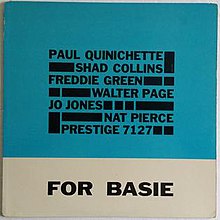
Walter Sylvester Page was born on February 9, 1900 in Gallatin, Missouri on to parents Edward and Blanche Page. Showing a love for music as a child, in 1910 with his mother moved to Kansas City, Missouri and exposed him to folksongs and spirituals, a critical foundation for developing his love of music. He gained his first musical experience as a bass drum and bass horn player in the brass bands of his neighborhood. Under the direction of Major N. Clark Smith, he took up the string bass in his time at Lincoln High School. During that time he also drew inspiration from bassist Wellman Braud, who he had the opportunity to see when he came to town with John Wycliffe.
After completing high school, he went on to study to become a music teacher at the University of Kansas at Lawrence. In college,Walter completed a three-year course in music in one year, in addition to taking a three-year course on gas engines. Between the years 1918 and 1923, he moonlighted as a tuba, bass saxophone, and string bass player with the Bennie Moten Orchestra. In 1923 he left Moten and began an engagement with Billy King’s Road Show, and with Jimmy Rushing and Count Basie, toured the Theater Owners’ Booking Association (TOBA) circuit across the United States.
Walter Page and the Blue Devils was a territory band founded in 1925, based out of the Oklahoma City~Wichita, Kansas area that included Basie, Rushing, Buster Smith, Lester Young, and Hot Lips Page. By 1929 the Blue Devils faced defections of key players, booking problems and musicians’ union conflict, he relinquished control to James Simpson and joined Moten’s band in 1931, staying until 1934. After his second stint with Moten, he moved to St. Louis, Missouri to play with the Jeter-Pillars band. Following the death of Moten in 1935, however, Basie took over the former Moten Band, which Page rejoined.
Staying with the Count Basie Orchestra from 1935 to 1942, Walter was an integral part of what came to be called the “All-American Rhythm Section. Together with drummer Jo Jones, guitarist Freddie Green, and pianist Basie, the rhythm section pioneered the “Basie Sound”, a style in which Page, as bass player, clearly established the beat, allowing his band mates to complement more freely. Until this point, the rhythm of a jazz band was traditionally felt in the pianist’s left hand and the kick of the bass drum on all four beats. In a sense, the classic Basie rhythm section were liberators.
After his first departure from the Count Basie Orchestra, Walter worked with various small groups around Kansas City. He returned to the Basie Band in 1946 for three more years. Bassist and multi-instrumentalist Walter Page, best known for his groundbreaking work with Walter Page’s Blue Devils and the Count Basie Orchestra, passed away of kidney ailment and pneumonia at Bellevue Hospital on December 20, 1957 in New York City.
More Posts: bandleader,bass,bass horn,bass saxophone,drums,history,instrumental,jazz,music,tuba
Daily Dose Of Jazz…
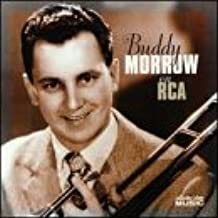
Buddy Morrow was born Muni Zudekoff on February 8, 1919 in New Haven, Connecticut. Receiving a scholarship at age 16, he studied trombone with Ernest Horatio Clarke at Juilliard from October to December 1936. During the next year he began playing trombone with Sharkey Bonano’s Sharks of Rhythm, an Eddie Condon group. He then worked with Eddy Duchin, Vincent Lopez, and Artie Shaw.
In 1938 Muni became known as Buddy Morrow when he joined the Tommy Dorsey band. The following year he performed with Paul Whiteman’s Concert Orchestra for their recording of Gershwin’s Concerto in F. In 1940, Morrow joined the Tony Pastor band, but this was only a short detour on his way to replacing Ray Conniff in the Bob Crosby band. Shortly after, he joined the U.S. Navy, during which he recorded with Billy Butterfield, leading a ten-piece band with three trombones, accompanying Red McKenzie singing four arrangements, including Sweet Lorraine and It’s the Talk of the Town.
After demobilization, Morrow joined Jimmy Dorsey’s band, then went into radio freelancing as a studio musician. He began conducting sessions, which introduced him to bandleading. RCA Victor sponsored him as director of his band in 1951. The band’s first hit, Night Train by Jimmy Forrest, was a hit in rhythm and blues.
Morrow was a member of The Tonight Show Band. His early 1950s records such as Rose, Rose, I Love You and Night Train appeared on the Billboard magazine charts. Night Train reached No. 12 in the U.K. Singles Chart in 1953. In 1959 and 1960 Morrow’s Orchestra released two albums of American television theme songs: Impact and Double Impact respectively.
In 2009 he received a Lifetime Achievement Award from the International Trombone Association. He led the Tommy Dorsey Orchestra from 1977 through 2010, when he appeared with the band for the final time. Over the course of his career he recorded 18 albums as a leader and 30 as a sideman. Trombonist, arranger, composer and bandleader Buddy Moorow, who was also known as Moe Zudekoff, passed away on September 27, 2010 in Maitland, Florida.
More Posts: arranger,bandleader,composer,history,instrumental,jazz,music,trombone
Daily Dose Of Jazz…
Wyatt Robert Ruther was born on February 5, 1923 in Pittsburgh, Pennsylvania. Playing trombone in high school before picking up the double-bass, he studied at the San Francisco Conservatory of Music and the Pittsburgh Musical Institute.
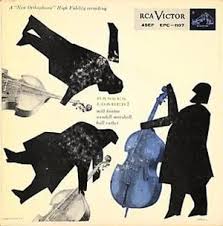
From 1951 to 1952 he played in New York City with Dave Brubeck and Erroll Garner from 1951-55. A sought after bassist Wyatt toured with Lena Horne in 1953 and recorded an album under his own name alongside Milt Hinton in 1955 for RCA Records entitled Basses Loaded. Following this he played with Toshiko Akiyoshi in 1956, then studied at the Royal Conservatory of Music in Toronto, Canada.
While in Canada he played with the Canadian Jazz Quartet for two years beginning in 1956 and then in 1957 with Peter Appleyard. During the same period back in the States, Ruther played with Ray Bryant, Zoot Sims, Bob Brookmeyer, and Chico Hamilton. From the end of the Fifties to the mid~Sixties he toured with George Shearing, went on a world tour with Buddy Rich, played in Gerry Mulligan’s quartet, then joined Count Basie.
In the late 1960s, Wyatt worked freelance in the San Francisco area, and played at the Olympic Hotel in Seattle, Washington in the early Seventies. Moving to Vancouver, British Columbia, Canada he played with Fraser MacPherson from 1975 to 1979. He went on to play at the Ankor Hotel in Vancouver in the early 1980s, and while there worked with Sammy Price, Jay McShann, and Dorothy Donegan. Returning to San Francisco in 1984, he played with Stan Getz, Lou Stein, John Handy, Benny Carter, and Jerome Richardson late into thedecade and early Nineties. Bassist Wyatt Ruther played until he passed away of a heart attack at age 76 on October 31, 1999 in San Francisco, California.
More Posts: bandleader,bass,history,insrumental,jazz,music