

Daily Dose Of Jazz…
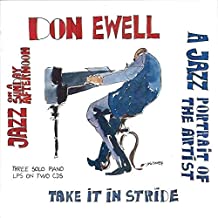
Donald Tyson Ewell was born in Baltimore, Maryland on November 14, 1916. He played with Bill Reinhardt’s Jazz, Ltd. band in Chicago, Illinois in 1947, 1948, and 1949. From 1956 to 1962, he was a member of the Jack Teagarden band and after Teagarden’s death, he went on tour in Europe.
Returning to New Orleans, Louisiana he performed in clubs and hotels. From 1976 to 1978 he performed in concert while battling alcoholism, he lived with his friend King Denton, the manager of a jazz club where Don was Artist in Residence.
He worked with Sidney Bechet, Kid Ory, George Lewis, George Brunis, Muggsy Spanier, and Bunk Johnson. He recorded twenty-one albums as a leader and seven as a sideman with Barbara Dane, Doc Evans, Bunk Johnson, Jack Teagarden. Moving back to Maryland. After his daughter’s death from cancer and after two strokes, stride pianist Don Ewell passed away on August 9, 1983.
More Posts: bandleader,history,instrumental,jazz,music,piano

Daily Dose Of Jazz…
Charlie Mariano was born Carmine Ugo Mariano on November 12, 1923 in Boston, Massachusetts, the son of Italian immigrants. Growing up in the Hyde Park neighborhood of Boston, after high school, he enlisted in the Army Air Corps during World War II. After his discharge, he attended Schillinger House of Music, now Berklee College of Music. He was among the faculty at Berklee from 1965–1971.
Moving to Europe in 1971, he eventually settled in Köln, Germany, with his third wife, Dorothee Zippel. He played with one of the Stan Kenton big bands, Toshiko Akiyoshi, his second wife, Charles Mingus, Eberhard Weber, the United Jazz and Rock Ensemble, Embryo and numerous other notable bands and musicians.
He was known for his use of the nadaswaram, a classical wind instrument from Tamil Nadu. He recorded thirteen albums as a leader and another sixty records as a sideman, working with Shelly Manne, Eberhard Weber, Manny Albam, Max Bennett, Chet Baker, Philip Catherine, Serge Chaloff, Peggy Connelly, Herb Ellis, Maynard Ferguson, Michael Gibbs, John Graas, George Gruntz, Chico Hamilton, Bill Harris, Bill Holman, Jackie and Roy, Elvin Jones, Quincy Jones, Mel Lewis, Arif Mardin, Toshiko Mariano, Vince Mendoza, Modern Jazz Quartet, Mike Nock, Nat Pierce, Herb Pomeroy, Irene Reid, Johnny Richards, Jimmy Ricks, Shorty Rogers, Frank Rosolino, Sal Salvador, Fredy Studer, Harvie Swartz, McCoy Tyner, Sadao Watanabe, Stu Williamson.
Alto and soprano saxophonist Carmine Mariano passed away from cancer on June 16, 2009
More Posts: bandleader,composer,history,instrumental,jazz,saxophone
Daily Dose Of Jazz…
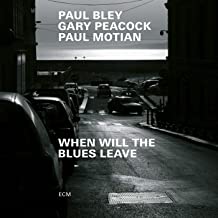
Paul Bley was born Hyman Paul Bley on November 10, 1932 in Montreal, Quebec. His adoptive parents were Betty Marcovitch and Joe Bley, who owned an embroidery factory. When he was five years old he studied violin, but by seven he took up the piano. He received a junior diploma from the McGill Conservatory in Montreal when he was 11 and at thirteen he formed a band which played at summer resorts in Ste. Agathe, Quebec. His teenage years saw him he played with touring American bands, including Al Cowan’s Tramp Band. In 1949 at the start of his high school senior year, Oscar Peterson asked him to fulfill his contract at the Alberta Lounge in Montreal. The next year he left Montreal for New York City and Juilliard.
The Fifties saw Paul returning to Montreal, establishing the Jazz Workshop and inviting Charlie Parker, he played and recorded with him. Returning to New York City he hired Jackie McLean, Al Levitt, and Doug Watkins to play an extended gig at the Copa City on Long Island. He did a series of trio recordings with Al Levitt and Peter Ind, toured as Lester Young and the Paul Bley Trio, and performed with tenor saxophonist Ben Webster at that time. He then conducted for bassist Charles Mingus on the Charles Mingus and His Orchestra album and in 1953, Mingus produced the Introducing Paul Bley album for his label, Debut Records with Mingus on bass and drummer Art Blakey. A 1954 call from Chet Baker put him with the quintet at Jazz City in Hollywood, California that led to a tour with singer Dakota Staton.
Staying in Los Angeles he evolved his trio into a quintet with young avant~garde musicians Dave Pike, Don Cherry, Ornette Coleman, Charlie Haden, and Billy Higgins. Through the Sixties, he worked with Jimmy Giuffre, Sonny Rollins, Coleman Hawkins, Bill Dixon, Roswell Rudd, Cecil Taylor, Archie Shepp, Carla Bley, Michael Mantler, Sun Ra, and others. The Seventies had him and Carol Goss founding the production company Improvising Artists. The label issued Jaco, the debut recording of Pat Metheny on electric guitar and Jaco Pastorius on electric bass, with Bley on electric piano and Bruce Ditmas on drums. The label would release IAI records and videos of Jimmy Giuffre, Lee Konitz, Dave Holland, Marion Brown, Gunter Hampel, Lester Bowie, Steve Lacy, Ran Blake, Perry Robinson, Naná Vasconcelos, John Gilmore, two solo piano records by Sun Ra, and others. Bley and Goss are credited in a Billboard cover story with the first commercial music video.
Through the Eighties and Nineties, he continued to record, tour prolifically through Europe, Japan, South America, and the United States. in 1993 a relative from the New York branch of the Bley family walked into the Sweet Basil jazz club in New York City and informed him that his father was actually his biological parent. In the new millennium, he became a part-time faculty member of the New England Music Conservatory.
His last public performances were in 2010 playing a solo piano concert at the La Villette Jazz Festival in Paris, followed by a duo with Charlie Haden at BlueNote in New York City during a full moon. Pianist Paul Bley passed away of natural causes on January 3, 2016, at home in Stuart, Florida, at the age of 83.
More Posts: bandleader,composer,history,instrumental,jazz,music,piano
Daily Dose Of Jazz…
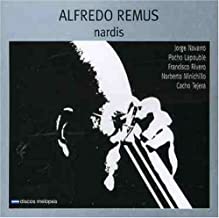
Alfredo Remus was born on November 9, 1938 in Argentina. He learned to play the double bass and by 1964 was part of the ensemble recording the historic album La Misa Criolla by Ariel Ramírez. He has performed and/or recorded with Paul Gonsalves, Vinícius de Moraes, Maria Bethânia, Enrique “Mono” Villegas, Gato Barbieri, Mercedes Sosa, Tony Bennett, Ariel Ramírez, Víctor Heredia, Alberto Cortez, Trio Los Panchos, Raphael, Cuarteto Zupay, Dyango, Leonardo Favio, Sandro, Susana Rinaldi, and Antonio Carlos Jobim, among others.
He was regularly participated in a series of improvisation and casual folk experimentation at the house of Eduardo Lagos, named humorously by Hugo Diaz as folkloréishons, the jazz jam sessions with Astor Piazzolla, Diaz, Oscar Cardozo Ocampo, Domingo Cura, and Oscar López Ruiz, to name a few. Double bassist Alfredo Remus, the interpreter of tango, jazz, Argentine folklore, and bossa nova, continues to perform.
More Posts: bandleader,bass,history,instrumental,jazz,music
Daily Dose Of Jazz…
Dara Tucker was born on November 8th in Tulsa, Oklahoma, the third of seven children to music minister and gospel recording artist, Doyle Tucker, and singer Lynda Tucker. Starting out singing harmony at the age of 4 with her brothers and sisters, she began playing the piano at age 8, and traveled the country singing with her family for most of her childhood. The family spent time in Spokane, Washington; Detroit, Michigan; Fayetteville, Arkansas; Pasadena, California; and Baltimore, Maryland. Along with her siblings, they were known as The Tuckers bringing forth their rich harmonies and seamless blend.
Receiving her degree in International Business and German Studies, after graduating, Tucker worked for a few years in the field of International Business. She then moved to Interlaken, Switzerland to study German while aupairing. It was while living in Switzerland in 2003 she began songwriting, and the next year moved to Nashville, Tennessee to pursue a career as a singer/songwriter.
She recorded her debut album All Right Now in 2009 featuring Great American Songbook standards. Two years later she dropped her second album Soul Said Yes blending r&b, jazz, and gospel and featured seven-string guitarist, Charlie Hunter.
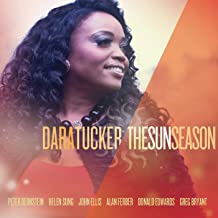
A third release, The Sun Season in 2014 was recorded in Astoria, Queens, New York included ten originals penned by Dara. The session had guitarist Peter Bernstein, pianist Helen Sung, drummer Donald Edwards, John Ellis on saxophone, Alan Ferber on trombone, and bassist Greg Bryant. She would go on to record another studio album and live date.
Vocalist Dara Tucker, named Jazz Vocalist of the Year at the 2016 and 2017 Nashville Industry Music Awards, and cites her influences including her parents as Mel Tormé, James Taylor, Stevie Wonder, and Nancy Wilson, continues to compose, perform and record.
More Posts: bandleader,composer,history,instrumental,jazz,music,vocal