

Daily Dose Of Jazz…
Joe Britton was born on November 28, 1903 in Birmingham, Alabama and following his student days under the guidance of Fess Whatley, he went to work with Bessie Smith who took him on the road from 1924 through 1926 as a member of her backing group, followed with the Fred Longshaw Orchestra and then the Bill Woods Orchestra. The next year, he jumped to Frank Bunch & the Fuzzy Wuzzies, most likely the most obscure name in the list of the groups he played for.
Settling in New York in the ’30s and immediately got into the fast-paced jazz scene working with Ellsworth Reynold’s Bostonians, Teddy Hill, the band of classic jazz drummer Kaiser Marshall, Charlie Johnson, Edgar Hayes, and the Vernon Andrade Orchestra. In the ’40s: he worked with Benny Carter from 1940-1941 and Dizzy Gillespie, while at the same time collaborating on older styles of jazz.
In the 1940s Britton worked and recorded with Jelly Roll Morton, Jay McShann, and Lucky Millinder in 1942. He would go on to be employed by Wynonie Harris showing up on a half-dozen of her R&B records, and also recorded with Sister Rosetta Tharpe.
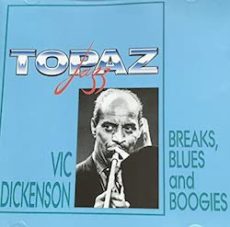
He performed and recorded with pianist Earl Hines. The trombonist dabbled into orchestra arrangements and his work in this field is highlighted on the album Breaks, Blues and Boogies by fellow bone-man Vic Dickenson. retired from full-time professional playing in the 1950s, however, he gigged off and on into the Sixties, including a regular stint in a band led by saxophonist Wesley Fagan. Trombonist Joe Britton passed away on August 12, 1972 in New York City, New York.
More Posts: arranger,bandleader,history,instrumental,jazz,music,trombone
Daily Dose Of Jazz…
Wilber Morris was born on November 27, 1937 in Los Angeles, California and began playing drums as a child. Joining the Air Force in 1954, during his tour of duty of eight years switched to the bass. He would play around San Francisco, California in his off times with the likes of Pharoah Sanders and Sonny Simmons. After his discharge, he returned to Los Angeles and played with Arthur Blythe and Horace Tapscott.
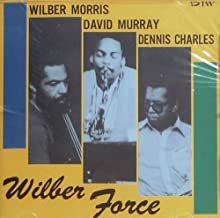
Moving back to San Francisco in 1969 his jazz career didn’t really take off until he relocated to New York City nearly a decade later. By 1978 Wilber found work with violinist Billy Bang and saxophonist David Murray, the latter would become a long-standing association well into the ’90s. During the early Eighties, he formed his own trio, Wilber Force, with drummer Denis Charles and saxophonist Charles Tyler with whom he recorded.
He held various teaching positions in addition to recording and performing. He began to work outside Murray’s group and also founded the One World Ensemble. He recorded four albums as a leader and as a sideman another two dozen albums. Morris performed with such musicians as Pharoah Sanders, Sonny Simmons, Alan Silva, Joe McPhee, Horace Tapscott, Butch Morris, Arthur Blythe, Charles Gayle, William Parker, and Bob Ackerman, Charles Tyler, Dennis Charles, Roy Campbell, Avram Fefer, Alfred 23 Harth, Borah Bergman, Bobby Few, and Rashied Ali.
Double bassist and bandleader Wilber Morris, who performed mainly in the free jazz genre and was the brother of the cornetist, composer, and conductor Butch Morris, passed away on August 8, 2002 in New York City.
More Posts: bandleader,bass,history,instrumental,jazz,music
Daily Dose Of Jazz…
Alvin Leroy Fielder Jr was born November 23, 1935 in Meridian, Mississippi to a mother who played the violin and piano and a father who played the cornet and was a pharmacist by profession. His brother William became a trumpeter. He initially learned the piano as a young child, but stopped and did not regain an interest in music until he was 12 when he heard a Max Roach record. He took drum lessons from Ed Blackwell while studying pharmacology at Xavier University of Louisiana, and then continued his degree at Texas Southern University. He did all this while maintaining his musical development by taking lessons with local drummers and performing at night. He went on to complete his pharmacology studies with a master’s degree from the University of Illinois at Chicago.
In Chicago, Illinois he played with Sun Ra during 1959 and 1960. Encouraged by fellow musicians Muhal Richard Abrams and Beaver Harris, he became more experimental in his playing and went on to be a charter member of the Association for the Advancement of Creative Musicians (AACM). The AACM’s first released recording featured him on Roscoe Mitchell’s Sound. In the mid-to-late 1960s, while working part-time as a pharmacist, Alvin played in his own trio with Fred Anderson and bassist/cellist Lester Lashley.
1969 saw he returned home to Mississippi where he took responsibility for managing the family business, becoming involved in political activism, and continued to pursue his passion for music. In 1971 he met John Reese and helped develop the Black Arts Music Society (BAMS). Fielder was instrumental in bringing many AACM and other musicians to Mississippi. In 1975, he began working with Kidd Jordan in what became the Improvisational Arts band, which featured various musicians over three decades and appeared at the New Orleans Jazz and Heritage Festival every year from 1975 to 2008. In 1995, he participated as a founding faculty member in the Louis “Satchmo” Armstrong Summer Jazz Camp.
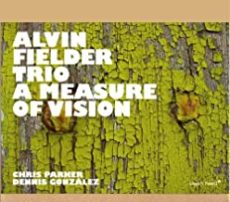
He recorded twenty-seven albums with Ahmed Abdullah, Charles Brackeen, Damon Smith, and Dennis Gonzalez, and continued exploring free jazz in the 1990s with Joel Futterman, Kidd Jordan, and others, and toured with Andrew Lamb. He was awarded the Resounding Vision Award by Nameless Sound in Houston, Texas. Drummer Alvin Fielder passed away of complications from congestive heart failure and pneumonia, in Jackson, Mississippi on January 5, 2019.
More Posts: bandleader,drums,history,instrumental,jazz,music
Daily Dose Of Jazz…
Peter Warren was born November 21, 1935 in Hempstead, New York and learned to play the cello as a child, studying the instrument formally, giving a recital at Carnegie Hall in 1953. After studying at Juilliard School, he went on to play with the Atlanta Symphony Orchestra before switching to double-bass and studying jazz under Chuck Israels.
From 1965, for two years Peter was Dionne Warwick’s touring bassist, and following this, he played with David Izenzon in the New York Bass Revolution. Working in Belgium in the early Seventies, he played with Chick Corea, John Surman, Rolf Kuhn, Joachim Kuhn, Jean-Luc Ponty, Don Cherry, Terumasa Hino, Masahiko Sato, Albert Mangelsdorff, John Tchicai, Anthony Braxton, and Tomasz Stańko.
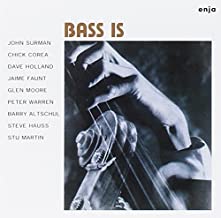
Settling once again back in the United States in 1974, he played with Jack DeJohnette and Carla Bley, and in 1976 he received a National Endowment for the Arts grant in cello composition. The early Eighties saw him working with Mike Stern, Ken Vandermark, and again with DeJohnette. He recorded three albums as a leader Bass Is on Enja Records in 1970, Solidarity for JAPO Records, in 1981, and Bowed Metal Music in 2001. Cellist and bassist Peter Warren continues to perform.
More Posts: bandleader,bass,cello,history,instrumental,jazz,music
Daily Dose Of Jazz…
Clarence “Shorty” Sherock was born on November 17, 1915 in Minneapolis, Minnesota and attended the Illinois Military Academy. In the 1930s he was a soloist with the Jimmy Dorsey Orchestra and with the Gene Krupa Orchestra. He led a big band in the 1940s. In 1944 he was a featured soloist in Los Angeles, California at the first Jazz at the Philharmonic concert, a series started by Norman Granz. The concert included Nat King Cole, Illinois Jacquet, J. J. Johnson, Jack McVea, and Les Paul.
1946, Sherock recorded Leonard Feather’s composition Snafu, and in 1955 he recorded three tracks for Freddie Slack’s Boogie Woogie on the 88. As a member of the Nelson Riddle Orchestra, he recorded with Dean Martin, Frank Sinatra, Ella Fitzgerald, Van Alexander, Benny Carter, Bobby Darin, Bing Crosby, Pete Fountain, Mel Henke, Freddy Martin, Matty Matlock, and Mavis Rivers.
He only recorded two albums as a leader during his career. Swing trumpeter passed away on February 19, 1980 in Northridge, Los Angeles, California.
More Posts: bandleader,history,instrumental,jazz,trumpet