

Daily Dose Of Jazz…
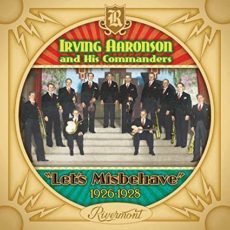
Irving A. Aaronson was born in New York on February 7, 1895 and learned to play the piano from Alfred Sendry at the David Mannes School for music. By age 11 he played accompaniment in silent movie theaters called nickelodeons. In 1921 he co-wrote a hit song, Boo-Hoo-Hoo.
When his band was signed with the Victor label, the band name was changed to Irving Aaronson and his Commanders. From 1926 to 1929, the band recorded for the label and had a notable success with Let’s Misbehave in 1927. The band appeared in Cole Porter’s Broadway musical Paris, in 1928 and broadcasted on KFWB in Hollywood, California in 1929.
In 1935, he starred in the Irving Aaronson Orchestra radio program on NBC. The band toured movie theatres and ballrooms across the US before calling it quits in the mid-1930s, But his band had included at various times musicians such as Phil Saxe, Joe Gillespie, Artie Shaw, Gene Krupa, Tony Pastor, and western movie actor Fuzzy Knight was the band’s drummer in the late Twenties.
By the time he turned 45, Irving was working as a musical director for MGM studios. He remained there in that capacity, voicing for television Mr. Nobody in the MGM’s animation Betty Boop for President and as an assistant to producer Joe Pasternak, until his death from a heart attack. Pianist, bandleader and composer Irving Aaronson passed away in Hollywood, California on March 10, 1963 at the age of 68. His most popular song, The Loveliest Night of the Year, was not recorded with his band but was adapted by Aaronson in 1950 for the Mario Lanza film The Great Caruso.
More Posts: bandleader,composer,history,instrumental,jazz,music,piano

Daily Dose Of Jazz…
Chris Biscoe was born on February 5, 1947, in Pensford, Somerset, England and in 1963 taught himself to play alto saxophone and then started playing tenor, soprano, baritone, and also comparatively rare alto clarinet. Before he became a notable presence on the UK Jazz scene, he was a computer programmer.
From 1970 to 1973 Biscoe played with National Youth Jazz Orchestra in London, doing gigs with various other London-based bands of that period, including Redbrass. He worked with several notable jazz musicians during the Seventies such as Harry Beckett, Ken Hyder, Didier Levallet, Chris McGregor, Andy Sheppard, Graham Collier, Danilo Terenzi, Pete Hurt, Tommy Chase, Pete Saberton, Barry Guy, Dave Holdsworth, and Pete Jacobsen.
In 1979, Chris had a long-term association with Mike Westbrook touring throughout Europe and playing international festivals in Australia, Singapore, Hong Kong, Canada and the USA. In the same year, he also formed a quartet featuring Peter Jacobsen, expanded to a quintet in 1980, a sextet in 1986, and reformed as a quartet in 1987. During the Eighties he also recorded two albums.
During the late 1980s and 1990s, Biscoe toured and recorded with George Russell, Andy Sheppard, Liam Noble, Gail Thompson’s Jazz Africa, Harry Beckett, and also played in France with Didier Levallet’s groups and the collective band called Zhivaro. In 1991, he released a second cassette, Modern Alarms, and also recorded in the Dedication Orchestra in the Spirits Rejoice project.
Between 1997 and 2000, he became the first English musician to join the Orchestre National de Jazz. Multi-instrumentalist Chris Biscoe plays the alto, soprano, tenor and baritone saxophone, the alto clarinet, piccolo, and flute and continues to play and record.
More Posts: bandleader,clarinet,flute,history,instrumental,jazz,music,piccolo,saxophone
Daily Dose Of Jazz…
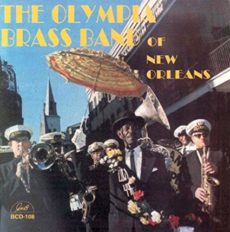
Duke Dejan was born Harold Andrew Dejan into a Creole family in New Orleans, Louisiana on February 4, 1909. He took clarinet lessons as a child before switching to the saxophone, and became a professional musician in his teens, joining the Olympia Serenaders and then the Holy Ghost Brass Band. He played regularly in Storyville, at Mahogany Hall, and on Mississippi riverboats.
During World War Two he played in Navy bands. Afterwards, Duke worked in the mail office of the Lykes Brothers Steamship Company for 23 years while maintaining a parallel musical career, leading his own band, Dejan’s Olympia Brass Band, from 1951. The band often appeared at Preservation Hall, recorded nine albums, and also toured internationally, making 30 concert tours of Europe and one of Africa. The band was featured in the James Bond movie Live and Let Die and in many television commercials.
Suffering a stroke in 1991 left him unable to play the saxophone but he continued as a bandleader and singer until shortly before his death on July 5, 2002 at the age of 93. Alto saxophonist and bandleader Harold Dejan best remembered as the leader of the Olympia Brass Band, including during the 1960s and 1970s when it was considered the top band in the city.
More Posts: bandleader,history,instrumental,jazz,music,saxophone
Daily Dose Of Jazz…
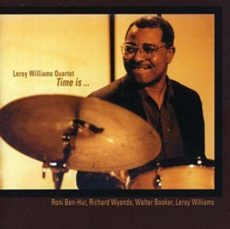
Leroy Williams was born in Chicago, Illinois on February 3, 1939 and first began playing drums as a teenager in the 1950s. From 1959 to the middle of the 1960s he played with Judy Roberts, and following this stint he moved to New York City and played with Booker Ervin in 1967.
1968 found him playing with Sonny Rollins, Archie Shepp, and Clifford Jordan; in 1969 he first began playing and collaboration with Barry Harris. 1970 saw him playing with Hank Mobley, Wilbur Ware, and Thelonious Monk, the latter of which he went with on a tour of Japan.
Later in the 1970s he played and recorded with Hank Mobley, Yusef Lateef, Ray Bryant, Charles McPherson, Stan Getz, Andrew Hill, Sonny Stitt, Junior Cook, Al Cohn, Buddy Tate, Ted Dunbar, Slide Hampton, Red Rodney and Bob Wilber, among others.
In the 1980s Williams played with Talk Talk, Level 42, Art Davis, Barry Harris, Tommy Flanagan, Steve Turre, and recorded with Pepper Adams, Bill Hardman. In the 1990s he performed and recorded with Frank Morgan, with Anthony Braxton, Lee Konitz, Ralph Lalama, and Pete Malinverni. Most recently, he was a member of El Mollenium with Roni Ben-Hur, Bertha Hope, and Walter Booker.
He was a member of the cast in the music documentary Bird Now and played one of the Angels of Mercy in the Steve Martin film spoof Leap Of Faith about fake faith healers. At the turn of the decade, Williams was a member of the cooperative band el Mollenium, which also included guitarist Roni Ben-hur, pianist Bertha Hope, and bassist Walter Booker. The band is devoted largely to interpreting the music of the late pianist Elmo Hope. Drummer Leroy Williams continues to be active.
More Posts: bandleader,drums,history,instrumental,jazz,music
Daily Dose Of Jazz…
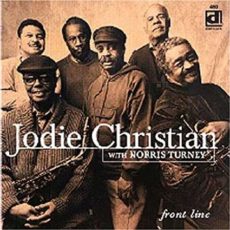
Jodie Christian was born on February 2, 1932 on 44th Street and Prairie Avenue in Chicago, Illinois. His grandfather sold his livestock and sent the family there once he realized the futility of raising a family as share-croppers. His mother was a church pianist, who helped him with music. The young Jodie attended Wendell Phillips High in Chicago. When his mother became director of the church choir, he took over on the piano; sometimes they played organ and piano duets in the church. His father sang and played the blues on the piano in speakeasies and rent parties, but ultimately stopped performing and followed his wife into the church.
Christian was one of the founders of the Association for the Advancement of Creative Musicians (AACM) with pianist Muhal Richard Abrams, drummer Steve McCall, and composer Phil Cohran. He and Abrams were also part of the Experimental Band. He worked at the Jazz Showcase club in Chicago and performed with Eddie Harris, Stan Getz, Dexter Gordon, Gene Ammons, Roscoe Mitchell, Buddy Montgomery, and John Klemmer.
He led his own group and recorded six albums, and another fifteen as a sideman with Von Freeman, Eric Alexander, Gene Amons, Lin Halliday, Les McCann, and Ira Sullivan to name a few. Pianist and bandleader Jodie Christian, noted for bebop and free jazz, passed away on February 13, 2012, aged 80, in Chicago.
More Posts: bandleader,history,instrumental,jazz,music,piano