


Review: Dangerus & The Freedom Fighters
Dangerus was born on March 26, 1990 in Uster, Switzerland to a Black American father and a Serbian mother, and the singer, lyricist, composer and bandleader grew up listening to rock, jazz, reggae and classical music that his father played in the house. In grammar school he sang songs in music class and sat at the feet of his father as he composed, often using melodies in his songs that his son would hum. These experiences became the foundation of his musical education and now this multi-faceted singer is adding piano to his musical arsenal.
In 2014 forming his band, The Freedom Fighters, he has brought together a multicultural and international sextet of accomplished musicians featuring Brazilian producer, arranger and keyboardist Julinho Martins, drummer Herby Casseley from Jamaica, jazz bassist Merlin Mathews of Portuguese and Canadian heritage, Chineyem Okolo, a guitarist from Nigeria and Severin Blaser, a Swiss jazz saxophonist.
Why Dangerus, is an often asked question when interviewed. The answer is quite simple. Break down his name to Danger and Us, you will understand his dis-ease. He believes his generation, like every generation before him, is in danger of inheriting a world that will not sustain them and is doing nothing to correct the situation. Poverty, oppression, hunger, genocide, the ecology and their very existence is in danger of implosion. This dynamic group of Freedom Fighters are socially and politically conscious of the destructive system that is ultimately threatening humanity. They also see themselves as one instrument of change and a danger to that very system of oppression and slavery. They are warriors of the light and music is their weapon, operating in the footsteps of Fela Kuti.
Their logo is a lion, known globally as the king of the jungle, the protector of the pride. His job, like the logo, is black and white. There is no grey area, but there are those who seek to undermine humanity for selfish gains, tending to operate in the grey between dawn and sunrise, dusk and sunset. In those cases, these warriors see themselves as guardians of their urban concrete jungle and the earth that has given them birth.
However, this is much more than a picture of a lion as it has symbolism well beyond. Look closely and one will see the lion’s teeth are his lethal weapons, represented by keyboards and guitars, the tongue is a road, implying the way of one’s journey. The nose and whiskers are two arms chained together, depicting unity, and holding the barb-wires of oppression that are his whiskers. The eyes are fire and they are the force to be unleashed upon the world through their music. The mane let’s all know they are descendants of royalty and their bearing is regal..
Never straying far from his cultural roots or the diaspora, Dangerus delivers his songs with a fervor and passion, inspired by the trials and triumphs of today’s world. If you listen closely you will hear the influences of reggae with jazz, ska, bossa nova and samba, in what can only be described as an homage to Bob Marley, Black Uhuru, Peter Tosh, Jimmy Cliff and others who spoke of love, beauty, strength, politics and freedom. Dangerus and the Freedom Fighters continue this tradition, standing on the shoulders of those musical ancestors.
It is evident that this poet is contemplative and compassionate in his search for answers about an unstable world not of his making that will be left for his generation. Those of us who have marched the decades of unrest and have witnessed the beauty of the world, this is familiar territory celebrating the joy and pain of love and life. We understand, it is their generation’s turn to shout at the consciousness of society the gravity of their situation. Highly recommended listening but only if you are ready to expand your mind and face your convictions.
carl anthony | notorious jazz / november 29, 2017
Give A Gift Of Jazz ~ Share 
#preserving genius
More Posts: bandleader,composer,history,instrumental,jazz,music,vocal
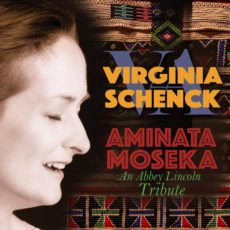
Review: Virginia Schenck | Aminata Moseka
Whenever I hear the word ambitious used by critics, I take pause, because it rings of a generosity that references an artist who has made a conscious decision to cover the music of an icon. The artist is often convinced that they have the chops to give a new life to the music; however, they are often the singers who release the adequate. And then there are those vocalists who are the light at the end of the tunnel and successfully walk into posterity. This offering by Virginia Schenck, however, happens to be a case of the latter and this is her moment.
The last time I saw this talented interpreter of lyrics I was amongst a gathering of jazz enthusiast under a beautiful Atlanta evening sky. During her set while singing Caged Bird, providence stepped forward and a small flock of birds answered her call with an appropriate and timely response. I knew a higher power was at work and everyone felt the energy pass throughout the audience. There are very few occasions when I experience a connection with nature in an urban setting as I did that night.
So to choose to pay homage to a poet of Abbey Lincoln stature was not only adventurous but exhibited a resolve that resulted in a highly rewarding experience. As I sat listening to Virginia’s delivery, with each composition hope blossomed again and again into a blissful reality. This was no mere one or two listens to this compendium of songs, but a dozen or more at different times in light and darkness, at different levels of volume and not all songs at the same time. I became engrossed in the conversation between musicians and heard the joy and pain, the laughter and sadness, the troubles and the victories as each song unfolds and began feeling the spirit of Abbey in every word from this messenger.
Though the subtitle states this recording is a tribute, this is so much more. It is a conversation between Abbey and Virginia. If you are familiar with Ms. Lincoln, then you know each vocalist is holding her own tempo and pacing within the understanding of the lyrics. Ms. Schenck’s choice of compositions were well thought out, with a precision that compliments her voice and clearly represents thirteen of Abbey’s best. To be true to the emotion and exhibit every side of the composer, these musicians invite you to be privy to the conversation between poet and vocalist.
Virginia hangs with a few of Atlanta’s best in the recording studio for a session that may appear perfunctory, however, it is the banked talent that makes it look and sound effortless in their execution that allows one to hear the voice until it’s time for the musicians to shine. With Kevin Bales tickling the 88, Rodney Jordan walking the bass, Marlon Patton keeping time on the drums and their special guest on alto saxophone Kebbi Williams, they bring a fresh breath of interpretation to these 13 songs. It is here that we hear the musical dialogue between the rhythm section and Virginia as they playfully emote their understandings. Kebbi’s frenetic improvisation keeps pace, adding complementary emphasis to Schenck’s spoken word of The River.
The arrangements. Listen but listen most carefully and you will hear the subtleties in the playing of piano, bass and drum that will entice you to desire more. This project goes beyond the borders of convention as collectively and individually each musician contributes their thoughts to each song that will touch, move and inspire each listener differently.
So, suffice it to say, Ms. Schenck has made a joyful noise in honoring one of America’s preeminent lyricists by crossing the borders of time, race and emotion with Aminata Moseka. She has raised the bar a few feet and what she leaves behind is an indelible audible mark on the industry that she loves. I would be remiss if I didn’t compel you to sit and listen, then read the liner notes for context, then listen again to truly hear the magic of Virginia and company talking to the sun.
carl anthony | notorious jazz | august 28, 2017
Give A Gift Of Jazz ~ Share
#preserving genius
More Posts: bandleader,history,instrumental,jazz,music,review
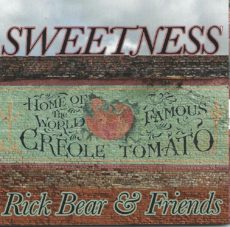
Review: Rick Bear & Friends | Sweetness
If you’ve ever been to the Crescent City, then you are well aware of the charms that seduce its visitors, as its residents are already under the city’s spell. Within its confines and in neighboring jurisdictions belies a cornucopia of delights in the aromas of varied cuisines, ample drinks and lots of music. It is, however, the latter that embraces and stimulates the enthusiast and aficionado to move to the myriad of rhythms.
So don’t allow the cover art to tempt you to pigeonhole this group of world class musicians in some staid understanding of what NOLA offers, for you just may miss their stellar performances. And for you initiates who have yet to sample the delights there is no better place to begin your journey than with a tasting of Sweetness. This is a recording representative of the talent that continues to spring forth from the city that has heralded the title of the birthplace of jazz.
Sweetness not only lends itself to the cuisine of the Crescent City but also invokes the very nature of the musicianship that is its tapestry. Herein lies the beauty of the compositions performed by drummer Rick Bear, guitarist John Fohl, bassist Jason Stewart and trumpeter/trombonist Ken Gregory. Stir in the piano and organ of Herb Avery and the vocals of Hampton B. Cole and you understand why jazz remains such an integral component to the gumbo that is New Orleans.
The base ingredients of this gumbo of compositions are Bechet, Waller, Rodgers & Hart, Henderson, Monk, Mitchell, Hines, Hancock, Ronell, Patton and Bernie who set the stage for this compendium of jazz standards. There is nothing subtle about their choices as they pay homage to the jazz canon and the Great American Songbook. So put aside any and all biases as to what may be and enjoy listening to these arrangements.
The set opens with the Sidney Bechet classic Petite Fleur where Spanish trumpet and French guitar influences conjoin in a flourish of style. The rest of the album follows with jazz standards – Willow Weep For Me, Rosetta, My Funny Valentine, Honeysuckle Rose, Bye Bye Blackbird, ‘Round Midnight, Hard Times, Jitterbug Waltz, Cantaloupe Island, Funky Mama and Sweet Georgia Brown.
Gregory takes the lead on most songs and his interpretations of My Funny Valentine and Round Midnight, the two ballads presented here, mournfully take you into a place of melancholy. The trumpet and trombone spell out his attributes, begging Valentine not to leave. On the latter, Fahl’s guitar quietly releases the anguish of a soul as it spells out its woes.
Hard Times is juxtaposed against its name with a rhythm that is anything less than enjoyable. Composed by Paul Mitchell during the turbulent Sixties, Americans on both sides of the struggle found lighter moments. Just the same way society did in finding its fun during the war years in the Jitterbug Waltz of Fats Waller.
Fohl opens up Cantaloupe Island with an easy strum and accompanies Gregory through what puts me in the mood for a hammock, warm breezes, sand and a cooler as the Hammond B3, guitar and the trombone swing you into a toe-tapping, finger snapping mode on Funky Mama. The closing tune on the album, Sweet Georgia Brown, opens with a rim shot staccato and ends the set on a fun note, a fitting tribute to the vocals of their recently departed friend, Colonel Bruce Hampton (Hampton B. Cole), making this final studio recording and an apt farewell.
Throughout the project, Rick Bear leads his compatriots and keeps time, allowing each musician to bring his sensibility to the signature sound that emanates from this city. Subtle though it may be, this session extolls a synchronicity in the songs that tell stories that are American made, as are the players whose star-power has not diminished.
To return to an earlier statement, allow me to clear up any misconception it was not my intent to disregard the thought behind the cover. I merely mentioned not to be distracted or form an opinion of what lay behind because there is a sellable story in the art. The missing part of the sign painted on the side of the building is A. J. ‘S Produce Co. Inc, 3162 Chartres. Angelo Benandi, the son who broke away from the family produce business at the French Market, established it in 1983. The Creole Tomato is grown in Louisiana soil in the river parishes along the Mississippi where the soil is richer. They are large, meatier, heat resistant, stay on the vine longer and hit the table so much sweeter. So when you’re down in New Orleans feel the pulse of the city, have a robust taste of homegrown and you’ll begin to understand the flavor that is The Big Easy.
carl anthony | notorious jazz / august 3, 2017
Give A Gift Of Jazz ~ Share
#preserving genius
More Posts: bandleader,drums,history,instrumental,jazz,music,review
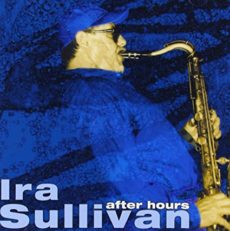
Daily Dose Of Jazz…
Ira Sullivan was born May 1, 1931 in Washington, D.C. and was taught trumpet by his father, saxophone by his mother and played both in the 1950s Chicago, Illinois with Charlie Parker, Lester Young, Wardell Gray and Roy Eldridge, garnering a reputation as a fearsome bebop soloist. After playing briefly with Art Blakey in 1956, he mastered alto and baritone saxophone before moving south to Florida and out of the spotlight in the early Sixties.
Sullivan was reluctant to travel which limited his opportunities to play with musicians of the first rank, but he continued to play in the Miami area, often in schools and churches. Hanging out with local younger players Jaco Pastorius and Pat Metheny, led to teaching and to broadening of his own musical roots to include the lessons of John Coltrane’s music and elements of jazz rock.
Adding flute and soprano saxophone to his armoury, Ira moved to New York City and in 1980 formed a quintet with legendary bop trumpeter Red Rodney where they worked on new material and fostered young talent to produce some fresh and stimulating music. He and his longtime friend and collaborator jazz pianist and vibraphonist Stu Katz, co-led a multi-night performance with at Joe Segal’s Jazz Showcase in Chicago.
Ira has performed and/or recorded with Red Rodney, Erin McDougald, Rob Block, Art Blakey, Frank Catalano, Kelly Sill, Charles Heath, Eddie Harris, Roland Kirk, Marc Berner, Lin Halliday, J. R. Monterose, Rita Reys and Billy Taylor and numerous others.
Trumpeter, flugelhornist, flautist, saxophonist, and composer Ira Sullivan has recorded as a leader and taught at the Young Musicians Camp each summer at the University of Miami passed away on September 21, 2020, of metastatic pancreatic cancer in his Miami, Florida home at age 89
Sponsored By

Voices From The Community
#preserving genius
More Posts: bandleader,flugelhorn,flute,history,instrumental,jazz,music,saxophone,trumpet
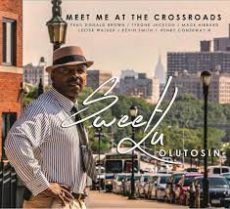
Review: Sweet Lu Olutosin ~ Meet Me At The Crossroads
Meet Me At The Crossroads immediately conjured up the myth of Robert Johnson, who stood at that famed intersection awaiting the sale of his soul to the devil. However, experience has taught me not to merely accept the obvious and with Lutalo Olutosin this is far from that legendary tale. Upon listening, the avid jazz devotee will quickly recognize the appropriateness of the title. What is gifted here is more of a convergence than a meeting. This is not a random gathering of songs but a carefully considered compendium. If there is any convention connected to this body of work, it is that this project has touched the soul of wisdom and versatility.
History meets style that goes well beyond this vocalist’s sense of fashion, though he continually pays homage to a time when musicians dressed to kill. The style of which I speak is his choice of compositions and the myriad of genres he presents as he travels through music’s evolution during the last century.
Affectionately known by his stage moniker Sweet Lu, he dives right in with the pacesetter Still Swingin’ that says it all for the tempo but leaves something to be desired in the story as he recognizes the past and reiterates that it ain’t over yet. He immediately switches gears and drops down to an outpouring of love that would melt any heart with a soulful rendition a la Eddie Levert on Love You More Than You Ever Know. I was immediately taken with a Roy Ayers like arrangement of How They Do That telling our stories of great determination and triumph over adversity.
Walking the wooden planks laid end to end across the backwater at the edge of the swamp, Lu’s vocal version of Intimacy of the Blues takes us to a juke joint envisioned in an atmosphere of an Ernie Barnes painting or Harpo’s Place as he belts out Sister Sadie’s Blues and how she turns a head and a heart. It is evident Sadie has been around a few joints in her life and one can imagine the crowd bumping and grinding through a hot and sticky night and singing and hand-clapping to a fervor pitch in church. Skin Game eradicates the lines of color and evens the playing field for humanity’s acceptance of each other. One unlucky traveler is set on the straight and narrow because Granny said it and nobody’s word is more trusting than hers.
Dancea Swing A Nova moves easily through a dream world of a dancer who woos a young man and teaches him about life with a bossa rhythm. Lu bravely embraces the classic Lou Rawl’s tune You’ll Never Find and intuitively arranges it to make it his own, adding a little more jazz to this rhythm and blues mix. Tunji Baby is a mid-tempo groove that hurts so bad with the pain of desire but everything about her is tantalizingly sexy and exquisitely distressful but he refuses to give it up. Where I come from we call that love and happy to be in it.
If one is responsible for his craft then he must delve into the classics and for this outing Sweet Lu respectfully delves into the catalogue of tenor great Joe Henderson and retrieves Recorda Me, pens lyrics, sings and scats his way across the charts of Don’t Forget To Remember. This is just one of the six songs he composed and or penned lyrics for on this project, adding the talents of Kevin Mahogany, Al Kooper, Antonio Ciacca, along with the venerable Kenny Gamble and Leon Huff. And for those listeners who enjoy singing, he reprises two sing along tracks of Skin Game and How They Do That.
Let us not be bereft of our responsibility to acknowledge his powerhouse assemblage of musicians that reflects Atlanta’s finest with pianist Tyrone Jackson and Marty Kearns, trumpeter Lester Walker, saxophonist Mace Hibbard, bassist Kevin Smith, drummer Henry Conerway III, and legendary jazz pianist Donald Brown. Adding a little spice to the mix is vocalist Crystal Mone’t who we hear in all her splendor on How They Do That, Skin Game and You’ll Never Find. Not limiting his musicians to simply add their instrumental thoughts to the musical conversation, he collaborated with Tyrone, Antonio, Donald and also enlists the talents of Dwight Andrews to bring fresh arrangements to those borrowed songs and his original compositions.
To call Sweet Lu a griot is an understatement. He is a wise sage imparting age old lessons by deftly infusing our cultural history and family values utilizing a tapestry of blues, gospel and jazz that are pure entertainment from beginning to end. The messages are all too familiar but like that loving elder we all grew up with, he delivers them in different ways for a new generation. There is more here that meets the ear and the eye, so take a listen and your perspective on life may be altered.
carl anthony | notorious jazz | march 5, 2017
Give A Gift Of Jazz ~ Share
#preserving genius
More Posts: bandleader,composer,history,instrumental,jazz,music,vocal