


Daily Dose Of Jazz…
Alfredo Remus was born in Buenos Aires, Argentina on November 9, 1938. In 1964 he participated as the double bassist on the historic album La Misa Criolla by Ariel Ramírez.
He has accompanied important musicians and groups such as Paul Gonsalves, Vinícius de Moraes, Maria Bethânia, Enrique “Mono” Villegas, Gato Barbieri, Mercedes Sosa, Tony Bennett, Ariel Ramírez, Víctor Heredia, Alberto Cortez, Trio Los Panchos, Raphael, Zupay Quartet, Dyango, Leonardo Favio, Sandro, Susana Rinaldi, and Antonio Carlos Jobim , among others.
He was a regular participant in a series of informal folklore improvisation and experimentation meetings at Eduardo Lagos’s house, humorously baptized by Hugo Díaz as folkloréishons, which in the style of jazz jam sessions, used to bring together Lagos, Astor Piazzolla and Díaz.
With other musicians, Remus played with Oscar Cardozo Ocampo, Domingo Cura and Oscar López Ruiz among others. He recorded nine albums as a leader with his debut album Trauma released in 1968 and his final recording Tribute To Bill Evans in 2006.
Double bassist Alfredo Remus, who performed various genres of American popular music, that included but not limited to tango, jazz, Argentine folklore, bossa nova and post-bop, died in Buenos Aires on September 28, 2022.

More Posts: bandleader,bass,history,instrumental,jazz,music
The Jazz Voyager
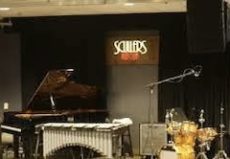
The coast to coast flight has the Jazz Voyager sleeping on the red eye heading east for a taste of jazz in the town where the tea party took place, Beantown as some call it or Boston, Massachusetts. The venue is Scullers Jazz Club and it has a small stage where jazz and soul legends as well as new talent perform in this intimate supper club with a background of river views.
This week I’ll be in the company of pianist, composer and arranger Jon Cowherd who is best known as the co-founder and co-director of Brian Blade and the Fellowship Band. He has worked extensively as an arranger, producer, songwriter and accompanist with a vast range of artists, such as Cassandra Wilson, John Scofield and Lizz Wright to Joni Mitchell, Brandi Carlile, Rosanne Cash, Norah Jones, Glen Hansard and more.
Scullers Jazz Club is located at 400 Soldiers Field Road 02134. For more information visit https://scullersjazz.com.
More Posts: adventure,bass,club,genius,guitar,jazz,music,piano,preserving,saxophone,travel
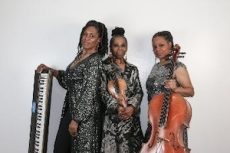
FIERY STRING SISTAS
At the core of Firey String Sistas are three powerhouse women, Nioka Workman (founder),Marlene Rice and Mala Waldron. Together they infuse world, global funk, ‘head bopping’ soul and Jazz music to produce a unique sound for violin, cello, bass, piano and percussion. The Firey String Sistas extend from 3 to 5 members, featuring cutting edge acoustic and electric musicians. The ‘Sistas’ presentations include tone portraits of the current times, reflections of women’s culture and a celebration of family traditions. The ensemble’s first recording received overwhelming critical acclaim with the press saying; “ ….there’s enough energy in Firey StringSistas to fire up a constellation….deeply personal, naturally expressive playing….whets the appetite for further releases.” – Raul da Gama (Jazz daGama ). “,….eight fun and swingingoriginals.
The team literally shows pluck…a treat” -George Harris (Jazz Weekly) “ ….. a charming and delectable work by .. supremely talented musicians. It is simultaneously accessible and sophisticated, poignant and erudite and, as such, should have a wide appeal. It certainly whets the appetite for more to come…..” -Hrayr Attarian (All About Jazz) . After the success of CD “That’s What She Said” , the Firey String Sistas have begun to record their sophomore CD with dedications to icons, Maxine Waters, Michelle Obama and Mal Waldon This CD also includes surprise features of renowned Jazz artists sprinkled in. Firey String Sistas are recipients of the South Arts Jazz Tours 2023 for performances at Outpost Performing Center, Albuquerque and SITE Museum, Santa Fe Jazz Collective in New Mexico.
Tickets: $35.00~$110.00
More Posts: adventure,bandleader,bass,cello,club,genius,instrumental,jazz,music,percussion,piano,preserving,travel
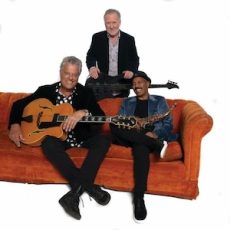
BRIAN BROMBERG, PAUL BROWN & MICHAEL PAULO
The Supergroup, formed by the first letters of their first names, as well as the term BPM stands for beats per minute, the definition of the tempo in music.
Collectively they are responsible for over 80 Billboard Smooth Jazz Number 1 Hits and many hundreds of thousands of record sales. Now together as BPM, they share their success with Grammy wins, nominations, and bring over 100 years of experience to the stage and to the music. BPM is the new fresh voice of Contemporary and Smooth Jazz!
Tickets: $40.00~$150.00
More Posts: adventure,bandleader,bass,club,genius,guitar,instrumental,jazz,music,preserving,saxophone,travel
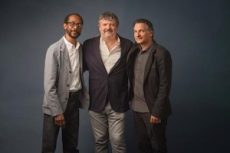
JON COWHERD
The pianist, composer and arranger is best known as the co-founder and co-director of Brian Blade and the Fellowship Band. He has worked extensively as an arranger, producer, songwriter and accompanist with a vast range of artists, such as Cassandra Wilson, John Scofield and Lizz Wright to Joni Mitchell, Brandi Carlile, Rosanne Cash, Norah Jones, Glen Hansard and more.
He is also a leader in his own right having released three acclaimed albums of his own. For this night, he performs in trio with an all-star rhythm section including drummer Brian Blade and bassist John Patitucci — the group from Cowherd’s most recent album Pride and Joy on Le Cowhich was named one of the year’s best by Downbeat critics, NPR.
The Band: Jon Cowherd, John Patitucci, Brian Blade
Tickets: $40.00~$145.00
More Posts: adventure,bandleader,bass,club,drums,genius,instrumental,jazz,music,piano,travel