


JOHN BROWN LITTLE BIG BAND FEATURING NNENA FREELON
Six-Time Grammy Award Nominee Nnenna Freelon is known worldwide as a compelling and captivating live performer. The John Brown Big Band is a professional large jazz ensemble made up of top musicians, specializing in performances of traditional compositions from the Great American Songbook and today’s cutting-edge arrangements. Together, these two forces will bring an unforgettable evening of music to the JPAC as they perform all your favorite Holiday favorites such as “Let it Snow, “Jingle Bells” and “Silent Night.” John Brown ~ Bass.
Doors Open: 6:45 PM
John Brown “Little” Big Band Featuring Special Guest Nnenna Freelon Holiday Show – Pre-Concert Hors d’oeuvres Reception** ~ $35.00 | 5:30
More Posts: adventure,album,bass,club,festival,genius,jazz,museum,music,preserving,restaurant,travel,vocal
The Jazz Voyager
Getting back on a plane once more and in an enclosed space I continue to mask up to protect myself because these variants are steadily morphing. People are still dying daily, maybe not at the rate of its height but nonetheless keep yourself safe.
This Jazz Voyager has decided to head up the East coast and make the sojourn to New England as his next stop. This is where a day earlier I will resume visualizing the autumn colors of this neck of the woods, as they say. I hope to get near some lake water to see the reflection which I’ve missed for many years. So my next stop is Old Lyme, Connecticut for a jazz encounter with bassist Matthew Parrish and saxophonist Houston Person at The Side Door. Located within the Old Lyme Inn at 85 Lyme Street 06371.
These two musicians, an elder master and a mature performer are perfectly matched to bring not only the romance but the heat as they most definitely swing together. This 68 seat venue brings an air of intimacy to every performance. For more information visit notoriousjazz.com/event or thesidedoorjazz.com. The club’s number is 860.434.2600.

More Posts: adventure,album,bass,club,festival,genius,jazz,museum,music,preserving,restaurant,saxophone,travel

Daily Dose Of Jazz…
Norman Dewey Keenan was born on November 23, 1916 in Union, South Carolina. He began playing piano before learning bass at age 15.
In the mid~1930s he worked with Tiny Bradshaw, Lucky Millinder, Henry Wells, Earl Bostic, and Cootie Williams into the Forties, and jammed at Minton’s Playhouse around the same time.
Following World War II he worked with Williams again and with Eddie Cleanhead Vinson in 1947-49. Then he became the bassist in the house trio at the Village Vanguard until 1957. After backing and recording three albums with Harry Belafonte from 1957 to 1962, Keenan worked on the TV show Hootenanny.
He began playing jazz again in the 1960s, recording with Miriam Makeba, Chad Mitchell, Count Basie from 1965-74, recording twenty-one albums with the orchestra, and Roy Eldridge in 1966. Double bassist Norman Keenan transitioned on February 12, 1980 in New York City.

More Posts: bass,history,instrumental,jazz,music
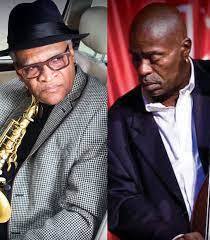
BOBBY WATSON & CURTIS LUNDY
Bobby Watson is a saxophonist, composer, and educator. Born in Lawrence, Kansas, United States, and grew up in Kansas City, Kansas. He attended the University of Miami at the same time as Pat Metheny, Jaco Pastorius, and Bruce Hornsby. He graduated in 1975, moved to New York City, and became music director for the Jazz Messengers from 1977 to 1981. After leaving the band, he was productive as a session musician, recording with Wynton Marsalis, Branford Marsalis, Max Roach, Joe Williams, Dianne Reeves, Lou Rawls, Betty Carter, and Carmen Lundy. He formed the band Bobby Watson & Horizon with bassist Curtis Lundy and drummer Victor Lewis, with whom he played throughout the 1980s and 1990s.
Curtis Lundy is a double bass player, composer, producer, choir director and arranger. Lundy is best known for his work as part of jazz vocalist Betty Carter’s band and is the brother to vocalist Carmen Lundy.
More Posts: adventure,album,bass,club,festival,genius,jazz,museum,music,preserving,restaurant,saxophone,travel
Daily Dose Of Jazz…
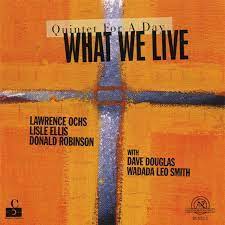
Lisle Ellis was born Lyle Steve Lansall on November 17, 1951 in Campbell River, British Columbia. and began playing electric bass in his teens and worked professionally from an early age in numerous environments including studios, radio & TV shows, and strip clubs. He studied at the Vancouver Academy of Music with Walter Robertson and attended Douglas College in Vancouver, Canada. He later studied at the Creative Music Studio in New York City from 1975-1979.
He moved to Toronto, Ontario, Canada where he resided from 1982 until 1983 and then went to Montreal, Quebec, Canada for nearly a decade until 1992. Lisle became the inaugural recipient of Canada’s Fred Stone Award in 1986, given annually to a musician for integrity and innovation. The Eighties saw him as a conspicuous activator of musician alliance organizations, performance venues, and concert series presentations in Vancouver and Montreal. One collective in particular, Vancouver’s New Orchestra Workshop, is still active nearly thirty years later.
After moving to the United States in 1992, he settled in San Francisco, California where he worked with Glenn Spearman for nine years. In 1994, he was a member of the Cecil Taylor band for a brief tour of California. He lived in San Diego, California from 2001–2005 and then crossed the country to New York City where he presently lives.
Since the late 1990s, he primarily focused on developing an electro-acoustic interface he calls “bass & circuitry”. By 2008 he turned his attention back to acoustic music projects with an emphasis on jazz based improvisation and to finding a balance between his electronic and acoustic music interests. Bassist and composer Lisle Ellis, who professionally has used both L. S. Ellis and L. S. Lansall-Ellis, and is known for his improvisational style and use of electronics, continues to explore the realm of jazz.
More Posts: bandleader,bass,history,instrumental,jazz,music