

Requisites
Smokin’ In Seattle: Live at The Penthouse ~ Wynton Kelly Trio and Wes Montgomery | By Eddie Carter
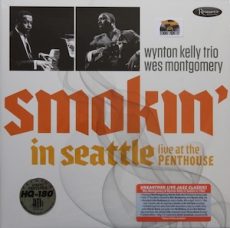
I’ve been a fan of The Wynton Kelly Trio and Wes Montgomery since I was eleven and first heard Full House and Smokin’ at The Half Note. So, I was extremely happy to pick up a copy of Smokin’ In Seattle-Live at The Penthouse (Resonance Records HLP-9029), their 1966 live date over two nights from the Seattle, Washington jazz club. Jim Wilke of radio station KING-FM hosted a weekly half-hour program from The Penthouse, and he’s our Master of Ceremonies for the two sessions. The personnel for both dates are Wynton Kelly on piano, Wes Montgomery (tracks: A3 to A5, B3 to B5) on guitar, Ron McClure on bass, and Jimmy Cobb on drums. My copy is the 2017 US Mono audiophile release.
Jim Wilke kicks off Side One by welcoming the crowd and introducing the trio who opens with There Is No Greater Love by Isham Jones and Marty Symes. The group swings effortlessly through the melody, setting up Wynton’s spirited first solo. Ron comes in next for a lively presentation. Wynton and Jimmy share a brisk conversation in the closing statement leading to the song’s climax. Not a Tear by Rudy Stevenson begins deceptively like a ballad before the beat moves upward to an aggressive theme. Kelly has the song’s only solo and stretches out in a marvelous interpretation preceding the theme’s restatement.
Wes Montgomery joins the group on his original tune, Jingles. The quartet takes off on an upbeat theme. Wes goes right to work on an enthusiastic interpretation that bounces along into the foursome’s energetic finale. Up next is the poignantly beautiful standard by Bob Haggart and Johnny Burke, What’s New? The group also gives a pretty rendition of this tune on Smokin’ at The Half Note. Kelly begins with a politely touching introduction, segueing into the song’s gorgeous melody. Montgomery delivers a very personal performance in the song’s only solo ahead of the foursome’s gentle ending.
The first side ends on an upbeat note with the guitarist’s Blues In F. The group lays an impressive blueprint on the opening chorus. Wes has the solo spotlight to himself and delivers an exciting flow of ideas that sadly fade out due to the program’s time constraints. Mr. Wilke starts Side Two with his introduction to The Wynton Kelly Trio, who play The Theme, briefly starting their first number, Sir John, by Blue Mitchell. After the trio states the melody, Kelly gets his teeth into a brilliant opening statement. McClure lets his bass do the talking in the following solo before the pianist makes a few final comments, leading to the theme’s reprise.
If You Could See Me Now by Tadd Dameron and Carl Sigman is also on Smokin’ at The Half Note. The trio works together beautifully from the start of Wynton’s lush introduction. As the song’s only soloist, Kelly reveals the warmth and tenderness anchored by Ron’s and Jimmy’s support. West Coast Blues is a Montgomery original from Movin’ Wes. It comes to life with the guitarist’s introduction, segueing into the foursome’s easygoing theme. The song’s only solo belongs to Wes, and he delivers the goods to an infectious beat that is sure to have the listener tapping their feet ahead of the close.
O Morro Não Tem Vez by Antonio Carlos Jobim and Vinícius De Moraes is a beautiful Brazilian song and a highlight of the album Goin’ Out of My Head. Jimmy gets things going with a percussion introduction that blossoms into a lovely melody. Wes gets to stretch out and delivers a gorgeous performance preceding the foursome’s return for the theme’s restatement and climax. The album and set concludes with Oleo by Sonny Rollins. The ensemble starts things off with a zesty melody, then steps aside for Wes to take charge of the song’s only statement that concludes with a slow dissolve into nothingness.
Zev Feldman and George Klabin produced Smokin’ In Seattle. Jim Wilke was the original recording engineer, and Bernie Grundman mastered the album. The record was pressed on 180 grams of audiophile vinyl, and the album’s sound quality is quite good for a sixties live recording. The listener is transported to the club audience as the musicians are performing. The record is also incredibly quiet until Jim Wilke speaks. If you’re a fan of The Wynton Kelly Trio and Wes Montgomery, I offer, for your consideration, Smokin’ In Seattle the next time you’re out record-shopping. The music is simply amazing, and this is an album you shouldn’t miss for a spot in your library!
~ Full House (Riverside RLP 434/RS 9434), Goin’ Out of My Head (Verve Records V-8642/V6-8642), Movin’ Wes (Verve Records V-8610/V6-8610), Smokin’ at The Half Note (Verve Records V-8633/V6-8633) – Source: Discogs.com ~ If You Could See Me Now, Oleo, There Is No Greater Love, What’s New? – Source: JazzStandards.com
© 2023 by Edward Thomas Carter
More Posts: choice,classic,collectible,collector,history,instrumental,jazz,music,piano
Requisites
Amsterdam After Dark ~ George Coleman | By Eddie Carter
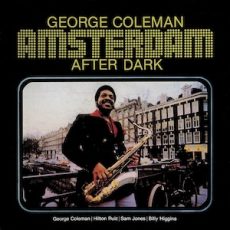
George Coleman enters this morning’s spotlight with an excellent 1979 quartet album, Amsterdam After Dark (Timeless SJP 129). I first heard him playing alto on Houseparty and The Sermon. I later discovered he also played tenor and enjoyed his work on Eastern Rebellion, ‘Four’ and More, Maiden Voyage, Miles Davis In Europe, My Funny Valentine and Seven Steps To Heaven. This morning’s album from the library was his debut as a leader, and he composed four of the tunes. He’s joined on this date by The Hilton Ruiz Trio. Hilton Ruiz on piano and Eastern Rebellion colleagues Sam Jones on bass and Billy Higgins on drums. My copy is the original Netherlands Stereo release.
Side One opens with the trio’s introduction to the title tune, Amsterdam After Dark. George takes over and starts the fire burning on the song’s infectious melody and opening solo. Hilton sinks his teeth into the second reading, and then Sam speaks confidently, preceding the tenor’s joyful vitality in the closing chorus. Hilton Ruiz’s New Arrival picks up the quartet’s pace in an engaging opening chorus. Coleman takes flight first and builds a perfectly crafted interpretation effectively. Ruiz comes on next and is shown to great advantage in the closing statement ahead of the theme’s reprise and fadeout.
Lo-Joe is a feisty original that opens with an airy statement of the theme. George gets things going with a passionate first solo, followed by Hilton, who suggests a happy mood in the second statement. Billy’s brushwork in the closing statement swings very nicely into the foursome’s ending theme and exit. Autumn In New York by Vernon Duke is the album’s only standard. The quartet dresses up this old favorite with an intimately tender introduction and melody. Coleman’s opening statement is reflective and quite beautiful. Ruiz takes a moment for an elegantly exquisite comment leading to the leader’s delicately pretty ending.
Apache Dance is an impressive tune from the opening notes of the two-instrument conversation with tenor sax and drums, leading to a quick run of the ensemble’s theme. George unravels a lot of twists and turns in the first solo. Hilton comes right behind him, keeping his foot on the gas. Billy delivers the song’s final solo until the group reappears to take it out. Blondie’s Waltz begins with the quartet establishing an optimistic melody. Coleman starts things off with a beautifully phrased statement. Ruiz jumps in next to move things along in a lively interpretation. Higgins adds to the fun with a short spot until Coleman’s reappearance for the finale.
Wim Wigt produced Amsterdam After Dark. Bob De Caro and Jim McCurdy were the recording engineers. The album has an exceptional soundstage that comes through your speakers convincingly. If you close your eyes, it’s like the musicians are playing right in front of you. George Coleman is on fire throughout each selection, and the trio compliments him efficiently. At 88 years old, he’s showing no signs of slowing down and is still performing for jazz fans. I’ve caught a few of his performances at Smalls via their nightly streams. If you only have albums with George Coleman as a sideman, I invite you to take a trip to visit Amsterdam After Dark. It’s worth every penny for a spot in your library and is an excellent trip you can take without leaving the comfort of your chair!
~ Eastern Rebellion (Timeless SJP 101), ‘Four’ and More (Columbia CL 2453/CS 9253), Houseparty (Blue Note BLP 4002/BST 84002), Maiden Voyage (Blue Note BLP 4195/BST 84195), Miles Davis In Europe (Columbia CL 2183/CS 8983), My Funny Valentine (Columbia CL 2306/CS 9106), Seven Steps To Heaven (Columbia CL 2051/CS 8851), The Sermon (Blue Note BLP 4011/BST 84011) – Source: Discogs.com ~ Autumn In New York – Source: JazzStandards.com © 2023 by Edward Thomas Carter
More Posts: choice,classic,collectible,collector,history,instrumental,jazz,music,saxophone
Requisites
Blowin’ The Blues Away ~ The Horace Silver Quintet and Trio | By Eddie Carter
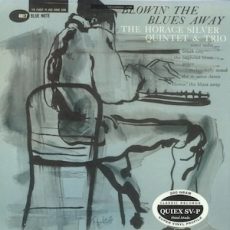
It’s always a pleasure listening to Horace Silver, and one of my favorite albums by the arranger, composer, and pianist became the inspiration for this morning’s discussion. Blowin’ The Blues Away (Blue Note BLP 4017/BST 84017) by The Horace Silver Quintet and Trio is Horace’s ninth album as a leader and one of the best in his extensive discography. He composed all the selections, and his supporting cast on this date are Blue Mitchell on trumpet (tracks: A1, A3, A4, B1, B2), Junior Cook on tenor sax (A1, A3, A4, B1, B2), Eugene Taylor on bass, and Louis Hayes on drums. My copy is the 2008 Classic Records U.S. deep groove Mono audiophile reissue sharing the original catalog number.
Side One is off to the races with the title tune, Blowin’ The Blues Away. The quintet is firing on all cylinders from the start of their lively theme. Junior takes the first solo in high gear. Blue keeps the velocity up in the following reading, and then Horace delivers an exhilarating statement. Both horns add the exclamation point in a vigorous exchange, leading to the ensemble’s closing chorus and quick stop. The trio makes the first of two appearances in The St. Vitus Dance and establishes a happy beat in the melody. Horace radiates an infectious enthusiasm as the song’s only soloist into the reprise and exit.
The quintet takes a quick trip to Break City next, beginning with their swift melody. Junior gets the solos underway with a speedy interpretation. Blue accelerates with riveting urgency in the second statement. Horace rips through the third reading, and Hayes travels toward the song’s brisk conclusion in a conversation with the front line. Peace is a very pretty ballad that opens with the ensemble’s soft, sultry melody. Blue begins with a beautifully tasteful lead statement. Horace completes the solos with a tenderly passionate performance ahead of the group’s gentle theme restatement and climax.
Side Two starts with the ensemble taking us to church to meet Sister Sadie, starting with an infectious theme. Blue gets into a funky groove on the lead solo, followed by Junior, who wails with authority next. Horace captures the song’s pure goodness in the third statement, and the front line’s final sermon leads us out of the church into the closing chorus. Baghdad Blues begins with a Middle Eastern flavor in the introduction before the quintet changes gears for the bluesy melody. Junior has the first say and gives a marvelous interpretation. Blue shares a few thoughts of his own in the second solo, and Horace feels right at home, leading to the reprise and exit.
Melancholy Mood is the album’s second trio number and was first heard on Further Explorations by The Horace Silver Quintet. Like its predecessor, this rendition expresses the pianist’s softer emotions in the gentle melody. Horace gives a poignantly beautiful performance enhanced by the rhythm section’s tender accompaniment ahead of the close. Alfred Lion produced Blowin’ The Blues Away, and Rudy Van Gelder was the recording engineer. Bernie Grundman remastered the Classic Records audiophile reissue, and the record was pressed on 200 grams of Quiex SV-P Handmade Super Vinyl.
The reissue’s sound quality is excellent, with a superb soundstage that brings the musicians to your listening room with stunning definition. Horace Silver spent twenty-five years at Blue Note from 1955 to 1980, and some of his greatest work appears on the label. If you’re a fan of Mr. Silver or are just discovering his music, I offer for your consideration Blowin’ The Blues Away by The Horace Silver Quintet and Trio. It’s a wonderful hard bop album you can enjoy anytime that gets better with repeated listening. I am happy to have it in my library, and I highly recommend it for yours!
~ Further Explorations by The Horace Silver Quintet (Blue Note BLP 1589/BST 81589) – Source: Discogs.com © 2023 by Edward Thomas Carter
More Posts: choice,classic,collectible,collector,history,instrumental,jazz,music,piano

Requisites
Joanne Grauer Trio ~ Joanne Grauer | By Eddie Carter
I love piano trios, and I was listening to a little-known title after dinner a few nights ago, which became the inspiration for this morning’s column. Joanne Grauer Trio (Mode Records MOD-LP-113) marks the debut of a young pianist named Joanne Grauer, whose musical education began at age five. Her brother and dad were professional musicians, and she started classical training at age twelve. Her musical education took a turn towards jazz while studying with Sam Saxe, a West Coast piano instructor who broadened her knowledge of the challenging dynamics of jazz piano. Listening to Hampton Hawes, Horace Silver, and Johnny Williams further moved her toward a career as a jazz pianist.
On her first date, she is joined by Buddy Clark on bass and Mel Lewis on drums. My copy is the 1988 US Mono reissue on VSOP Records (VSOP #58). The opener is an original by Joanne titled Mood for Mode. The trio introduces the song at a relaxing tempo that continues through the melody and is sure to get the listener’s toes tapping. Joanne is up first and swings so easily, while Buddy and Mel’s exemplary support follows her like a shadow. Buddy has the next solo and makes his point by generating a good feeling. Joanne returns for a few concluding thoughts before the theme’s return dissolves slowly into nothingness.
The pace picks up for Richard Rodgers and Lorenz Hart’s, Have You Met Miss Jones? The trio begins with a lively introduction and melody, leading to Joanne’s vivaciously spirited opening statement. Buddy and Mel engage in a short, joyous conversation until the threesome’s closing chorus takes the song out. Invitation by Bronislaw Kaper and Paul Francis Webster is given a regal treatment by Joanne, who performs the song alone. She brings out the jazz standard’s sensitivity and delicacy in a beautifully romantic rendition that is sure to linger in the listener’s mind and heart long after it is over.
The first side finale, Happy Is the Sheepherder by Marv Belew, is full of good spirits from the start of the ensemble’s cheerfully sunny melody. Joanne takes the reins and gives an optimistic, upbeat interpretation ahead of the restatement of the theme, during which Buddy makes a brief comment before the ending. Side Two takes off at a fast clip with I’ll Remember April by Gene de Paul, Patricia Johnston, and Don Raye. The trio swings with authority in the brisk opening chorus. Joanne sets a jubilant mood in the opening solo, then shares a spirited exchange of ideas with Mel ahead of the trio’s reprise and fadeout.
Dancing Nitely by Bill Holman takes the trio’s foot off the accelerator with a soothing introduction that gets into a simpler groove on the melody. Joanne leads off with a carefree, light-hearted performance, followed by Buddy, who eases into the second statement. The leader has a few more things to say preceding the trio finishing it out. I’m Glad There Is You by Jimmy Dorsey, and Paul Madeira is a beautiful love song from the forties. Joanne brings the song to life with a gorgeous solo introduction segueing into the trio’s tender melody. As the song’s only soloist, she delivers an intimately delicate interpretation, with Buddy and Mel complimenting her every note into the peaceful ending.
The Song Is You by Jerome Kern and Oscar Hammerstein II ends the album on an upbeat note with the trio in perfect harmony on the energetic melody. Joanne takes flight in the song’s only solo with a vigorous performance that’s thrilling from start to finish into the reprise and climax. Red Clyde supervised The Joanne Grauer Trio, and Dayton Howe was the recording engineer. The album has a superb soundstage that transports the musicians to your listening room with stunning fidelity. Joanne Grauer’s next release wouldn’t hit stores until seventeen years later, and she has only a few titles in her discography.
But if what I heard on this album is an indication, I’ll certainly be on the lookout for those other releases. If you’re a fan of piano jazz as I am and are in the mood for an album to help you unwind after a long day or week. I invite you to check out The Joanne Grauer Trio on your next record shopping trip. It’s a delightful album that would make a terrific complement to your day or evening’s listening and become a welcome addition to your jazz library!
~ Joanne Grauer – Source: Album liner notes by Joe Quinn ~ I’m Glad There Is You, Have You Met Miss Jones, The Song Is You – Source: JazzStandards.com © 2023 by Edward Thomas Carter
More Posts: choice,classic,collectible,collector,history,instrumental,jazz,music,vocal
Requisites
Starting Time ~ Clifford Jordan | By Eddie Carter
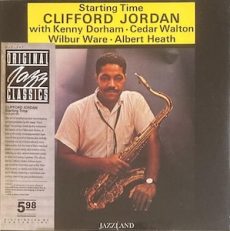
Clifford Jordan enters the spotlight to begin November with a wonderful 1961 quintet date called Starting Time (Jazzland JLP 52/JLP 52S). It was the tenor saxophonist’s seventh album as a leader and second on the label following A Story Tale. He was born in Chicago, Illinois, and early in his career, played with Max Roach and Sonny Stitt and was also a member of a few rhythm and blues groups. Clifford recorded three albums at Blue Note after moving to New York in 1957. Here, he is joined by Kenny Dorham on trumpet, Cedar Walton on piano, Wilbur Ware on bass, and Albert Heath on drums. My copy is the 1984 US Original Jazz Classics Stereo reissue (Jazzland OJC-147).
The opener, Sunrise in Mexico by Kenny Dorham, first appeared on the trumpeter’s album, Whistle Stop. The front line begins the introduction in unison, segueing into the quintet’s mid-tempo melody. Clifford is up first, and then Cedar has a satisfying statement. Wilbur and Albert share a brief comment before the group’s closing chorus fades out slowly. Extempore is a blues by Clifford Jordan that gets underway with the ensemble’s inviting theme. Jordan opens with a solo as smooth as velvet, and then Dorham glides through the second statement leisurely. Ware continues this bluesy trip in the following reading, and Walton speaks briefly ahead of the melody’s return and climax.
Down Through the Years is a very pretty ballad by the leader that the quintet begins with a delicately gentle melody. Clifford opens with a thoughtfully polite reading. Kenny takes a beautiful romantic interpretation next. Cedar closes with an elegantly serene performance preceding the ensemble’s tender reprise and conclusion. Quittin’ Time is the saxophonist’s lively way to end the first side with the group’s brisk theme. Jordan goes first with a spirited statement, and then Dorham keeps things rolling. Walton enters the next solo swiftly, and Heath swings comfortably in the closer, leading to the theme’s restatement and exit.
Side Two starts with One Flight Down, a funky blues by Cedar Walton that the quintet has some fun with. Cedar takes charge first with an infectiously laid-back solo. Kenny gets the next nod, and Jordan takes over for a short, satisfying statement leading to the closing chorus. Windmill by Kenny Dorham also comes from Whistle Stop and is a speedster from the quintet’s opening chorus. Dorham fires the first shot with an electrically charged interpretation. Jordan soars into an enthusiastic performance next, and then Walton shifts into high gear on the third reading. The leader has a vigorous exchange with Heath before the reprise and summation.
Don’t You Know I Care by Duke Ellington and Mack David is a quartet performance by Clifford and the rhythm section. The saxophonist is the featured soloist and begins with a warm tone on the melody and a beautifully phrased opening solo. Cedar shines briefly in a concise comment until Clifford reappears to take the song out tenderly. Mosaic by Cedar Walton became the title tune of an album by Art Blakey and The Jazz Messengers. The quintet begins with Dorham leading the way on the Eastern-flavored melody. Jordan takes the first statement, and then Dorham makes a profound impression next. Walton takes us into the ensemble’s reprise with a splendid solo.
Orrin Keepnews produced Starting Time, and Ray Fowler was the recording engineer. The sound quality of this OJC reissue is wonderful, with a soundstage that places the listener’s sweet spot in the studio as the musicians are playing. Clifford Jordan recorded thirty-six albums as a leader, and as a sideman, he appeared with some of the greatest musicians in jazz. For those fans of the tenor sax who enjoy a great hard-bop album, I invite you to check out Starting Time by Clifford Jordan on your next record-shopping trip. It’s a terrific record that I highly recommend as a welcome addition to any jazz library!
~ A Story Tale (Jazzland JLP 40/940S), Mosaic (Blue Note BLP 4090/BST 84090), Whistle Stop (Blue Note BLP 4063/BST 84063) – Source: Discogs.com © 2023 by Edward Thomas Carter
More Posts: choice,classic,collectible,collector,history,instrumental,jazz,music,saxophone