


Daily Dose Of Jazz…
Born in Boggs, Oklahoma on December 7, 1906, George James began his career late in the 1920s, in the bands of Charlie Creath and Johnny Neal. Moving to Chicago, Illinois in 1928, he played with Jimmie Noone, Sammy Stewart, Ida Marples, Jabbo Smith, and Bert Hall.
In 1931 on into 1932 he toured with Louis Armstrong, then remained in New York City at the end of the tour. He went on to join the Savoy Bearcats and, later, Charlie Turner’s Arcadians. Fats Waller assumed leadership of the Arcadians in the middle of the decade, and James played under him until 1937.
Finishing the Thirties decade playing in the Blackbirds Revue, in the early 1940s George worked with James P. Johnson, Benny Carter, Teddy Wilson, and Lucky Millinder. He led his own band in 1943-44 and later in the decade he played with Claude Hopkins and Noble Sissle.
He was active both as a leader and a sideman into the 1970s, playing with Clyde Bernhardt and the Harlem Blues and Jazz Band in that decade. Saxophonist, clarinetist, and flautist George James passed away on January 30, 1995 in Columbus, Ohio.

More Posts: bandleader,clarinet,history,instrumental,jazz,music,saxophone
Daily Dose Of Jazz…
Eugene Sufana Allen was born on December 5, 1928 in East Chicago, Indiana. He began playing clarinet and piano as a child, and was playing with Louis Prima at age 15 in 1944. He stayed in Prima’s band until 1947, then worked with Claude Thornhill for two years in 1949, and from 1951 to 1953 he played with Tex Beneke.
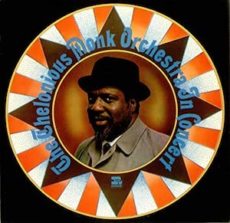
In 1953 he began playing with the Sauter-Finegan Orchestra, playing with them intermittently until 1961, and also worked with Tommy Dorsey, Benny Goodman, and Hal McKusick in the 1950s. Toward the end of the decade, and into the early 1960s, Gene worked with Gerry Mulligan, Manny Albam, Woody Herman, Thelonious Monk, and Bob Brookmeyer.
His later associations include work with Urbie Green, Mundell Lowe, Rod Levitt, and Rusty Dedrick. In the calendar year of 1963, Allen successfully played in and recorded with the big bands of Benny Goodman, Thelonious Monk, and Woody Herman.
Baritone saxophonist and bass clarinetist Gene Allen passed away on February 14, 2008.
More Posts: clarinet,history,instrumental,jazz,music,saxophone
Daily Dose Of Jazz…
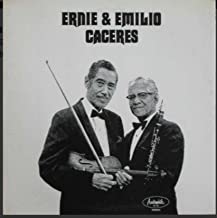
Ernesto Caceres was born on November 22, 1911 in Rockport, Texas and learned to play the clarinet, guitar, alto and baritone saxophone. He first played professionally in 1928 in local Texas ensembles. He and his brother Emilio moved to Detroit, Michigan before moving to New York City, taking work as session musicians. In 1937 they made live nationwide appearances on Benny Goodman’s popular radio series Camel Caravan which created a sensation and made them jazz stars.
In 1938 Ernesto became a member of Bobby Hackett’s band, then worked as a sideman with Jack Teagarden and Glenn Miller’s orchestra from 1940 to 1942. While with Miller, he made an appearance in the films Sun Valley Serenade and Orchestra Wives. Time with Benny Goodman, Woody Herman, and Tommy Dorsey followed later in the 1940s. In 1949 he put together his own quartet, playing at the Hickory Log in New York. He was a frequent performer with the Garry Moore Orchestra on television.
At the beginning of the 1960s he played with the Billy Butterfield Band. In 1964 he moved back to Texas and played in a band with brother Emilio from 1968 until his death. He spent some time in 1965 and 1966 at Mint Hotel in Las Vegas, Nevada and at the Holiday Hotel in Reno, Nevada with the Johnny Long Band. Saxophonist, clarinetist and guitarist Ernesto Caceres passed away from cancer on January 10, 1971.
More Posts: bandleader,clarinet,guitar,history,instrumental,jazz,music,saxophone
Three Wishes
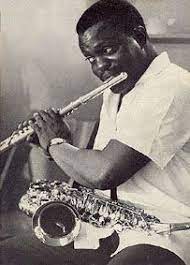
Pannonica inquired of Leo Wright, if given three, what would he wish for and he answered her by saying:
- “I wish that people would be more individualistic.”
- “The problem in my profession, that the supply is greater than the demand… I wish that that wasn’t so.”
- “I wish the public in general would realize the importance of jazz.”
*Excerpt from Three Wishes: An Intimate Look at Jazz Greats ~ Compiled and Photographed by Pannonica de Koenigswarter

More Posts: baroness,clarinet,flute,history,instrumental,jazz,music,pannonica,saxophone,three,wishes
Daily Dose Of Jazz…
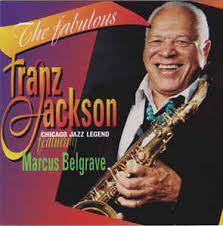
Born in Rock Island, Illinois on November 1, 1912 Franz Jackson got his first lessons on saxophone from Jerome Don Pasquall and later studied at the Chicago Musical College.
Early in his career, Jackson played with Albert Ammons’s band and for much of the 1930s he was based in Chicago, Illinois. He toured with Fletcher Henderson in 1938, then played with Roy Eldridge’s band in New York City. In 1940 he toured with Fats Waller and then went to work with Earl Hines.
Following small band work back in New York City, Franz joined Cootie Williams’s big band, played in Boston, Massachusetts with Frankie Newton, toured with Eldridge, and worked with Wilbur De Paris at Jimmy Ryan’s in the city.
Jackson formed his own band in Chicago in 1957, the Original Jass All Stars and with this group he made overseas tours, including playing in Vietnam. Moving to Dowagiac, Michigan in 1975, he formed another band, the Jazz Entertainers, in 1980.
Saxophonist and clarinetist Franz Jackson, who played in the Chicago jazz school, passed away on May 6, 2008 in Niles, Michigan. The Franz Jackson Collection at the Chicago Jazz Archive contains his papers and oral history material.
More Posts: bandleader,clarinet,history,instrumental,jazz,music,saxophone