


On The Bookshelf
Jazz and Justice explores the rich, complex origins of jazz, the historical American art form born in the late 19th century, most likely in the brothels of Storyville in New Orleans, Louisiana from the cultural traditions of the newly emancipated African Americans. Rooted in the blues, a genre that gave voice to the pain, endurance, and aspirations of the oppressed Black communities under Jim Crow. Jazz emerged from the discarded instruments of post–Civil War military bands and quickly evolved into a profound cultural force.
In this revelatory work, historian and professor Gerald Horne examines the social, economic, and political dynamics that shaped jazz into a singular Black American contribution to global arts and culture. He chronicles the struggles musicians faced in a deeply segregated and exploitative society, contending with organized crime, white supremacist groups like the Ku Klux Klan, and the pervasive racism of American society and the entertainment industry.
Horne gives overdue recognition to the groundbreaking contributions of women artists, such as pianist Mary Lou Williams and trombonist Melba Liston, while also highlighting the influence of musicians with Native American heritage. Jazz and Justice is both an incisive historical investigation and a tribute to the resilience of an art form that gave voice to generations.
Jazz & Justice: 2019 | Gerald Horne
Monthly Review Press

Requisites
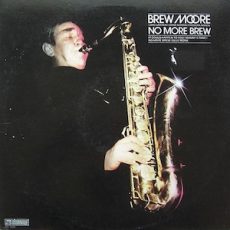
No More Brew ~ Brew Moore | By Eddie Carter
This morning’s album offered for your consideration is a live performance by Brew Moore. No More Brew (StoryvilleSLP-4019) was his final album, released eight years after his passing. Brew was born in Indianola, Mississippi and began playing the trombone at age twelve, later graduating to the clarinet and eventually the tenor saxophone. His professional journey took him from a Texas territorial band before attending college, to New Orleans, Memphis, and New York, to further his craft. He’s joined on stage by Lars Sjösten on piano, Sture Nordin on bass, and Fredrik Noren on drums. My copy is the 1981 U.S. Stereo release.
The set begins with Jimmy Van Heusen and Johnny Burke’s It Could Happen To You. Lars opens with a swinging introduction, setting up the quartet’s theme. Brew launches into a sizzling solo. Lars comes in energetically next. Sture illustrates he’s an effective soloist in a polished reading. Brew and Frednik exchange a brief dialogue, leading to the theme’s return and closure. Moore addresses the audience, then Sjösten’s introduction leads into the ensemble’s lively melody of Manny’s Tune by John Marabuto. Moore takes off first quickly. Sjösten responds with an impressive reading. Moore and Noren wrap things up with a concise conversation ahead of the closing chorus and abrupt finish.
Brew’s contribution to the set, No More Brew begins Side Two with the foursome’s joyful introduction and melody. Moore opens with energetically captivating phrases, then Lars’s vigorous reading flows through the rhythm section like ephemeral shadows. Brew and Fredrik fuel the finale with a concise comment preceding the theme’s return and a short announcement by Moore that concludes with Blue Monk by Thelonious Monk. The quartet begins with a soulful, blues-inspired melody that sets the stage for Moore to accelerate into an extended, captivating solo. Sjösten mines a rich vein of sentimentality next until the tempo slows again for the melody’s reprise and exit.
Rune Öfwerman produced the album, although it’s unknown who recorded it. However, the album’s sound quality is excellent, with a soundstage placing the listener in the club audience as the musicians are performing. Brew Moore, known for his irresistibly appealing tone that could either stir excitement or touch the heart, recorded twelve albums as a band leader and contributed to seven more as a sideman. Tragically, he passed away on August 19, 1973, at age forty-nine after a fatal fall down a flight of stairs. If you’re a fan of swing and bop and also enjoy the tenor sax, I highly recommend exploring No More Brew by Brew Moore on your next record store visit. This exceptional album showcases a talented young musician whose promising career was sadly cut short!
~ Blue Monk – Source: JazzStandards.com
~ It Could Happen To You – Source: Wikipedia.org
© 2025 by Edward Thomas Carter

More Posts: choice,classic,collectible,collector,history,instrumental,jazz,music,saxophone
On The Bookshelf
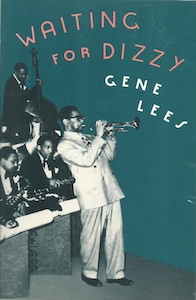
WAITING FOR DIZZY | GENE LEES
The story of jazz is a story of individuals–enormously gifted, dedicated, sometimes driven, yet often gentle people.
In this volume, Gene Lees, continues his richly entertaining and informative chronicle of the lives and times of jazz with a new collection of fourteen memorable essays drawn from his renowned Jazzletter. Waiting for Dizzy adds to the insights of his two previous collections, where the lyricist, essayist, and music historian draws on a lifetime of experience, and in many cases friendships in the jazz world to bring fresh insights to the lives and work of these magnificent artists, whether he is discussing why any guitarists have unsteady time or the complex role of race in jazz history.
The heart of Waiting for Dizzy is its exquisitely crafted character studies, warm pictures of the men and women who created and continue to create this music. Beginning in the era of its first great flowering, the 1920s, he weaves a story of discrimination against Black Americans to the tragic, determined, gifted guitarist Emily Remler who sought to break the sex barrier and her own drug habit, only to die all too young in a far-away place.
The stories continue through the final essay: a day spent in the recording studio with Dizzy Gillespie, surrounded by brilliant younger musicians who are his spiritual children, among them Art Farmer and Phil Woods. It is a lyrical, affectionate, and affecting portrait of one of the three or four most important figures–and the most loved– in jazz history.
Waiting For Dizzy: 1991 | Gene Lees
Oxford University Press
Requisites
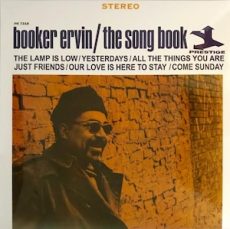
The Song Book ~ Booker Ervin | By Eddie Carter
In February 1964, tenor saxophonist Booker Ervin recorded an album of standards. The Song Book (Prestige PRLP7318/PRST 7318) is a quartet session featuring Tommy Flanagan on piano, Richard Davis on bass, and Alan Dawson on drums. My copy is the 2023 Analogue Productions stereo audiophile reissue matching the original catalog number. The album opener, The Lamp Is Low by Peter de Rose, Mitchell Parish, Maurice Ravel, and Bert Shefter, kicks off the quartet’s melody at a fast gallop. Booker wails with remarkable energy, then Tommy rips down the road next. Richard follows suit with a brisk walk, and Alan goes to work last, preceding the ending theme and fadeout.
The quartet brings a profound emotional depth to Duke Ellington’s Come Sunday. Tommy’s gentle introduction sets the mood for Ervin’s warm tone, tenderly embracing the theme. Flanagan shines as the song’s lone soloist, delivering sweet moments of beauty matched by the rhythm section’s serene accompaniment, leading up to the leader’s soft conclusion. All The Things You Are by Oscar Hammerstein II and Jerome Kern picks up the beat for the quartet’s lively melody. Booker goes right to work on the opening statement and is consistently inventive and entertaining. Tommy swings effortlessly into the spotlight next with a spirited solo before the theme’s restatement dissolves gradually.
Just Friends by John Klenner and Sam M. Lewis begins the second side on an upbeat note, with Flanagan’s introduction leading to the quartet’s opening theme. Ervin blazes the trail with a commanding performance, then Flanagan delivers the song’s second message with authority. Davis completes the proceedings with a concise comment leading to a charming conclusion. Yesterdays by Otto Harbach and Jerome Kern opens with a tender piano introduction ahead of the saxophonist’s beautiful melody. Tommy takes the first turn with an emotionally rich, heartfelt interpretation, then Booker blends nostalgia and sentiment flawlessly until the theme’s gentle reprise and serene ending.
Our Love Is Here To Stay by George and Ira Gershwin picks up the pace one final time for the foursome’s lively melody. Ervin takes hold of the first spot swiftly, then Flanagan swings effortlessly into the following reading. Davis provides the exclamation point propelled by the rhythm section’s brisk supplement, ahead of the group’s upbeat exit.
Don Schlitten produced The Song Book, and Rudy Van Gelder was the recording engineer. Kevin Gray mastered the audiophile reissue, and the album’s sound quality is mesmerizing, placing the musicians in front of the sweet spot. The record was pressed on 180 grams of audiophile vinyl and is quiet as a church mouse until the music starts.
Booker and the rhythm section bring each track to life with genuine emotion, and approach each song with heartfelt affection, showcasing a profound admiration for the melodies of these cherished standards. If you’re a fan of hard bop and haven’t acquired an earlier pressing yet, please make a note to add The Song Book by Booker Ervin to your list on your next record hunt. This Analogue Productions reissue beautifully celebrates the timeless treasures of The Great American Songbook and undoubtedly deserves a place in every jazz fan’s library!
~ All The Things You Are, Come Sunday, Just Friends, Love Is Here To Stay – Source: JazzStandards.com
~ The Lamp Is Low, Yesterdays – Source: Wikipedia.org
© 2025 by Edward Thomas Carter
More Posts: choice,classic,collectible,collector,history,instrumental,jazz,music,saxophone

Jazz Poems
POEM IN WHICH I MAKE THE MISTAKE
OF COMPARING BILLIE HOLIDAY TO A
COSMIC WASHERWOMAN
We were driving back from the record store at the mall
when Terrance told me that Billie Holiday
was not a symbol for the black soul.
He said, The night is not African American either for
your information,
it is just goddamn dark,
and in the background
she was singing a song I never heard before
moving her voice like water moving
along the shore of a lake
reaching gently into the crevices, touching the pebbles
and sand.
Once through the dirty window of a train
on the outskirts of Hoboken, New Jersey,
I swear I saw a sonnet written high up in a
concrete wall,
rhymed quatrains rising from the
dyslexic alphabet of gang signs and obscenities
and Terrance said he saw a fresco
of brown and white angels flying
on a boarded-up building in Chinatown
and everybody knows
there’s a teenager genius somewhere out there,
a firebrand out of Ghana by way of Alabama,
this very minute in a warehouse loft,
rewriting Moby-Dick-The Story of the Great
Black Whale
When he burst out of the womb
of his American youth
with his dictionary and his hip-hop shovel,
when he takes his place on stage
dripping the amniotic fluid of history,
he won’t be any color we ever saw before,
and I know he’s right, Terrance is right, it’s
so obvious
But here in the past of that future,
Billie Holiday is still singing
a song so dark and slow
it seems bigger than her, it sounds very heavy
like a terrible stain soaked into the sheets,
so deep that nothing will ever get it out,
but she keeps trying,
she keeps pushing the dark syllables under the water
then pulling them up to see if they are clean
but they never are
and it makes her sad
and we are too
and it’s dark around the car and inside also is very
dark
Terrance and I can barely see each other
in the dashboard glow.
I can only imagine him right now
pointing at the radio
as if to say, Shut up and listen.
TONY HOAGLAND | 1953~2018
from Jazz Poems ~ Selected and Edited by Kevin Young
More Posts: book,classic,collectible,history,jazz,library,poet