

Jazz Poems
THE SYNCOPATED CAKEWALK
My present life is a Sunday morning cartoonIn it, I see Miss Hand and her Five Daughters
rubbing myback and the backs of my legs
Nat King Cole provides the music and the words
It’s 1949, Finished with them, I take off
on a river boat, down the Mississippi, looking for work.
On deck the got the Original Dixieland Jazz Band
doing “Big Butter and Egg Man.”
A guru haas the cabin next to mine and everybody
who visits him whimpers something terrible!
Stood on deck after dinner watching the clouds
form faces and arms. The Shadow went
by giggling to himself.
An Illinois Central ticket fell from his pocket.
Snake Hips picked it up, ran.
Texas Shuffle, who sat in with the Band last night,
this morning, dropped his fiddlecases
in the ocean and did the Lindy all the way
to the dinning room
I got off at Freak Lips Harbor.
Boy from Springfield said he’d talk like Satch for me
for a dime. I gave him a Bird,
and an introductory note to the Duke of Ellington.
Found my way to the Ida B. Wells Youth Center.
Girl named Ella said I’d have to wait to see Mister B.
Everybody else was out to lunch.
In the waiting room got into a conversation
with a horse thief from Jump Back. Told him:
My past life is a Saturday morning cartoon.
In it, I’m jumping Rock Island freight cars, skipping
Peoria with Leadbelly; running from the man,
trying to prove my innocence. Accused of being
too complex to handle.
Meanwhile, Zoot, Sassy, Getz, Prez, Cootie, everybody
gives me a hand.
Finally, Mister B comes in. Asks about my future.
All I can say is, I can do the Cow Cow Boogie
on the ocean and hold my own in a chase chorus
among the best!Fine, says Mister B, you start seven in the morning!
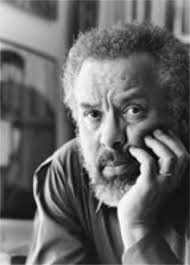
CLARENCE MAJOR
from Jazz Poems ~ Selected and Edited by Kevin Young

More Posts: book,classic,collectible,history,jazz,library,poet
Requisites
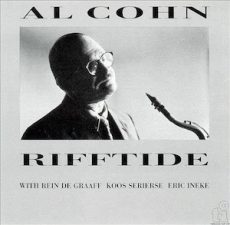
Rifftide ~ Al Cohn | By Eddie Carter
Submitted for your approval this morning is an excellent album by Al Cohn. Rifftide (Timeless Records SJP 259) was recorded during the tenor saxophonist’s 1986 European tour. He’s joined on this date by three Danish musicians: Rein De Graaff on piano, Koos Serierse on bass, and Eric Ineke on drums. My copy is the 1987 Netherlands Stereo release. Side One opens with a popular song by Kurt Weill and Ogden Nash, Speak Low. The trio takes off with a lively introduction leading to the quartet’s theme. Al gets everybody in the mood with a spirited opening statement. Rein swings into action next with an energetic reading. Eric has a vigorous conversation with the saxophonist ahead of the theme’s restatement and fadeout.
Blue Monk by Thelonious Monk is a slow blues that was the pianist’s favorite and one of his most recorded songs, a testament to its enduring appeal. The foursome begins the melody gently, leading to Cohn’s gorgeous interpretation. De Graaff is equally graceful on the following solo, and then Serierse shows his tender side in a pretty presentation preceding the reprise and finale. The tempo for the quartet’s quick melody moves upward to begin the 1945 jazz standard, Hot House by Tadd Dameron. Al takes the lead and crafts an exciting solo. Rein meets the challenge with a fiery passion in the following interpretation. Al reappears for the closing chorus and leads the group to the finish line.
The Thing by Al Cooper starts the second side with the foursome’s medium melody. Cohn cruises comfortably into the opening interpretation. De Graaff follows with a silky smooth statement, and then Serierse provides the exclamation point until the closing chorus. We’ll Be Together Again by Carl T. Fischer, and Frankie Laine is a beautiful ballad from the forties, and the group begins with a gentle melody. The saxophonist opens his first of two solos with an intimate story. Rein caresses each note of the following solo with tranquil tenderness. Al returns for his second reading, complemented by the rhythm section’s hauntingly beautiful support before the song’s summation.
The album ends with the title tune Rifftide by Coleman Hawkins. It’s a pretty tune that the quartet opens at a slow tempo for the melody. Cohn’s opening solo is particularly stirring; De Graaff has the next spot and draws the listener into the second statement. Serierse has a short reflective moment closer, leading to the theme restatement and climax. Al’s career, which lasted nearly five decades, was marked by numerous achievements. He recorded thirty-five albums as a leader, including fourteen years co-leading a quintet with Zoot Sims. He was also a successful arranger for several big bands and worked on Broadway. Al Cohn passed away from liver cancer on February 15, 1988, at age sixty-two.
Wim Wigt produced Rifftide, and Max Bollerman, who owns and still operates Studio 44, was the man behind the dials of the recording. The album’s sound quality is stunning, with a stellar soundstage transporting the quartet to your listening room with crystal-clear fidelity. If you’re a fan of cool jazz and post-bop, I invite you to check out Rifftide by Al Cohn the next time you’re on a record-shopping trip. It’s a terrific album that’s sure to please even the most discriminating jazz fan, and I highly recommend it for a spot in your library!
~ Blue Monk, Speak Low, We’ll Be Together Again – Source: JazzStandards.com
~ Al Cohn – Source: Wikipedia.org
~ © 2024 by Edward Thomas Carter

More Posts: choice,classic,collectible,collector,history,instrumental,jazz,music,saxophone
Jazz Poems
FOR SIDNEY BECHET
That note you hold, narrowing and rising, shakes
Like New Orleans reflected on the water,
And in all ears appropriate falsehood wakes,
Building for some a legendary Quarter
Of balconies, flower-baskets and quadrilles,
Everyone making love and going shares–
Oh, play that thing! Mute glorious Storyvilles
Others may license, grouping round their chairs
Sporting-house girls like circus tigers (priced
Far above rubies) to pretend their fads,
While scholars manqués nod around unnoticed
Wrapped up in personnels like old plaids.
On me your voice falls as they say love should,
Like an enormous yes. My Crescent City
Is where your speech alone is understood,
And greeted as the natural noise of good,
Scattering long-haired grief and scored pity.
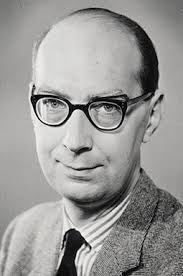
PHILIP LARKIN
from Jazz Poems ~ Selected and Edited by Kevin Young
More Posts: book,classic,collectible,history,jazz,library,poet
Requisites
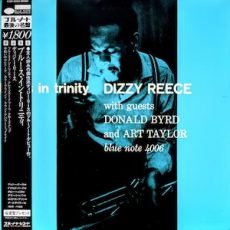
Blues In Trinity ~ Dizzy Reece | By Eddie Carter
Last night, I listened to one of my mom’s favorites, Blues In Trinity (Blue Note BLP 4006/BST 84006) by Dizzy Reece, which inspired this discussion. It was his second album as a leader and first for Alfred Lion’s label. Reece was born in Kingston, Jamaica, and began playing the baritone sax at eleven. He took up the trumpet at fourteen and later got the nickname Dizzy. At sixteen, he started playing professionally and worked with some of the best musicians in England, France, and the United States. Donald Byrd (tracks: A3, B1) and Dizzy Reece (A1 to B2) on trumpet, Tubby Hayes (A1, A3, B1 to B3) on tenor sax, Terry Shannon on piano, Lloyd Thompson on bass, and Art Taylor on drums are the musicians. My copy is the 1983 King Record Company Japanese Mono reissue (Blue Note BLP 4006 – K18P 9245).
The title tune and first of four originals by Dizzy Reece, Blues In Trinity, gets the first side off to a good start with the quintet’s medium theme. Dizzy jumps out front with a bright lead solo, then Tubby blows a set of wailing choruses. Terry takes charge next with a stunning short performance until the trumpeter and tenor saxophonist exchange riffs preceding the theme’s return. I Had The Craziest Dream by Harry Warren and Mack Gordon is a beautiful song from the 1942 film Springtime In The Rockies. Reece and the rhythm section reveal the song’s sensual beauty in an elegantly tender presentation. He also delivers a heartfelt solo as the only soloist.
Close-Up opens with a relaxing ensemble melody. Dizzy takes the lead, making each note look effortless. Tubby takes an exciting turn next, then Donald sinks his teeth into an aggressive statement. Terry follows with a solo of absolute joy. The front line takes the final flight in an exchange, leading to the sextet’s reprise and finale. Shepherd’s Serenade starts Side Two at a burning beat with the sextet’s rollicking theme. Reece launches into the opening statement with pure fire. Hayes continues with a shower of fiery notes from his tenor sax. Donald follows, blowing fierce heat in his second and final presentation, and then Art converses with the front line before the theme’s reprise and close.
Color Blind eases the throttle back to medium for the quintet’s finger-popping opening chorus. Dizzy goes right to work on the opening solo with plenty of feeling. Tubby takes the baton and builds the following interpretation effectively. Teddy maintains the mellow mood in the third performance, and the front line shares the finale in a short exchange before the theme’s restatement and climax. ‘Round About Midnight by Thelonious Monk, Cootie Williams and Bernie Hanighen ends the album as a feature for Tubby Hayes and the rhythm section. The saxophonist combines the elements of elegance, restraint, and tenderness in a gorgeous performance that culminates softly.
Tony Hall produced the initial session of Blues In Trinity, and Rudy Van Gelder is credited as the recording engineer. However, he only re-recorded the initial session. The sound quality of this King reissue is sensational, with a superb soundstage that emerges from your speakers as if the musicians are playing right in front of your listening chair. This album holds a special place in my heart, as it was a staple during our Sunday jazz dinners with my mom and sister when I was younger. If you’re a hard bop fan, I offer Blues In Trinity by Dizzy Reece for consideration on your next record-shopping trip. It’s an underrated, excellent album by one of the best musicians most may not know, and I highly recommend it for a spot in your library!
~ ‘Round About Midnight – Source: JazzStandards.com
~ I Had The Craziest Dream – Source: Wikipedia.org
© 2024 by Edward Thomas Carter
More Posts: choice,classic,collectible,collector,history,instrumental,jazz,music,trumpet
Jazz Poems
BLACK AND BLUE
(WHAT DID I DO TO BE SO BLACK AND BLUE)
VERSEOut in the street,
Shufflin’ feet,
Couples passin’ two by two,
While here am I,
Left high and dry, black, and ‘cause i’m black I’m blue.
Browns and yellers
All have fellers,
Gentlemen prefer them light.
Wish I could fade,
Can’t makee the grade,
Nothin’ but dark days in sight.
REFRAIN
Cold empty bed,
Springs hard as lead,
Pains in my head,
Feels like old Ned,
What did I do
To be so black and blue?
No joys for me,
No company,
Even the mouse
Ran from my house,
All my life through
I’ve been so black and blue.I’m white
Inside,
It don’t help my case
‘Cause I
Can’t hide
What is on my face,ooh!
I’m so forlorn,
Life’s just a thorn,
My heart is torn,
Why was I born?
What did I do
To be so black and blue?
REFRAIN
Just ‘cause you’re black,
Folks think you lack,
They laugh at you
And scornyou too,
What did I do
To be so black and blue?
When you are near,
They laugh and sneer,
Set you aside
And you’re denied,
What did I do
To be so black and blue?
How sad I am
Each day I feel worse,
My mark of Ham
Seems to be a curse, ooh!
How will it end?
Ain’t got a friend,
My only sin
Is in my skin,
What did I do
To be so black and blue?
ANDY RAZAF | 1895~1973
MUSIC BY THOMAS “FATS” WALLER
from Jazz Poems ~ Selected and Edited by Kevin Young
More Posts: book,classic,collectible,history,jazz,library,poet