

Requisites
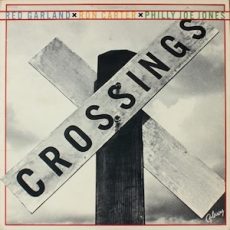
Crossings ~ Red Garland, Ron Carter and Philly Joe Jones | By Eddie Carter
It happened like this: after hearing Introducing Carl Perkins, I spent the remainder of the evening listening to several other trio albums while reading when I heard a title I hadn’t played in a while, which inspired this morning’s discussion. Crossings (Galaxy GXY-5106) is a 1978 release bringing together a dream team to record their first trio album. Red Garland is on piano, Ron Carter is on bass, and Philly Joe Jones is on drums. All three were members of the Miles Davis Quintet and have given jazz fans many incredible albums throughout their careers as leaders and sidemen. My copy is the original U.S. Stereo release.
Side One starts with a brief trio introduction, setting the stage for the melody of Solar by Chuck Wayne and Miles Davis. Red leads the way with a statement that sparkles with energy. Ron delivers precisely articulated choruses in the second solo. The pianist and Philly share the finale in an inspired interpretation, leading to the theme’s reprise. Railroad Crossing by Ron Carter is a smooth, easy-flowing tune. The bassist sets the tone with a concise introduction that seamlessly transitions to the trio’s melody. Carter begins with a leisurely opening statement; then, Garland gets into a down-home groove on the following solo ahead of the bassist’s return for the ending theme.
Never Let Me Go is a beautiful Jay Livingston and Ray Evans song. It was featured in the 1956 film noir The Scarlet Hour. Red opens with a short unaccompanied introduction that segues into the trio’s gorgeous theme. The pianist goes first with a delicately sultry performance, then hands the torch to Ron, who delivers a heart-warming presentation before the close. Oleo by Sonny Rollins gets underway with a short workout by Jones, leading to the ensemble’s quick theme. Garland ignites the fire in the first solo, and then Carter keeps the fires burning next. Jones adds more heat in the closer, preceding a captivating conclusion.
George and Ira Gershwin introduced But Not For Me in the 1930 Broadway musical Girl Crazy. The jazz standard starts Side Two with Ron leading the trio through the melody. The bassist masterfully manages the opening statement before making room for Red, who swings in the following reading. Ron returns to converse briefly with Philly ahead of the finish. Cole Porter’s classic Love For Sale begins with a lengthy solo piano introduction before the trio steps on the gas for the lively theme. Garland ignites the first solo with fiery choruses. Carter steps into the spotlight next and slows things down, and Garland returns for a vigorous exchange with Jones into the climax.
Orrin Keepnews produced Crossings, and Bruce Walford recorded and mixed the album at Fantasy Studios. David Turner mastered the album. The record’s sound quality possesses a vibrant soundstage, placing the musicians in your listening room with excellent fidelity. If you’re a fan of these jazz giants and enjoy a good piano trio album, I invite you to check out Crossings by Red Garland, Ron Carter, and Philly Joe Jones. The group’s musicianship shows three masters’ at work, and the six selections complement each other perfectly. The result is an album you can sit back, listen to and enjoy from the first note to the finale!
~ But Not For Me, Love For Sale, Oleo – Source: JazzStandards.com
~ Solar – Source: Wikipedia.org
© 2024 by Edward Thomas Carter

More Posts: bass,choice,classic,collectible,collector,drums,history,instrumental,jazz,music
Jazz Poems
JAZZ
It starts with an alto horn, and a young
boy who’d grown faster than he should have, and
who’d become great before he should have, and
who sought for the source of the feeling deep in-
side before he should have. He stood in his room
and started with a short burst of notes, and then
sought the tone he’d felt inside him, but which
he couldn’t match he couldn’t match by blowing.
He blew, fast, and beautifully; seeking the right
burst of notes, notes blown so fast that only God’s
perfection would be a match for it. He tried for
a tone that he’d never heard, but which he knew
as a sensation of mystery, of greatness, a feeling
that he was bigger than he seemed to be, could
blow faster than his fingers were letting him,
could cry out the tone that cried within him. All
this strained inside him, strained and drove him,
pushed him and made him whip his fingers upon
the valves of his horn until they hurt. And his
lungs seemed to bleed inside; his eyes ran water,
and he kept blowing, and blowing, with his eyes
closed to the white of the daytime and the touch
of the wind and the sound of the fists banging
at the door, and the bark of the voices outside
his door, shouting: Open up! It’s the police!
What’s going on in there?
FRANK LONDON BROWN
from Jazz Poems ~ Selected and Edited by Kevin Young

More Posts: book,classic,collectible,history,jazz,library,poet

Requisites
Swiss Movement ~ Les McCann and Eddie Harris | By Eddie Carter
This morning’s record from the library is an exceptional live album by Les McCann and Eddie Harris. They performed a spontaneous concert at the 1969 Montreux Jazz Festival. Their set, which became the highlight of the three-day event, was a testament to the quintet’s exceptional musicianship. Swiss Movement (Atlantic SD 1537) immortalizes this incredible performance. The ensemble consists of Benny Bailey on trumpet, Eddie Harris on tenor sax, Les McCann on piano, Leroy Vinnegar on bass and Donald Dean on drums. My copy is the original 1969 U.S. Stereo release.
The opener, Compared To What by Gene McDaniels, is a poignant reflection of the sentiments of many Americans towards the Vietnam War and the President of the United States. McCann’s vocals, which delve into the pressing issues of the time, add a layer of historical significance to the song. Les starts things with a spirited introduction, setting the stage for a lively dialogue when Donald joins in. Leroy and Eddie add to the jubilant theme with McCann’s vibrant vocal choruses. Benny follows with a zestful solo, and Les returns for another round of swinging. He then lets his fingers do the talking with exhilarating energy. Eddie takes the performance to a whole new level next, leading to an electrifying climax, the audience’s thunderous applause, and McCann’s quintet introduction.
Cold Duck Time by Eddie Harris slows the pace to medium speed, opening with Les McCann’s introduction to the crowd. Leroy and Donald build the song softly to the quintet’s relaxing theme. Eddie starts the soloing with a nice, easygoing groove. Benny delivers the following solo with thoughtful construction and captivating lines. Les ends with a contagious swing on the closer, which cooks to the finale. Kathleen’s Theme by Les McCann ends the first side with Harris leading a quartet performance. Eddie delivers a feisty reading with a spirited momentum fueled by the rhythm section’s groundwork, which receives a well-deserved ovation from the Montreux audience at its conclusion.
Les McCann’s You Got It In Your Soulness opens Side Two with the trio’s festive introduction to Les scatting along in the background of the melody. He continues taking care of business on the first solo. Eddie launches a funky, firm-toned attack next. Benny responds with energetic verses in the following reading, and Les puts the exclamation point on the solos with intense heat, which glows brightly into the close. The Generation Gap by Les McCann starts with the trio’s introduction and melody. Eddie begins with a velvety, smooth opening statement. Les delivers a stimulating workout before the trio’s gentle ending.
Nesuhi Ertegün and Joel Dorn produced Swiss Movement, and French recording engineer Pierre Grandjean crafted the album with meticulous diligence to detail. The album boasts an excellent soundstage with a “you are there” feeling, immersing the listener in the Montreux Jazz Festival audience as the group performs. The record is also quiet until the music begins. As for the music itself, Swiss Movement by Les McCann and Eddie Harris is a testament to the highest standards of jazz, a live performance that rocked the house that night and continues to captivate audiences today. If you’re a soul jazz or post-bop fan, it’s a must-have for your library!
~ Compared To What – Source: Wikipedia.org
© 2024 by Edward Thomas Carter
More Posts: choice,classic,collectible,collector,history,instrumental,jazz,music,piano,saxophone

Jazz Poems
CHASING THE BIRD
The sun sets unevenly and the people
go to bed.
The night has a thousand eyes.
The clouds are low, overhead.
Every night it is a little bit
more difficult, a little
harder. My mind
to me a mangle is.
ROBERT CREELEY
from Jazz Poems ~ Selected and Edited by Kevin Young
More Posts: book,classic,collectible,history,jazz,library,poet
Requisites
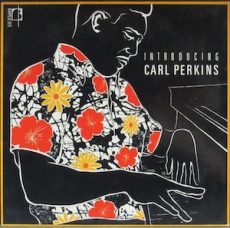
Introducing Carl Perkins ~ Carl Perkins | By Eddie Carter
One of my favorite things to do after a long day is listening to a piano trio album when reading. I first heard Carl Perkins on Harold In The Land of Jazz and You Get More Bounce With Curtis Counce. Introducing Carl Perkins (Dootone Records DL-211) is a 1956 release and his only album as a leader. He began playing professionally with Tiny Bradshaw and Big Jay McNeely in the late forties, then became a unique talent in the fifties. Despite polio afflicting his left arm, he developed a piano technique that was all his own. Leroy Vinnegar joins him on bass, and Lawrence Marable on drums completes the trio. My copy is the 1984 U.K. Mono reissue (Boplicity Records BOP-8).
Side One opens with Way Cross Town, the first of five Carl Perkins originals. The melody’s opening notes give the song a lively bounce. Carl is up first and delivers the lead solo with great spirit. Leroy takes a nice leisurely walk next, and then Lawrence has a short conversation with the pianist ahead of the closing chorus and abrupt stop. You Don’t Know What Love Is by Gene de Paul and Don Raye begins with a lovely solo introduction by Perkins, segueing into the trio’s pretty melody. Carl performs beautifully and sincerely as the song’s only soloist, culminating with a gentle theme reprise and climax.
The Lady Is a Tramp by Richard Rodgers and Lorenz Hart moves the beat to mid-tempo for the trio’s opening chorus. The mood is joyous from the start of the threesome’s theme. Carl delivers the song’s only interpretation with a carefree zest, leading to the theme’s restatement and close. Marblehead by Carl Perkins begins with the trio taking it easy on the opening ensemble. The pianist steps into the spotlight first to dispense a little home cooking. Vinnegar takes his bass for a short walk next, then Perkins returns to make a final comment preceding the ensemble’s theme restatement and ending.
Woody ‘n’ You by Dizzy Gillespie is among his most ageless compositions. The trio begins the jazz standard with a relaxing Latin-flavored melody. Carl has the solo showcase alone and keeps close to the bluesy spirit as his interpretation unfolds, while the rhythm section perfectly complements him into the ending theme and fade-out. Westside by Carl Perkins is a happy little tune that gets underway with the trio’s cheerful theme. The pianist is up first with an attractive reading, and then Vinnegar comes in for a buoyant walk. Marable applies a marvelous touch to the closer before the trio’s out-chorus.
Side Two starts with Just Friends by John Klemmer and Sam M. Lewis. Lawrence introduces the song with a short introduction that segues into the trio’s joyful melody. Carl leads the way and works his magic in the opening solo, then engages in a brief conversation with the drummer, leading to the closing ensemble. It Could Happen To You by Jimmy Van Heusen, and Johnny Burke is a beautiful song from the forties. Perkins’s lovely introduction sets the mood for the trio, showing its sentimental side in a tender melody. The pianist delivers the only solo with great sensitivity and delicacy ahead of the group’s gorgeous finale.
Why Do I Care by Carl Perkins is a much happier song than its title suggests, as exhibited in the trio’s medium groove on the theme. Carl takes the lead and constructs the opening solo effectively. Leroy comes in next to take a short walk, and Leroy returns for the theme’s reprise and close. Lilies In The Rain by Peter DeRose and Mitchell Parish is a lovely ballad that begins with an unaccompanied piano introduction to the trio’s gorgeous melody. In the song’s only solo, Perkins presents a thoughtfully tender presentation matched by the rhythm section’s elegant support until the trio’s return for a gentle ending.
It’s finger-popping time for the album’s final track, Carl’s Blues by Carl Perkins. The trio sets the scene with their easygoing opening chorus. The pianist approaches the first statement more relaxed, and then Leroy briefly walks in a splendid performance. The ensemble reassembles for the closing chorus and a final thought by the leader and bassist into the climax. Dootsie Williams supervised the original session, but it’s unknown who the recording engineer was for the date. The album’s sound quality is quite good, with a solid soundstage that transports the trio to your listening room with stunning fidelity.
Carl Perkins played with some of the elite jazz musicians in a short career but left the jazz world with a void when he died tragically from a drug overdose on March 17, 1958, at age twenty-nine. His untimely death was a loss to the jazz community, a reminder of the fragility of life and the enduring power of his music. If you’re a piano trio fan like me and in the mood for a terrific jazz album, I invite you to consider Introducing Carl Perkins on your next trip to your favorite record store. It’s a feast for the ears and a fascinating album that glimpses a talented pianist who was beginning to make a name for himself but left us far too soon!
~ Harold In The Land of Jazz (Contemporary Records C3550/S7550), You Get More Bounce With Curtis Counce (Contemporary Records C3539/S7539) – Source: Discogs.com
~It Could Happen To You, Just Friends, Woody ‘n’ You, You Don’t Know What Love Is – Source: JazzStandards.com
~Carl Perkins, The Lady Is a Tramp – Source: Wikipedia.org
© 2024 by Edward Thomas Carter
More Posts: choice,classic,collectible,collector,history,instrumental,jazz,music,piano