


Jazz Poems
CHARLIE PARKER BIRTHDAY CELEBRATION, TOMPKINS SQUARE PARK
I was telling you about that junkie wannabefrom Wall Street who OD’ed last week
on Explosion 2000 on that street corner
right over there when KABOOM! You kissed me
smack on the lips just as “Confirmation” kicked in.
Just as Venusin two-toned dreadlocks and a skin-tight
smock danced from the band shell with her pet python,
Bodyguard, to “All the Things You Are.”
Just as punk rockers rocked, in-flowered on sheets,
sipped smoothies and smoked,
Their hair spirited to pastel auras, rosehip,
Island lime, a shade of blue just washed by rain.
Just as Ukraine checkmated, as twins seesawed,
As bikers cracked smiles in the Hari-Hari, the slap-
tongue of sax. At the mommies and the poppies. Just as.
And they were doing the brothers in descending order.
The three brothers Heath: Percy, Jimmy, call him “Little Bird,”
And Albert “Tootie” Heath. With Milt Jackson on vibes,
three score and twelve, and still working. Two boys in love
Grooved, one in white pants and sailor hat,
the other in a buffalo nickel belt that bedazzled.
They sat on the park bench eating falafel.
A man with one leg sold charms for a dollar. For luck.
For the music that day and the light, you could say it
was all bell-bottomed and swaybacked. Young-like.
And your kiss. All at once I was riding a sparkling gold Schwinn bike.
Something in my head went from full torpor to starburst:
as if whetted by some wild vibranto, your kiss,
the vibes’ licks cleared my vision of fizz for an instant.
What had been all Midnight Dragon was now
a Tropicana-Pure-Premium-sharpened C
delivered as of this morning to the Santa Barbara Deli
and Superetti down the street. Just like that.
In your arms and the music and the light, I thought I might
>go plumb or Penteostal, lay down on the grass, recite
Kahlil, take up knitting, eat pickles and marry you–
Tell that priest to stop playing Frisbee with the lab
so we can say our vows right here and now before “Tenor Madness”
ends! Opps! I forget we’re already married! Just as.
CATHERINE BOWMAN
from Jazz Poems ~ Selected and Edited by Kevin Young

More Posts: book,classic,collectible,history,jazz,library,poet
Requisites
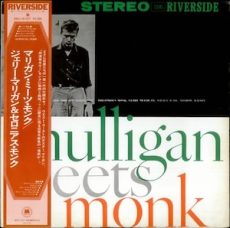
Mulligan Meets Monk ~ Thelonious Monk and Gerry Mulligan | By Eddie Carter
This morning’s record from the library, Mulligan Meets Monk (Riverside RLP 12-247/RLP 1106), is an excellent quartet date that brings together two giants, Gerry Mulligan and Thelonious Monk, for their only collaborative album. Their influence on bop and cool jazz is immeasurable. It hit the stores in 1957, and the personnel are Gerry Mulligan on baritone sax, Thelonious Monk on piano, Wilbur Ware on bass and Shadow Wilson on drums. My copy is the 1975 Victor Musical Industries Japanese Stereo reissue (Riverside SMJ-6107).
‘Round Midnight by Thelonious Monk, Cootie Williams, and Bennie Hanighen is one of The Great American Songbook’s most beautiful and recorded jazz tunes. It opens the first side with the quartet’s elegantly tender theme. Gerry delivers a mesmerizing first solo. Thelonious is next and gives a beautifully constructed reading ahead of the theme’s reprise and climax. Thelonious Monk’s Rhythm-a-ning picks up the pace with a lively introduction by Wilson segueing into the foursome’s spirited melody. Mulligan is up first with a statement of dynamic energy; then Monk speaks assertively in the second reading. Gerry returns with an excellent improvisation ahead of the theme’s restatement.
The group’s unique and refreshing approach to Sweet and Lovely by Gus Arnheim, Jules LeMare, and Harry Tobias starts with Gerry and Thelonious’ delicately graceful theme. Monk shows a considerable amount of respect in the opening solo. Mulligan’s exquisite softness in the closer precedes a gorgeous conclusion. Decidedly by Gerry Mulligan begins Side Two with a two-instrument dialogue between Gerry and Shadow, extending into the quartet’s brisk theme. Mulligan functions most effectively in the opening statement. Monk unwraps a pleasant surprise next. Wilbur takes a short, impressive walk, Gerry takes over briefly, and Shadow wraps things up before the close.
Straight, No Chaser is one of Thelonious Monk’s perfectly structured originals. The foursome’s bluesy theme sets up Gerry’s inspired opening statement. Wilbur’s bass goes to work next in a short reading, and then the pianist sums everything up nicely before the closing chorus and finale. I Mean You by Thelonious Monk and Coleman Hawkins begins with the pianist’s introduction, leading to the ensemble’s opening chorus. Monk steps into the spotlight first, cruising comfortably, and then Mulligan puts together a few good ideas in the second solo. Ware rounds out things with a breezy walk before the group reassembles to take the song out.
Mulligan Meets Monk was produced by Orrin Keepnews and recorded by Jack Higgins. The album’s sound quality is top-notch, with a superb soundstage that makes it feel like the quartet is performing right before you. Whether you’re a bop or cool jazz fan or new to the music of Gerry Mulligan and Thelonious Monk, Mulligan Meets Monk is a must-listen on your next record-shopping trip. It’s a delightful addition to both musicians’ discographies, showcasing their talents in a way that might make it a favorite in your library!
~ ‘Round Midnight, Straight, No Chaser, Sweet and Lovely – Source: JazzStandards.com
© 2024 by Edward Thomas Carter

More Posts: choice,classic,collectible,collector,history,instrumental,jazz,music,piano,saxophone
Jazz Poems
HERE WHERE COLTRANE IS
Soul and race
are private dominions
memories and modal
songs, a tenor blossoming,
which would paint suffering
a clear color, but is not in
this Victorian house
without oil in zero degree
weather and a forty-mile-an-hour wind;
it is all a well-knit family:
a love supreme.
Oak leaves pile up on walkway
and steps, catholic as apples
in a special mist of clear white
children who love my children.
I play”Alabama”
on a warped record player
skipping the scratches
on your faces over the fibrous
conical hairs of plastic
under the wooden floors.
Dreaming on a train from New York
to Philly, your hand out six
notes which become an anthem
to our memories of you:
oak, birch, maple,
apple, cocoa, rubber.
For this reason Martin is dead;
for this reason Malcolm is dead;
for this reason Coltrane is dead;
in the eyes of my first son are the browns
of these men and their music.
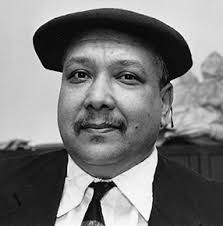
MICHAEL S. HARPER | 1938 ~ 2016
from Jazz Poems ~ Selected and Edited by Kevin Young
More Posts: book,classic,collectible,history,jazz,library,poet
Requisites
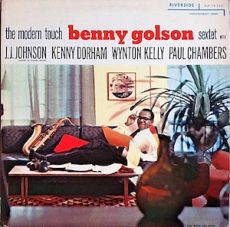
The Modern Touch ~ Benny Golson Sextet | By Eddie Carter
The jazz world mourned the loss of an icon when Benny Golson passed away on September 21, 2024. His departure left a void that can never be filled. Benny was an excellent musician, arranger and composer. He co-founded the Jazztet with Art Farmer. His extensive discography as a leader and his collaborations with elite jazz musicians as a sideman are a testament to his unique talent. My mother was a fan of his, and her love for his music inspired this morning’s discussion. The Modern Touch (Riverside RLP 12-256), released in 1958, is his second album as a leader and first for the label. He’s joined by Kenny Dorham on trumpet, J.J. Johnson on trombone, Wynton Kelly on piano, Paul Chambers on bass, and Max Roach on drums. My copy is the 1974 Victor Musical Industries Japanese Mono reissue (Riverside SMJ-6070M).
Out of The Past by Benny Golson opens the album with the sextet’s leisurely melody, setting the mood for the saxophonist’s relaxing opening solo. Kenny steps into the spotlight next. He is followed by J.J., who expresses his thoughts in the following statement. Wynton gives a captivating interpretation; then Paul walks with a steady beat. Max adds the finishing touches with a short solo ahead of the reprise. Reunion by Gigi Gryce begins with the front line’s introduction to the ensemble’s upbeat melody. Golson gets right to work first and wails. Johnson takes over and is especially impressive in an inspired interpretation. Dorham follows with a superb solo, ahead of a brief comment by Roach that gives way to Chambers telling a fascinating story. Kelly sustains the excitement in the following reading, and the drummer has an exchange with the front line into the closing chorus that slowly dissolves into nothingness.
Venetian Breeze by Benny Golson takes us on a musical journey inspired by the saxophonist’s travels over the Venetian Causeway from Miami to Miami Beach. The tempo shifts to mid-tempo for the three horns in unison to drive the sextet’s theme. J.J. takes the first solo and moves with ease into a fine groove. Kenny takes over like a refreshing drink on a hot day to give a relaxing performance. Benny swings straight from the heart next, and then Wynton holds our attention leading to the theme’s restatement. Hymn To The Orient by Gigi Gryce is a happy-blowing vehicle. It starts the second side with the sextet’s upbeat theme. Kelly takes the opening chorus and gives an energetic reading. Golson is at his most effective on the subsequent interpretation. Johnson has an outstanding solo next; then Roach gives his drums a short workout before the song’s conclusion.
The pace slows down for a beautiful rendition of Namely You by Gene DePaul and Johnny Mercer. The group sets the mood with a lovely introduction, segueing into Benny’s gentle, deeply emotional melody. In the solo showcase, the saxophonist applies a little tenderness and romantic beauty before the sextet reappears for a soft summation. Blues on Down by Benny Golson is a blues affording everyone a solo opportunity. It brings the album to a close, beginning with the sextet’s leisurely melody. Dorham begins the blowing with an easy-going solo. Golson continues to communicate a laid-back feeling in the following reading. Johnson steps into the spotlight next with a breezy interpretation; then Kelly offers a mellow flow of ideas in the fourth statement. Chambers gets the nod and takes a soulful walk, and Roach takes us home in the finale, ahead of the theme.
>Orrin Keepnews produced The Modern Touch, and Jack Higgins was the recording engineer behind the dials. The album has an excellent sound and is beautifully engineered. The listener will feel like the musicians are playing for them in their listening room. Benny Golson was one of the significant contributors to hard bop jazz as an arranger, composer and musician. I had the pleasure of seeing him perform live and meeting him during the nineties when he was the leader and musical director of The Jazz Messengers during a concert in Cleveland, Ohio. He couldn’t have been more gracious and down to earth. We talked for quite a while after the group’s performance, and I consider it a highlight of my life. His career lasted just over seven decades; he was ninety-five when he died.
Anyone who’s already a fan of Benny Golson and in the mood for an excellent hard-bop album should consider The Modern Touch on your next record-shopping trip. It’s a terrific release that offers a glimpse into one of the best multi-talented jazz musicians, and a record I happily recommend for a spot in your library!
Postscript: The Modern Touch was reissued in 1962 as Reunion on Jazzland (AM 85/AS 985).
© 2024 by Edward Thomas Carter
More Posts: choice,classic,collectible,collector,history,instrumental,jazz,music,saxophone
Jazz Poems
FOR OUR LADY
yehbillie if someone
had loved u like u
shud have been loved
ain’t no tellen what
kind of songs
u wud have swung
gainst this country’s wite mind
or what kind of lyrics
wud have pushed us from
our blue / nites
yeh billie
if some blk / man
had reallee
made u feel
permanentlee warm
ain’t no tellen
where the jazz of yo/songs
wud have led us.
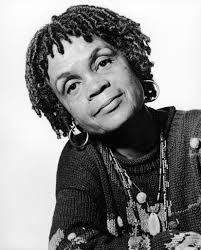
SONIA SANCHEZ
from Jazz Poems ~ Selected and Edited by Kevin Young
More Posts: book,classic,collectible,history,jazz,library,poet