

Requisites
Sound Pieces ~ Oliver Nelson | By Eddie Carter
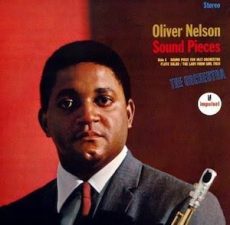
My next record from the library is by Oliver Nelson, one of jazz’s finest arrangers, composers, and multi-instrumentalists, which is too good to leave sitting on the shelf. Few performances on LP ever reached the heights of his 1961 release, The Blues and The Abstract Truth, producing his biggest hit, Stolen Moments. Sound Pieces (Impulse A-9129/AS-9129) is one that did, and in the process, became one of the best albums in Nelson’s discography. What sets Sound Pieces apart is its unique combination of a large ensemble for three works of orchestral jazz on Side One and a quartet in a more intimate setting on Side Two. My copy is the original 1966 US Stereo release.
The personnel on this date are an all-star ensemble. John Audino (tracks: A1 to A3), Bobby Bryant (A1), Conte Candoli, Oliver Mitchell (A1 to A3), Al Porcino (A2, A3) on trumpet; Bill Byers (A2, A3), Dick Noel (A1), Ernie Tack (A1 to A3) on trombone; Red Callender (A2, A3) on tuba; Bill Hinshaw, Richard Perissi (A1 to A3) on French horn; Gabriel Baltazar Jr. and Bill Green (A1 to A3) on alto sax; Plas Johnson, Bill Perkins (A1 to A3) on tenor sax; Jack Nimitz (A1 to A3) on baritone sax; Oliver Nelson (A1 to B3) on soprano sax; Gabriel Baltazar Jr., Bill Perkins (A2, A3) on clarinet; Steve Kuhn (B1 to B3), Mike Melvoin (A2, A3) on piano; Ray Brown (A2, A3), Ron Carter (B1 to B3) on bass; Shelly Manne (A2, A3), Grady Tate (B1 to B3) on drums.
Sound Piece For Jazz Orchestra is an unforgettable story of music told in two main themes: the first one is a calm state of tranquility. The second is a searing portrayal originally written for The Stuttgart Radio Dance Band in 1963. The song opens with the bass clarinets sounding a commanding call and an exceptional utilization of brass and winds to announce the majestic chorus with strong statements. Originally written for alto saxophone, Oliver is featured on soprano sax and is the song’s only soloist in both sections. When the pace slows down to a softer tempo, he delivers a thoughtfully sensitive interpretation, caressing each phrase with the clarinets and horns discreetly in the background, culminating in a tender finale. The rhythm section shifts the song back to uptempo for the orchestra to restate the melody, stepping aside for Nelson, who gives an intense workout on the closer before the stunning finale.
Flute Salad is an original by Oliver Nelson that, as the title suggests, places the flutes in front, leading the orchestra in the animated opening and ending melodies. Conte Candoli is the featured soloist, and his muted horn delivers an air of assurance that flows sonorously with the brass section in support. The Lady From Girl Talk by Oliver was written for Actress Virginia Graham, who hosted Girl Talk, a syndicated program using this tune as her theme. The trombones announce the introduction before evolving into the orchestra’s full-bodied melody. Mike Melvoin begins a taut opening solo of rhythmic joy, illustrating his nimble hands at work. Oliver follows, his soprano moving gracefully with soulful precision on the closer for a compelling reading that is especially impressive.
The Shadow of Your Smile by Johnny Mandel and Paul Francis Webster is also known as Love Theme From The Sandpiper. Steve, Ron, and Grady join Oliver in presenting a Bossa Nova version, opening with the introduction as if the quartet is playing the standard at a slow tempo. The mood moves upward to a medium beat for the melody with an energetic swing led by Nelson. Steve charges the opening statement with mild energy and agile phrases, exhibiting the cohesive harmony between himself, Carter, and Tate. Oliver closes with an affectionate performance of deep emotion, rich harmony, and warm phrasing that, to these ears, captures the essence of expressing the love the lyrics depict.
Patterns is an uptempo original that first appeared in Oliver’s 1966 Book, Patterns For Improvisation (Jamey Abersold), a collection of improvisational jazz patterns in various meters and feels that spells out some of the basic building blocks of the jazz language. It is the most adventurous and interesting tune on the album, beginning with a thematic statement that the quartet takes as far as it will go. The opening solo by Nelson is well-developed. Kuhn heightens the mood by supplying a scintillating closing presentation, held firmly by the always energetic foundation of Carter and Tate into the quartet’s reprise and climax.
The final track is Oliver’s Elegy For a Duck, which he recorded earlier in the year on Peter and The Wolf with organist Jimmy Smith. Based on the original work by Russian composer, conductor and pianist Sergei Prokofiev, Ron and Grady establish the introduction with a bouncy beat that is maintained throughout the entire song. Oliver and Steve join them for a bit of relaxed spontaneity on the theme. Then, the saxophonist settles in for a beautifully articulated opening statement that is brisk and merry. Kuhn closes with a refreshing performance of intriguing ideas, subtle moods, and impressions on each chorus, which is a deft musical portrayal.
The East Coast orchestra tunes were recorded by Bob Simpson of RCA Studios in New York, and the man behind the dials in the West Coast quartet sessions was Jim Lockert of Western Recorders. I was extremely impressed with each man’s work on Sound Pieces, and the sound quality is spectacular on both sides of the album. It is especially impressive during the orchestra tracks; Lockert accurately captures the brass, reeds, and drums and is as close to the real thing as I have heard. The highs are clear, the character of each instrument at midrange is crisp and natural, and there’s ample response in the bass region.
Oliver Nelson recorded six small group albums for Prestige, playing the alto and tenor sax, and nine more albums for Impulse, affirming his inspired leadership. He scored background music for films and television shows after moving to the West Coast in 1967. Oliver also recorded several excellent orchestra albums, including Afro-American Sketches in 1962 and Full Nelson in 1963, which are two of his finest LPs alongside The Blues and The Abstract Truth. He also arranged and produced records for some of the elite pop stars during the latter half of the sixties. It is no wonder why the Jazz and Pop communities mourned him deeply after his death from a heart attack at the age of forty-three on October 28, 1975!
I was fourteen when I first heard this album; it made quite an impression on me then, and I still find something new in the music each time I listen to it now. Impulse LPs also set a high standard for their releases with laminated gatefold covers, a distinctive spine color, incredible photography, knowledgeable liner notes, and great music. Sound Pieces is a tour-de-force of brilliant arrangements, incredible artistry, superb writing, and unparalleled listening pleasure by Oliver Nelson. A remarkable talent who, whether on record or in concert, always gave jazz fans exciting performances and albums that are still considered a must-have for any library!
~ Patterns For Improvisation – Source: Amazon.com
~ Afro-American Sketches (Prestige PRLP 7225/PRST 7225); Full Nelson (Verve Records V-8508/V6-8508); Peter and The Wolf (Verve Records V-8652/V6-8652); The Blues and The Abstract Truth (Impulse! A-5/AS-5); Bob Simpson, RCA Studios, Jim Lockert, Western Recorders – Source: Discogs.com
~ Sound Piece For Jazz Orchestra, The Stuttgart Radio Dance Band, Flute Salad, The Lady From Girl Talk, Patterns, Elegy For a Duck – Source: Album liner notes by Nat Hentoff
~ Girl Talk, Virginia Graham – Source: IMDB.com
~ Sergei Prokofiev – Source: Wikipedia.org
© 2024 by Edward Thomas Carter

More Posts: choice,classic,collectible,collector,history,instrumental,jazz,music,saxophone
Jazz Poems
FEBRUARY IN SYDNEYDexter Gordon’s tenor sax
plays “April in Paris”
inside my head all the way back
on the bus from Double Bay
Round Midnight, the ‘50s,
cool cobblestone streets
resound footsteps of Bebop
musicians with whiskey-laced voices
from a boundless dream in French.
Bud, Prez, Webster, & The Hawk,
their names run together riffs.
Painful gods jive talk through
bloodstained reeds & shiny brass
where music is an anesthetic.
Unreadable faces from the human void
float like torn pages across the bus
windows. An old anger drips into my throat,
& I try thinking something good,
letting the precious bad
settle to the salty bottom.
Another scene keeps repeating itself:
I emerge from the dark theatre,
passing a woman who grabs her red purse
& hugs it to her like a heart attack.
Tremolo. Dexter comes back to rest
behind my eyelids. A loneliness
lingers like a silver needle
under my black skin,
as I try to feel how it is
to scream for help through a horn.
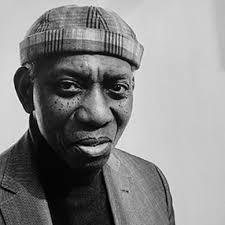
YUSEF KOMUNYAKAA
from Jazz Poems ~ Selected and Edited by Kevin Young

More Posts: book,classic,collectible,history,jazz,library,poet

Jazz Poems
BIX BEIDERBECKE (1908~1931)
January, 1926
China Boy. Lazy Daddy. Cryin’ All Day.
He dreamed he played the notes so slowly that
they hovered in the air above the crowd
and shimmered like a neon sign. But no,
the club stayed dark, trays clattered in the kitchen,
people drank and kept on talking. He watched
the smoke drift from a woman’s cigarette
and slowly circle up across the room
until the ceiling fan blades chopped it up.
A face, a young girl’s face, looked up at him,
the stupid face of small-town innocence.
He smiled her way and wondered who she was.
He looked again and saw the face was his.
He woke up then. His head still hurt from drinking.
Jimmy ws driving. Tram was still asleep.
Where were they anyway? Near Davenport?
There was no distance in these open fields–
only time, time marked by a farmhouse
or a barn, a tin-topped silo or a tree,
some momentary silhouette against
the endless, empty fields of snow.
He lit a cigarette and closed his eyes.
The best years of his life! The Boring “Twenties.
He watched the morning break across the snow.
Would heaven be as white as Iowa?
DANA GIOIA
from Jazz Poems ~ Selected and Edited by Kevin Young
More Posts: book,classic,collectible,history,jazz,library,poet
Requisites
The Sound Of The Wide Open Spaces ~ James Clay and David “Fathead” Newman | By Eddie Carter
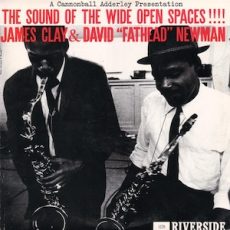
This morning’s album from the library brings together two Texas tenor saxophonists for the first of two recordings together. The Sound of The Wide Open Spaces (Riverside RLP 12-327/RLP 1148) is a 1960 release that marks the debut of James Clay and the second album by David “Fathead” Newman. The album’s title refers to the vast landscape of the Lone Star state. This hard bop blowing session allows both musicians to have a superb showcase in which to work. Wynton Kelly on piano, Sam Jones on bass, and Arthur Taylor on drums complete the quintet. My copy is the 1986 U.S. Original Jazz Classics Stereo reissue (Riverside OJC-257).
The quintet starts Side One with the opening ensemble to Wide Open Spaces by Babs Gonzales. David gets right down to business first. James takes the baton and gives an exhilarating interpretation; then Wynton comes in for a spirited reading. Clay and Newman return to share an energetic exchange ahead of the closing chorus. The front line eases up on the gas to begin They Can’t Take That Away From Me by George and Ira Gershwin. James steps into the opening statement with extreme confidence. David returns the compliment on the following reading, and then Wynton closes things out with masterful ease, leading to the theme’s reprise and ending.
Side Two begins with the rhythm section’s introduction to Some Kinda Mean by Keter Betts ahead of the front line’s laid-back theme. James is up first and moves leisurely through the opening solo. David is equally easygoing in the following reading. Wynton’s carefree interpretation precedes the theme’s restatement and the trio’s climax. James switches to the flute for the Johnny Burke, Bob Haggart standard, What’s New? The trio opens gently ahead of David’s tender melody. James leads the way with an emotionally sensitive statement. Wynton comes in next for a beautiful reading, and David delivers a gorgeous finale leading to the polite ending.
Figger-ration by Babs Gonzales takes off with the rhythm section’s quick introduction to the front line’s brisk melody. David is off to the races in the opening solo, then James takes a vigorous romp next. Wynton illustrates his agility in the following interpretation. Sam takes a short walk leading to a vigorous exchange by both horns ahead of the reprise and close. Julian “Cannonball” Adderley produced The Sound of The Wide Open Spaces and Jack Higgins was the recording engineer. The sound quality of this OJC reissue is exceptional, with an excellent soundstage allowing the instruments to come through your speakers vibrantly, as if the musicians are playing in front of your sweet spot, providing an immersive experience for the listener.
The Sound of The Wide Open Spaces by James Clay and David “Fathead” Newman is an overlooked, but wonderful album that, in my opinion, is a perfect place to start if you’re beginning your journey into either musician’s discography. Its got good tunes with great solos by five remarkable musicians who together have created an album that should appeal to any jazz collector and become a welcome addition to any jazz fan’s library!
~They Can’t Take That Away From Me, What’s New? – Source: Jazz Standards.com © 2024 by Edward Thomas Carter
More Posts: choice,classic,collectible,collector,history,instrumental,jazz,music,saxophone
Jazz Poems
suddenly in the midst of a game of lotto with his sisters
Armstrong let a roar out of him that he had the raw meat
Red wet flesh for Louis
and he up and sliced him two rumplings
since when his trumpet bubbles
their fust buss
poppies burn on the black earth
he weds the flood he lulls her
some of these days muffled in ooze
down down down down
pang of white in my hair
after you’re gone
Narcissus lean and slippered
you’re driving me crazy and the trumpet
In Ole Bull it chassés aghast
out of the throes of morning
down the giddy catgut
and confessing and my woe slavers
the black music it can’t be easy
it threshes the old heart into a spin
into a blaze
Louis lil’ ole fader Mississippi
his voice gushes into the lake
the rain spouts back into heaven
his arrows from afar they fizz through the wild horses
they fang you and me
then they fly home
flurry of lightning in the earth
sockets for his rootbound song
nights of Harlem scored with his nails
snow black slush when his heart rises
his she-notes they have more tentacles than the sea
they woo me they close my eyes
they suck me out of the world
ERNST MOERMAN Translated by Samuel Beckett
from Jazz Poems ~ Selected and Edited by Kevin Young
More Posts: book,classic,collectible,history,jazz,library,poet