

Requisites
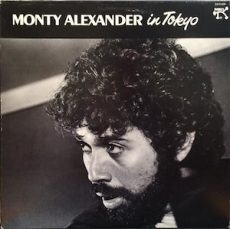
Monty Alexander In Tokyo | By Eddie Carter
I first heard Monty Alexander In Tokyo (Pablo Records 2310-836) in 1985 at the former jazz station, WNOP 740 AM, after my move to Cincinnati from Cleveland, Ohio. It was recorded during the pianist’s first trip to the city and is his nineteenth release as a leader. Here, he is working with two of the best in the business: Andy Simpkins on bass and Frank Gant on drums. My copy is the 1979 U.S. Stereo pressing, and the trio opens this musical adventure with a trip to Broadway by Billy Byrd, Teddy McRae and Henri Woode. They begin this catchy tune with a delightfully crafted melody. Monty cuts loose in a spirited statement that’s sure to have your fingers popping and toes tapping along until the song’s conclusion.
Just In Time by Jule Styne, Betty Comden, and Adolph Green starts with a short introduction by Monty, segueing into the threesome’s pulsating theme, who treats the standard like an old friend. Monty comes alive in the song’s only interpretation ahead of the closing chorus and finish. Sweet Lady is a lovely ballad by Dave Zoob, Frank Crumit, and Howard E. Johnson. It’s a showcase for Monty and Andy, who start the song with a tender introduction that leads to their enchanting melody. The duo sustains the gentle mood in the delicately sensitive statement they share, preceding a polite reprise and climax.
Tricotism by Oscar Pettiford begins with the trio introducing this happy swinger collectively before taking the theme at a fast clip. Monty kicks off the solos with a scintillating opening statement; then Andy takes over for a bit of brisk walking. The pianist has a second interlude before Frank engages in a short workout ahead of the melody’s restatement and ending. Never Let Me Go by Jay Livingston, and Ray opens with the threesome’s slow-tempo introduction. The pace picks up to a medium beat for the opening chorus, ahead of the pianist’s driving solo that has something to say into the closing chorus.
Up next is Montevideo by Richard Evans, which takes off from the opening notes of the trio’s upbeat introduction and melody. The rhythm section spurs Monty to soar into the stratosphere in the song’s only statement until he returns to Earth for the theme’s reprise and abrupt ending. Pawnbroker by Quincy Jones is a very pretty ballad from the 1964 film drama. It’s a solo showcase for Monty Alexander, and the pianist uses the poignant melody effectively to depict the song’s sincerity and melodic beauty in a gorgeous interpretation, preceding the melody restatement and a lovely summation.
See See Rider by Ma Rainey brings the album to a close on an upbeat note. The trio starts expressing their joy and pleasure in the melody. Monty is up first with an especially impressive interpretation; then Andy takes a short walk through the second reading. The pianist puts the finishing touches on the song ahead of the closing chorus and ending. Monty Alexander produced Monty Alexander In Tokyo, and Katsuyuki Handa and Kazutoyo Takeda were the recording engineers. The sound quality is excellent, with a vivid soundstage that transports the trio to your listening room’s sweet spot.
Whether you’re new to Monty Alexander’s music or a seasoned fan, Monty Alexander In Tokyo is a versatile album that’s perfect for any occasion. It’s the perfect soundtrack for a relaxing evening or a lively dinner with friends. I highly recommend adding it to your jazz library. With its diverse range of tracks, it’s a testament to the trio’s musical prowess and a must-have for anyone who loves a piano trio!
~ Just In Time – Source: JazzStandards.com
~ Broadway, See See Rider – Source: Wikipedia.org
© 2024 by Edward Thomas Carter

More Posts: choice,classic,collectible,collector,history,instrumental,jazz,music,piano
Jazz Poems
THE JOURNEY
Miles was waiting on the dock,his trumpet in a paper bag.
Lady was cold—
wind lashed the gardenias
I stole for her hair.
We were shabby, the three of us.
No one was coming so I started to row.
It was hard going—
stagnant, meandering…
The city moaned and smoldered.
Tin cans on the banks like shackles…
To be discovered, in the open…
But Miles took out his horn
and played.
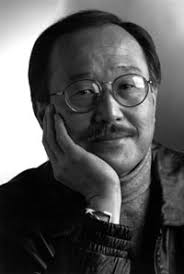
Lady sang. A slow traditional blues. The current caught us— horn, voice, oar stroking water… I don’t know how long we floated— our craft so full of music, the night so full of stars. When I awoke we were entering an ocean, sun low on water warm as a throat, gold as a trumpet. We wept. Then soared in a spiritual. Never have I been so happy. LAWSON FUSAO INADA
More Posts: book,classic,collectible,history,jazz,library,poet
Requisites
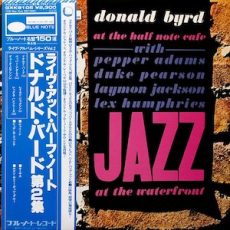
Donald Byrd at The Half Note Café, Volume 2 | By Eddie Carter
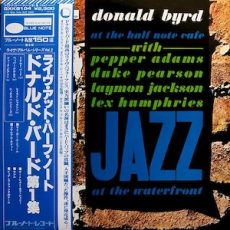
I enjoyed listening to the first set of Donald Byrd at The Half Note Café so much that I decided to hear the second set as well, which inspired this morning’s discussion. So, as the quintet makes their way back to the stage, let’s all sit back in our seats to enjoy Donald Byrd at The Half Note Café, Volume 2 (Blue Note BLP 4061/BST 84061). Donald Byrd is on trumpet, Pepper Adams is on baritone sax, Duke Pearson is on piano, Laymon Jackson is on bass, and Lex Humphries is on the drums. My copy is the King Record Company Japanese Stereo reissue (Blue Note BST 84061 – GYK-8105).
The rhythm section lays the foundation to begin Jeannine by Duke Pearson with their introduction ahead of the front line’s opening chorus. Donald lights the first solo like a shining beacon. Pepper succeeds him with a briskly exciting performance; then Duke keeps your foot tapping with swinging precision ahead of the ensemble’s closing chorus and trio ending softly. The leader then introduces the group’s theme, Pure D. Funk, before leading the trio through the bluesy theme. Pepper is up first with a relaxing interpretation. Duke has a very fine spot next, and then Donald is as smooth as Tennessee Whiskey preceding the group’s reprise and climax.
Side Two starts with Lex’s percussive introduction to the quintet’s medium melody of Donald’s second tune, Kimyas. Pepper swings easily in an impressive opening statement. Donald follows with another equally blissful gem. Duke completes the solos at a leisurely pace anchored by Laymon and Lex until the quintet’s ending theme. When Sonny Gets Blue by Marvin Fisher and Jack Segal opens with the front line delivering a very pretty opening chorus. Duke gets the song’s only solo and delivers a wonderful expression of incredible beauty and solace, leading to the quintet’s theme restatement. Donald ends the evening by thanking the crowd for being a receptive audience.
Alfred Lion produced this live date, and Rudy Van Gelder was the recording engineer. The sound quality possesses a top-notch soundstage that truly makes you feel like you’re right there in the Half Note Café audience. King Record Company has beautifully remastered the original mono tapes, enhancing the experience. If you’re new to the music of Donald Byrd or only know of his later ’70s jazz-funk releases, I invite you to check out Donald Byrd at The Half Note Café, Volume 2, on your next record hunt. Like its companion, Volume 1, the musicians are wonderful. The music has stood the test of time and both albums are excellent documents of a live jazz performance the listener can revisit anytime!
More Posts: choice,classic,collectible,collector,history,instrumental,jazz,music,trumpet
Jazz Poems
PREZ IN PARIS, 1959
By 1959 he’d moved to ParisPrez wouldn’t eat. Sweet alcohol harassedhis system. Cooled, the jazz “To Be or Not to Be” –withdrawn, a whisper–seemed a jot.
Once there’s been ways to get bak at the world;Ex-G.I. Prez had tried and tired. He hurledhimself now–hearsay, smoky horn–down-stage.“Well, Lady Gay Paree, it’s been a dog’s age.”
he might’ve said. Or “Ivy Divey! Wrong!The way that channel swims–toocold. “This song–the lyric’s weak. We’ll drown. No eyes, my man.No, let’s don’t take it from no top. The band
can skip it.” Prez. Monsieur le Président, who played us what can work, and what just won’t.
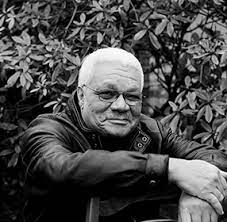
Al Young | May 31, 1939 – April 17, 2021
Poet, novelist, essayist, screenwriter, and professor. He was named Poet Laureate of California by Governor Arnold Schwarzenegger from 2005 to 2008.
More Posts: book,classic,collectible,history,jazz,library,poet
Requisites
Donald Byrd at The Half Note Café, Volume 1 | By Eddie Carter
I was still in the mood to hear another trumpet album after listening to Harry “Sweets” Edison when my search led me to another of my Mom’s favorite records. Donald Byrd and Pepper Adams were two musicians she enjoyed listening to and this morning’s record from the library brings them together in a great live date. Donald Byrd at The Half Note Café, Volume 1 (Blue Note BLP 4060/BST 84060) captures the trumpeter’s quintet featuring Pepper Adams (tracks: A1, A2, B2, B3) on baritone sax, Duke Pearson on piano, Laymon Jackson on bass and Lex Humphries on drums in performance at one of New York’s best jazz clubs. This album holds a special place in my heart because it reminds me of the music my Mom and I used to enjoy together during Sunday dinner. My copy is the 1978 King Record Company Japanese Stereo reissue (Blue Note BST 84060 – GXK-8104).
Ruth Mason is our Mistress of Ceremonies for the evening and starts the set with the musician’s introductions. The quintet then launches into the upbeat melody of My Girl Shirl by Duke Pearson. Donald kicks off the solos with an invigorating statement; then Pepper succeeds him with a joyfully spirited solo. Duke emerges next for a brisk presentation, and the front line cooks with Lex ahead of the close. Donald introduces the next tune, his own Soulful Kiddy, a blues that slows the beat down for the ensemble’s marching melody. Pepper serves up some down-home cooking in the opening solo. Donald comes into the second reading with carefree enthusiasm; then Duke eases into the spotlight last, leading to the theme’s restatement and climax.
Side Two opens with Donald’s introduction to A Portrait of Jennie by J. Russel Robinson and Gordon Burdge. The quartet showcase begins with the trumpeter’s romantically warm introduction to the melody. He continues mining a rich vein of sentimentality in the first solo. Duke takes over to deliver a very pretty reading until Donald’s return to add a few more comments into the reprise and close. Cecile by Donald Byrd brings the quintet back for a medium blues that commences with the trio’s introduction to the front line, taking the lead in the melody. Pepper takes off first, cruising at a comfortable pace. Donald gets to work next with an impressive interpretation, and then Duke completes the infectious beat in the finale ahead of the quintet’s closing moments.
The set climaxes with the group’s theme, Pure D. Funk. Donald has the showcase to himself in a concise theme and the song’s only solo into the ensemble’s conclusion. Alfred Lion produced Donald Byrd at The Half Note Café, Volume 1, and Rudy Van Gelder was behind the dials. The reissue has an excellent soundstage transporting the listener to the club audience with excellent fidelity. The unique sound of this album, with its stellar rhythm section and the great chemistry between Donald Byrd and Pepper Adams, is sure to captivate any jazz enthusiast. I invite you to pick up Donald Byrd at The Half Note Café, Volume 1, on your next record shopping trip. It’s a delightful live album that is sure to enjoy repeated plays on the turntable!
Postscript: For those who are unaware, Ruth Mason was a singer and WOV on-air personality who would become Mrs. Alfred Lion. She is also the lovely young woman who appears on the cover of Moods by The Three Sounds.
~ Moods (Blue Note BLP 4044/BST 84044) – Source: Discogs.com © 2024 by Edward Thomas Carter
More Posts: choice,classic,collectible,collector,history,instrumental,jazz,music,trumpet