

Jazz Poems
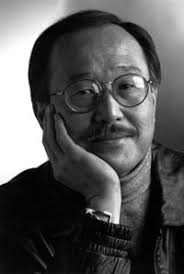
FILLING THE GAP When Bird died, I didn’t mind I had things to do— polish some shoes, practive a high school cha-cha-cha. I didn’t even know Clifford was dead: I must have been lobbing an oblong ball beside the gymnasium. I saw the Lady right before she died— dried, brittle as last year’s gardenia. I let her scratch an autograph. But not Pres. Too bugged to boo, I left as Basie’s brass booted him off the stand in a sick reunion— tottering , saxophone dragging himmlike a stage-hook. When I read Dr. Williams’ poem, “Stormy,” I wrote a letter of love and praise and didn’t mail it. After he died, it burned my desk like a delinquent prescription… I don’t like to mourn the dead: what didn’t, never will. And I sometimes feel foolish staying up late, trying to squeeze some life out of books and records, filling the gaps between words and notes. That is why I rush into our room to find you mumbling and moaning in your incoherent performance. That is why I rub and squeeze you and love to hear your live, alterable cry against my breast Lawson Fusao Inadafrom Jazz Poems ~ Selected and Edited by Kevin Young

More Posts: book,classic,collectible,history,jazz,library,poet
Requisites
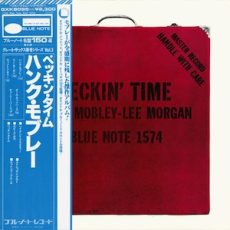
Peckin’ Time ~ Hank Mobley and Lee Morgan | By Eddie Carter
This morning’s record from the library is a perfect description of the term “two heads are better than one.” During the fifties and sixties, tenor saxophonist Hank Mobley and trumpeter Lee Morgan collaborated on several jazz albums. Peckin’ Time (Blue Note BLP 1574/BST 81574) is a 1959 release and one of their earliest dates together. Hank composed four of the five tunes on this album. They are joined by a fabulous rhythm section: Wynton Kelly on piano, Paul Chambers on bass, and Charlie Persip on drums. My copy is the 1978 King Record Company Japanese Mono reissue (Blue Note BLP 1574 – GXK 8095).
Side One takes off with the quintet’s brisk melody to High and Flighty. Hank starts right out of the gate quickly. Lee gets into a robust reading next, and then Wynton gives an enthusiastic statement. Charlie shares the closing solo with both horns in a vigorous conversation until the ensemble’s lively climax. The album’s only standard, Speak Low by Kurt Weill and Ogden Nash comes to life with the rhythm section’s Latin introduction to Lee beginning the theme and Hank completing the melody. Mobley opens with a warm tone in a delicate statement. Wynton enters next with a fine flow of ideas, then Lee eases into the finale before the theme’s restatement and finish.
Peckin’ Time is a catchy original beginning in a medium groove for the quintet’s melody. Wynton breaks the ice with a joyous and carefree solo. Hank approaches the following reading with confidence; then, Lee cooks in the third statement. Paul takes a short walk toward the front line’s final exchange into the closing chorus. Stretchin’ Out raises the temperature to begin Side Two with the ensemble’s fleet theme. Morgan takes flight first with a festive solo. Kelly fuels the second statement with energy, and then Mobley heats things up further before exchanging a few riffs with Persip. The drummer has a short workout until Morgan and Mobley add a few last thoughts to the ending.
Git Go Blues begins with the trio’s introduction leading to the quintet’s easygoing theme, giving way to Hank’s cheery opening statement. Lee continues the good feelings in the following solo. Wynton follows them both with a relaxing performance. Paul adds a concise comment next; then Hank ties it all together until the quintet takes it out after the theme reprise. Alfred Lion produced Peckin’ Time, and Rudy Van Gelder recorded the session. The album’s sound quality is excellent with a superb soundstage in the highs, midrange, and low end that’s sure to stand out on any good mid-fi or high-end audio system.
Hank Mobley and Lee Morgan always worked well together, and they consistently complimented each other’s playing. Lee appeared on seven additional Blue Note LPs with Mobley. Hank appeared on three records with Morgan. If you’re a fan of either musician and in the mood for excellent hard-bop jazz, I highly recommend and offer for your consideration, Peckin’ Time by Hank Mobley and Lee Morgan, the next time you’re out record shopping. It’s an enjoyable and entertaining album that’s sure to please any jazz lover and demonstrates why “two heads are better than one” fits this duo perfectly!
A Caddy For Daddy (Blue Note BLP 4230/BST 84230), A Slice of The Top (Blue Note LT-995), Charisma (Blue Note BST 84312), Cornbread (Blue Note BLP 4222/BST 84222), Dippin’ (Blue Note BLP 4209/BST 84209), Hank Mobley Sextet (Blue Note BLP 1540/BST 81540), No Room For Squares (Blue Note BLP 4149/BST 84149), Straight No Filter (Blue Note BST 84435), The Rajah (Blue Note BST 84426), Third Season (Blue Note LT-1081) – Source: Discogs.com
~ Speak Low – Source: JazzStandards.com © 2024 by Edward Thomas Carter
More Posts: choice,classic,collectible,collector,history,instrumental,jazz,music,saxophone,trumpet
Jazz Poems
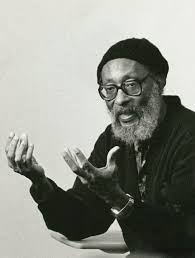
TRANE Propped against the crowded bar he pours into the curved and silver horn his old unhappy longing for a home the dancers twist and turn he leans and wishes he could burn his memories to ashes like some old notorious emperor of rome, but no stars blazed across the sky when he was born no wise men found his hovel, this crowded bar when dancers twist and turn, holds all the fame and recognition he will ever earn on earth or heaven. He learn against the bar and pours his old unhappy longing in the saxophoneKAMAU BRATHWAITE
from Jazz Poems ~ Selected and Edited by Kevin Young
More Posts: book,classic,collectible,history,jazz,library,poet
Requisites
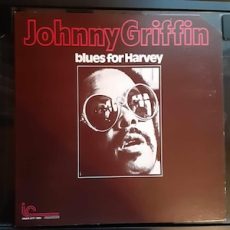
Blues For Harvey ~ Johnny Griffin | By Eddie Carter
It’s been a while since I listened to one of my favorite tenor saxophonists, Johnny Griffin, so I chose an album that became the inspiration for this morning’s discussion. Blues For Harvey (SteepleChase Records SCS-1004) is an excellent 1973 live date, and Johnny’s working with a stellar supporting cast: Kenny Drew on piano, Mads Vinding on bass, and Ed Thigpen on drums. My copy is the 1976 U.S. Stereo reissue (Inner City IC 2004). Johnny began his career in the forties playing the alto sax. He changed to tenor after joining Lionel Hampton’s Orchestra, and he’s played with Art Blakey, Eddie “Lockjaw” Davis, Kenny Clarke-Francy Boland Big Band and Thelonious Monk, to name a few.
The quartet begins the set with a trip to That Party Upstairs, the first of four by Johnny Griffin. The ensemble’s melody begins at an easy swing before stepping aside for Johnny’s lengthy opening statement. Kenny takes an interesting turn next; then Mads finishes with a carefree stroll ahead of the foursome’s theme restatement and close. Alone Again is a pretty ballad that Kenny introduces gently segueing into Johnny’s delicately tasteful theme and opening chorus. The pianist follows with an elegantly stylish interpretation; then, Mads makes a few intimate remarks preceding Griff’s return for a touching theme reprise and finale.
Side Two starts with Soft and Furry. Griff and Mads open with a dialogue over Ed’s soft supplement into the quartet’s haunting theme. Johnny opens the solos with an exceptionally rich tone. Kenny takes an exquisite performance next, and then Mads gives a tender interpretation before the tenor and bass reappear to lead the foursome to a beautiful climax. Blues For Harvey is dedicated to the Montmartre bartender, Harvey Sand. Griff sets the tone in the introduction and the quartet’s melody. Johnny takes the lead in an incredibly fleet interpretation. Kenny adds a bit of fire and drive in the second reading, and Ed has a vigorous exchange with the leader, leading to the ensemble’s brisk conclusion.
Rhythm-A-Ning by Thelonious Monk starts with the foursome’s quirky theme before Johnny takes flight with a speedy interpretation that seamlessly switches to The Theme before the song ends with Griff’s introduction of the quartet. Johnny Griffin and Nils Winther produced Blues For Harvey, and Nils also did double duty behind the dials of the recording. The album’s sound quality is good for a seventies live date, placing the listener in the Montmartre audience, and the quartet’s performance is enjoyable throughout. If you’re a fan of Griff’s playing or in the mood for hard bop, I offer for your consideration, Blues For Harvey by Johnny Griffin. It’s a little-known release in his extensive discography deserving of greater recognition and worthy of checking out for a spot in your library!
© 2024 by Edward Thomas CarterMore Posts: choice,classic,collectible,collector,history,instrumental,jazz,music,saxophone

Jazz Poems
CANARY For Michael S. Harper Billie Holiday’s burned voice had as many shadows as lights, a mournful candelabra against a sleek piano, the gardenia her signature under the ruined face. (Now you’re cooking, drummer to bass, magic spoon, magic needle. Take all day if you have to with your mirror and your bracelet of song.) Fact is, the invention of women under seige has been to sharpen love in the service of myth. If you can’t be free, be a mystery. RITA DOVEfrom Jazz Poems ~ Selected and Edited by Kevin Young
More Posts: book,classic,collectible,history,jazz,library,poet