

Requisites
Night Work ~ Sonny Stitt And The Giants | By Eddie Carter
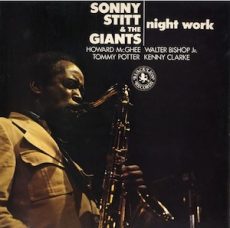
As a teenager growing up in the late sixties and early seventies, I was exposed to and enjoyed many different jazz saxophonists, thanks to my Mom and my uncles Ben, Bob, Emmanuel, and Mr. Leo Mintz. Sonny Stitt has always been one of my favorites. He enters this morning’s spotlight with Night Work (Black Lion Records BLP 30154) by Sonny Stitt and The Giants. It was initially recorded in 1967 but not released until 1974. Sonny Stitt is featured on alto sax (A1, A2, B1, B4), and the other giants are Howard McGhee (tracks: A1, A2, B3, B4) on trumpet, Walter Bishop Jr. on piano, Tommy Potter on bass, and Kenny Clarke on drums. My copy is the U.S. Stereo release (Black Lion BL-307).
The opener, Night Work by Howard McGhee, is an upbeat invitation to sit back, relax and ride the rhythm of the ensemble’s swift melody into Sonny’s opening solo. Howard has the next spot and delivers the goods with considerable agility, followed by Walter’s impeccably delivered reading. Howard and Sonny join forces to exchange a few ideas together before Kenny joins their conversation, leading to the reprise and ending. Matter Horns by the team of Eiger and Jungfrau slows the pace to mid-tempo for Stitt’s easygoing theme and relaxing opening statement. Howard comes in next with a pleasantly flowing solo. Walter continues the bluesy groove in the third reading. Tommy and Kenny add a great deal of pleasure to the next two interpretations ahead of the quintet, trading a few riffs together before the climax.
The second side starts with a gorgeous quartet rendition of Loverman by Jimmy Davis, Roger Ramirez, and Jimmy Sherman. It is a beautiful jazz standard that Sonny and the rhythm section begin with their exquisite melody. Sonny captures the standard’s delicacy and tenderness in the song’s lone interpretation preceding the foursome’s elegant conclusion. Both horns take a break for the rhythm section’s lovely version of Satin Doll by Duke Ellington, Billy Strayhorn, and Johnny Mercer. Walter shows a great deal of respect to Duke as he leads the trio through the introduction and melody. He continues making a personal impression on the song’s solo while Tommy and Kenny provide the support ahead of the theme’s restatement and close.
Howard steps into the spotlight with the rhythm section for Don’t Blame Me by Jimmy McHugh and Dorothy Fields. The trumpeter’s piercing tone penetrates the introduction before settling down for a pretty melody. Howard has an exceptionally fine spot as the song’s only soloist, complemented by the trio’s accompaniment culminating in a tender finale. Hello by Howard McGhee brings the album to a close and this song will remind listeners of Milt Jackson’s Bags’ Groove. McGhee’s muted trumpet shares the duties with Stitt during the melody. McGhee steps up first with an excellent muted solo. Bishop gets something cooking in the second statement, and then Stitt takes the spotlight next. Clarke gets the last word in an exchange with both horns ahead of the theme’s reprise and ending.
Alan Bates produced Night Work, and Helmuth Kolbe was behind the dials of the recording. The album’s sound quality is quite good with a solid soundstage that transports the listener to the studio as the musicians are playing. Sonny Stitt was one of the best jazz saxophonists, with a career lasting nearly four decades and a recorded discography of over one hundred albums. He was also proficient on the tenor sax and baritone sax. This is one of his best records, in my opinion, and if you are in the mood for a great sax album, I invite you to check out Night Work by Sonny Stitt and The Giants on your next record-shopping trip. If you’re looking to start a collection of his music, it’s worth seeking out for your library and a title I’m sure you’ll enjoy!
~ Don’t Blame Me, Loverman, Satin Doll – Source: JazzStandards.com © 2024 by Edward Thomas Carter
More Posts: choice,classic,collectible,collector,history,instrumental,jazz,music,saxophone
Jazz Poems
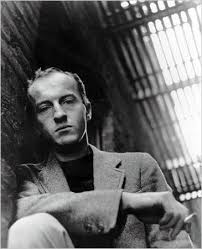
THE DAY LADY DIED It is 12:20 in New York a Friday three days after Bastille Day, yes it is 1959 and I go get a shoeshine because I will get off the 4:19 in Easthampton at 7:15 and then go straight to dinner and I don’t know the people who will feel me I walk up the muggy street beginning to sun and have a hamburger and a malted and buy an ugly NEW WORLD WRITING to see what the poets in Ghana are doing these days I go on to the bank and Miss Stillwagon (first name Linda I once heard) doesn’t even look up my balance for once in her life and in the GOLDEN GRIFFIN I get a little Verlaine for Patsy with drawings by Bonnard although I do think of Hesiod, trans. Richmond Lattimore or Brendan Behan’s new play or Le Balcon or Les Nègres of Genet, but I don’t, I stick with Verlaine after practically going to sleep with quandariness and for Mike just stroll into the PARK LANE Liquor Store and ask for a bottle of Strega and then I go back where I came from to 6th Avenue and the tobacconist in the Ziegfeld Theatre and casually ask for a carton of Gauloises and a carton of Picayunes, and a NEW YORK POST with her face on it and I am sweating a lot by now and thinking of leaning on the john door in the FIVE SPOT while she whispered a song along the keyboard to Mal Waldron and everyone and I stopped breathing FRANK O’HARAfrom Jazz Poems ~ Selected and Edited by Kevin Young

More Posts: book,classic,collectible,history,jazz,library,poet
Requisites
Xocia’s Dance (Sue-sha’s Dance) ~ Harold Land | By Eddie Carter
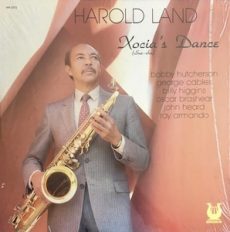
Harold Land takes the stage for this morning’s discussion with an excellent hard bop album, Xocia’s Dance (Sue-sha’s Dance) (Muse Records MR 5272). He was one of the best West Coast tenor saxophonists during the fifties and sixties. His resume includes playing with the Clifford Brown/Max Roach Quintet, The Curtis Counce Group, The Gerald Wilson Orchestra, and The Timeless All-Stars. Xocia’s Dance reunites Harold with Bobby Hutcherson, who co-led a quintet with him thirteen years earlier. He is joined on this date by Oscar Brashear on flugelhorn (track: B2) and trumpet (A1 to A3), Bobby Hutcherson (A2, A3, B2) on vibes, George Cables on piano, John Heard on bass, Billy Higgins on drums, and Ray Armando (B1) on percussion. My copy is the original 1982 U.S. Stereo release.
Side One opens with Dark Mood, an original by Harold Land that is introduced by the trio ahead of the quintet’s lively theme. Harold gets things started, and then Oscar follows with a clearly inspired performance. George approaches the third reading with driving enthusiasm; then, all three soloists share a moment before the closing chorus and vibrant ending. Daisy Forever is a pretty tune by Oscar Brashear that Bobby gets started ahead of the group’s lovely melody. Brashear leads the way with a solo of seductive warmth; then, Land shows great care in the following reading. Hutcherson enters for the first time and delivers a beautiful interpretation. Cables provides the final gentle verses leading to the group’s closing chorus and slow dissolve.
Xocia’s Dance (Sue-sha’s Dance) comes from the pen of Harold Land, Jr., and the pace moves upward to a lively beat. The trio’s introduction heads toward the ensemble’s medium theme. Harold Sr. has the first solo and gets into a remarkable groove. Oscar answers him with a tasty reading as sweet as honey, and then George provides an exclamation point into the theme’s restatement and close. Side Two opens with Ah, I See, a beautiful tune by Charles Tolliver that starts with Harold’s and Bobby’s tranquil yet haunting theme. Land picks up the pace for a sweetly melodic opening statement, then gives way to Hutcherson’s delightful interpretation. Cables comes in softly and with feeling next before Harold returns for a restrained ending.
The album ends with a romantic postscript by Harold Land. To Lydia, With Love is a touching tribute to his wife and the mood is delicately expressed in the introduction and theme. Harold begins the opening solo lovingly, succeeded by Bobby’s equally thoughtful reading. Oscar’s flugelhorn delights with a beautiful statement. George conveys the feeling of everlasting love in a short anecdote ahead of the ensemble’s closing chorus and fadeout. Esmond Edwards produced Xocia’s Dance, and Jim Mooney was the recording engineer. The album’s sound quality is good, except for a bit of harshness during the piano solo on Ah, I See. The music, however, is terrific and quite capable of brightening anyone’s mood after a long day or week.
In addition to Xocia’s Dance, Harold Land recorded fourteen albums as a leader and appeared in some of the best jazz albums as a sideman. He co-led groups with Billy Higgins, Blue Mitchell, and Red Mitchell. Land later became a professor at the University of California and joined the UCLA Jazz Studies. He passed away on July 27, 2001, from a stroke at age seventy-two but is still remembered as a brilliant improviser and one of the best to play the tenor sax. If you’re a fan of West Coast jazz, I invite you to check out Xocia’s Dance (Sue-sha’s Dance) by Harold Land on your next record shopping trip. It’s a hidden gem in his discography and a personally satisfying album that I can happily recommend for a spot in your library!
~ Harold Land – Source: Wikipedia.org © 2024 by Edward Thomas Carter
More Posts: choice,classic,collectible,collector,history,instrumental,jazz,music,saxophone
Jazz Poems
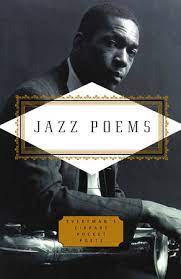
WHAT I’M WILD FOR I broke when I was ten and forty- year-old Mr. D. was clambering on top of me and it was all I could do to kick him back, keep the red ceiling light in sight, and wait for her to find me. So this is what she’s on her knees for every night, praying for Pops to come on back, rip her skirt off and ride her until it’s only skin she ever wants to feel again. I wanted to fling that in her face the way a slick trumpeter cat from Philly flung any panties at me summer I was fifteen. I’ve seen more love in Alderson, behind the warden’s back, behind Jim Crow’s back on the way home from movies: dykes would touch hands, feed cigarettes to one another like they were kisses, before the cells broke us all up–- forgers, whores, boosters, pushers, users. The soldiers had it, too, begging for pieces of my dress and stockings, tearing them to petals under their noses because they have the smell of woman on them. I could love a whole army like that. But two husbands later and the hungry I feel is not the 600-miles-a-night on a bus flashing slow silver between gigs while my stomach opens wide. The cure for that is simple as a couple bucks, red beans and rice. What I’m wild for is a few grains of dope and the shakes I get from head to satin feet when it’s “Strange Fruit.” One night, mybody can’t
hold me down, the notes break clean, and no one can see me, but they point to the voice flying over the band and say, Billie, nobody sings hunger like you do, or love. JANET M. CHOIfrom Jazz Poems ~ Selected and Edited by Kevin Young
More Posts: book,classic,collectible,history,jazz,library,poet
Requisites
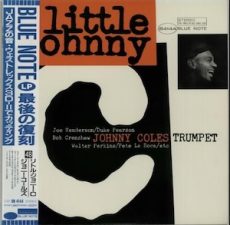
Little Johnny C ~ Johnny Coles | By Eddie CarterIt happened like this: after listening to Bass on Top, my memories of my mom led me to another of her favorite jazz albums. Little Johnny C (Blue Note BLP 4144/BST 84144) by Johnny Coles is the trumpeter’s second release as a leader and his only Blue Note session. It was recorded in 1963 and released the following year. Johnny’s joined on this hard bop date by Leo Wright on alto sax (tracks: A1 to A3, B2, B3) and flute (B1), Joe Henderson on tenor sax, Duke Pearson on piano, Bob Cranshaw on bass, Walter Perkins (A1 to A3), and Pete La Roca (B1 to B3) on drums. My copy is the 1990 Toshiba EMI Japanese Stereo reissue sharing the original catalog number.
Little Johnny C is the first of five tunes by Duke Pearson. It kicks off Side One at a fast tempo with Duke’s brisk introduction to the front line’s lively theme. Leo comes out cooking first; then Johnny steps swiftly into the second statement. Joe wails in the following solo; then Duke shows his impressive skills into the group’s climax. Hobo Joe by Joe Henderson is a Latin-flavored blues that opens with the trio’s introduction, ahead of the sextet’s easy going melody. Coles begins this pleasant trip; then, Pearson picks up the next part of the journey. Wright continues the leisurely caravan, and Henderson concludes the trek in a fine finale ahead of the theme’s return and the trio’s fadeout.
Jano picks up the beat to end the first side with the ensemble’s medium melody. Leo sets the scene in the opening solo. Johnny takes over for a lengthy reading; then Joe builds the third statement exquisitely. Duke provides the closing remarks before the group returns to take the song out. My Secret Passion is a pretty ballad taken at a medium bounce, with Johnny leading the sextet in the melody and Pete La Roca taking over on drums. Coles opens the solos with a warm tone. Henderson displays delicacy and sensitivity in the following reading. Wright comes in next on the flute and gives a heartwarming statement. Pearson’s soulful interpretation brings us back to the reprise and ending.
Heavy Legs delivers an upbeat invitation to relax and enjoy the sextet’s ride through the opening chorus. Johnny is concise and to the point in the first reading. Joe follows with an equally enjoyable solo; then Leo steps in next for a rousing interpretation. Duke brings the solos to a happy conclusion ahead of the sextet’s theme restatement, slowly dissolving into nothingness. So Sweet My Little Girl is Pearson’s tribute to his then seven-year-old daughter, Cynthia. Johnny starts the melody softly with the saxes in the background. It sets the scene for the pianist’s tender performance as the song’s only soloist, leading to the front line’s return for a gentle climax.
Alfred Lion produced Little Johnny C and Rudy Van Gelder was the man behind the dials of the recording. The album sounds amazing, with a stellar soundstage that’s so good you’ll think you’re in the studio with the musicians as they are playing. Toshiba EMI did an excellent job with this reissue and the record is also very quiet until the music starts. Johnny only recorded five albums as a leader but has an extensive discography as a sideman. If you’re a hard bop fan and unfamiliar with Johnny Coles, I invite you to look out for Little Johnny C on your next record shop visit. It’s simply a great jazz album that I’m sure would make a perfect addition to any library and become a favorite on your turntable! © 2024 by Edward Thomas Carter
More Posts: choice,classic,collectible,collector,history,instrumental,jazz,music,trumpet