

Requisites
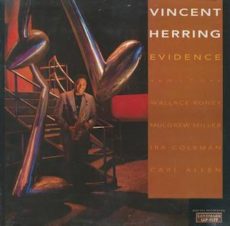
Evidence ~ Vincent Herring | By Eddie CarterThis next choice from the library is by alto saxophonist Vincent Herring who I first heard at the 1992 Atlanta Jazz Festival as a member of The Nat Adderley Quintet. Their performance was a highlight of the AJF, and Herring’s solos were breathtaking throughout the set, mesmerizing the crowd. Evidence (Landmark Records LLP-1527) is his second album as a leader, and accompanying him are Wallace Roney on trumpet, Mulgrew Miller on piano, Ira Coleman on bass, and Carl Allen on drums. My copy used in this report is the 1991 Swiss Digital Stereo pressing.
Side One opens with Mr. Wizard by Vincent and Larry Willis, swinging from the outset with an invigorating theme statement. Wallace takes off first driven by jet propulsion, followed by an energetic workout by Vincent. Mulgrew speaks last with a fierce intensity preceding an exuberant closing chorus and abrupt ending. The mood moves to a slower tempo for a beautiful rendition of I Sing a Song by Tex Allen. This tune opens showing grace and politeness with a Bossa-Nova beat on the melody. Roney begins with a seductively appealing performance, the altoist delivers a sublimely beautiful reading next. Miller’s closing presentation is an equal mix of elegance, poignancy, and warmth. Stars Fell on Alabama, the 1934 jazz standard by Frank Perkins and Mitchell Parish is a touching tribute to Cannonball Adderley who recorded it on Cannonball Adderley Quintet in Chicago (1959). Vincent opens the soloing with a sweet lyricism like a rare vintage wine that’s mellowed with age. Mulgrew adds a richly evocative romanticism to the finale matched by Ira and Carl’s tender interplay.
Voyage by Kenny Barron is the Side One finale with a lively, uptempo beat by the quintet on the opening chorus. Herring solos first with a captivating interpretation. Roney bursts into the next reading with a blazingly hot attack of electrically charged energy. Miller takes the final spot for an effervescent statement into the reprise and ending. Never Forget is Herring’s second contribution to the album and a very pretty ballad by Vincent expressing a voluptuous richness on the opening chorus and affectionate intimacy on the lead solo. Mulgrew gives a vivid example of his ability to communicate something special by caressing each phrase of the closing reading, making it truly distinctive and memorable for a deeply satisfying performance.
Evidence was written by Thelonious Monk in 1948, this jazz standard was first recorded as a single, and later on Milt Jackson and The Thelonious Monk Quintet (1955). The quintet starts with a happy groove exhibited in the opening statement by Herring showing a remarkable maturity beyond his age. Roney takes over in fine spirits and exceptional form on the second solo. Miller comes in next for an equally inspired reading. Carl shares the finale with all three soloists before the ensemble’s exit. Soul-Leo by Mulgrew Miller begins with a joyous medium theme. Wallace delivers tremendous excitement on the first solo. Vincent continues with an infectious groove next, then Mulgrew provides the summation ahead of a few closing comments by Vincent into the close.
The engineer on Evidence is Paul Goodman who has a large discography of notable jazz albums for Atlantic, Cobblestone, Elektra Musician, MPS Records, Muse Records, Onyx Records, Prestige, RCA Victor, and Xanadu. The digital mastering is by George Horn who also has a lengthy resume of albums at Fantasy Studios, and his own company, George Horn Mastering. The quality of this digital recording is splendid with a natural soundstage surrounding your listening chair with sweet sounds. In his closing remarks of the liner notes, producer Orrin Keepnews described Vincent Herring as “a force to be reckoned with in the world of jazz”. I agree with his statement and will only add that Vincent’s playing is indeed a satisfying experience supporting the Evidence found in the seven selections on this album!
~ Cannonball Adderley Quintet in Chicago (Mercury Records MG 20449/SR 60134), Evidence (Blue Note 549), Milt Jackson and The Thelonious Monk Quintet (Blue Note BLP 1509/BST 81509) – Source: Discogs.com ~ Stars Fell on Alabama – Source: JazzStandards.com © 2021 by Edward Thomas Carter

More Posts: choice,classic,collectible,collector,history,instrumental,jazz,music,saxophone
Requisites
Great Encounters ~ Dexter Gordon | By Eddie Carter
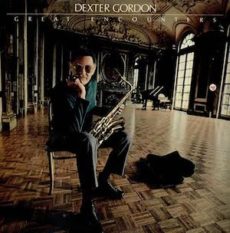
Dexter Gordon steps into the spotlight for this report with two sessions making up the album, Great Encounters (Columbia JC 35978). Side One consists of two tracks recorded live at Carnegie Hall on September 23, 1978. The three tracks on Side Two were recorded at CBS Recording Studios on May 1, 1978, and January 26, 1979. The personnel appearing with Dexter on this record are Woody Shaw on trumpet, Curtis Fuller on trombone, and Eddie Jefferson on vocals (tracks: B1, B3), Johnny Griffin on tenor sax (tracks: A1, B1), George Cables on piano, Rufus Reid on bass, and Eddie Gladden on drums. My copy used in this report is the 1979 US Stereo album.
Blues Up and Down was written in 1950 by Gene Ammons and Sonny Stitt. This tune is the epitome of the terms, “blowing session”, or “cutting session”, and was first heard on Battle of The Saxes. Both saxophonists begin the melody at a blistering speed. Dexter gives a lengthy performance rivaling the speed of Indy 500 race cars. Johnny responds with an amazing quickness on the next reading. Dex and Griff continue sparring with each other vigorously until the climax. Cake, a Gordon original, was written in 1962, premiering on his album Go, as Cheese Cake. The trio makes an efficient introduction, then both horns work together on the melody. Gordon goes first with a heated reading. Griffin delivers the second solo with the impact of a brick through a plate-glass window and Gladden has a brief conversation with both saxes into the close. Both songs also appear on the CD album, Live at Carnegie Hall (1998).
The mood changes to start Side Two with a rollicking rendition of Gordon and Jefferson’s original Diggin’ In. The front line gets the party started with a lively introduction, then Jefferson stokes the engines with an impressive vocal melody and an exchange with Dexter on the lead solo. The saxophonist takes over for a jubilant reading that swings like mad. Woody comes in next to fuel the rhythm section with fire from his horn. Curtis gets the last word with an enthusiastic presentation. Ruby My Dear was written by Thelonious Monk in 1947 and appeared on Genius of Modern Music (1952). Lyrics were added by Sally Swisher for Carmen McRae who sang it on her tribute album, Carmen Sings Monk (1990). Gordon’s opening statement is picturesque, lovely, and elegantly presented. Cables expresses a haunting dreaminess on the second reading ahead of a gentle climax.
It’s Only a Paper Moon was written in 1933 by Harold Arlen, E.Y. Harburg, and Billy Rose. The song starts on a joyous introduction by the trio segueing into the lively opening chorus by Dexter. Eddie creates pure pleasure in a vigorous vocal interpretation. Dex is inspired on the following statement, then Woody has a brief uptempo improvisation that’s especially gratifying. George communicates his excitement next on a short statement and Curtis hits a perfect stride with a concise comment before the ending. The choice of using Jefferson for this album happened when Dexter met up with him at The Tin Palace after performing at The Village Vanguard. My only regret is that he couldn’t be used for the entire album instead of just two tracks. Eddie was an innovator of Vocalese, his treatments of classic songs and ballads were fresh and exciting, possessing a tremendous fire and imagination.
Six months after this recording session, Eddie Jefferson was shot and killed after leaving Baker’s Keyboard Lounge in Detroit, Michigan on May 8, 1979, by a disgruntled dancer he fired. The engineers behind the dials on Great Encounters are Tom Arrison (tracks: A1, A2), Don Puluse (track: B1), and Jerry Smith (tracks: B2, B3). The live and studio tracks are wonderfully recorded with a stunning soundstage that places the listener in the concert venue and the studio. If you’re a fan of Dexter Gordon, Great Encounters is an underrated album of wonderful performances that I recommend for your library, and it might just become one of your favorites!
~ Vocalese – a musical composition consisting of the singing of melody with vowel sounds or nonsense syllables rather than text, as for special effect in classical compositions, in polyphonic jazz singing by special groups, or in virtuoso vocal exercises. Source: Dictionary.com
~ Battle of The Saxes (Prestige PRLP 107), Carmen Sings Monk (Novus 3086-1-N), Extensions (Atlantic SD 19258), Genius of Modern Music (Blue Note BLP 5002), Go (Blue Note BLP 4112/BST 84112), Live at Carnegie Hall (Columbia Legacy CK 65312) – Source: Discogs.com ~ Eddie Jefferson, It’s Only a Paper Moon, Ruby My Dear – Source: Wikipedia.org ~ © 2021 by Edward Thomas Carter
More Posts: choice,classic,collectible,collector,history,instrumental,jazz,music,saxophone

Requisites
Open House~Jimmy Smith | By Eddie Carter
During his time at Blue Note, any album by Jimmy Smith was considered something special to have in one’s library. Jimmy knew his instrument and his contributions to help popularize the Hammond B3 organ in Hard-Bop and Soul-Jazz are a notable achievement. Open House (Blue Note BLP 4269/BST 84269) was recorded in 1960 but remained shelved until 1968. The gentlemen joining Jimmy for this informal session are Blue Mitchell (tracks: A1, B1) on trumpet, Jackie McLean (tracks: A1, B1, B2) on alto sax, Ike Quebec (tracks: A1, A2, B1) on tenor sax, Quentin Warren on guitar, and Donald Bailey on drums. This lineup also appears on the companion album, Plain Talk, and my copy used in this report is the 1970 US Stereo reissue.
Side One starts with a visit inside Jimmy’s Open House. The ensemble builds the melody gradually with Jimmy alternating sections with the front line. Blue opens the lead solo with a relaxing informality, then Jackie takes over in low gear on the second reading, building steadily to a satisfying groove. Ike comes in next for a delightful interpretation and Jimmy wails on the closing statement preceding the ending theme and fadeout. Old Folks by Willard Robison and Dedette Lee Hill is one of the prettiest jazz standards ever recorded. It was composed in 1938 and Quebec gets the honors as the only horn, backed by the trio. Ike’s deeply thoughtful stating the pensive theme and also gives a tender first statement. Jimmy closes with a reflective comment before Quebec returns to take the song out with a tender ending.
The sextet begins Side Two with a visit to Jimmy’s Sista Rebecca. After a brief collective theme by the ensemble, Ike moves into a steady medium tempo on the opening chorus with the trio comfortably backing him. Blue follows, sailing smoothly with a sassy groove that’s sure to get the listener to snap their fingers and tap their toes. Jackie’s alto flows nicely on the third reading and Jimmy adds the final touch with some down-home country cooking leading to the theme’s reprise and fadeout. A pretty introduction and melody by McLean begins the 1928 song, Embraceable You by George and Ira Gershwin. The altoist creates a romantic atmosphere with a dreamy lead solo, then Jimmy briefly conveys a loving sentiment into an elegant ending.
Open House was produced by Alfred Lion and engineered by Rudy Van Gelder. The good news is the musicians are excellent, the music features great solos from the principals and solid support from Warren and Bailey. The issue I have with the record is the microphone placement for Jimmy’s organ has a tone of harshness as he’s playing on two of the tunes (tracks: A1, B1). I think that’s the reason the album wasn’t released after the session was recorded. That issue aside, if you’re a fan of Jimmy Smith, Soul-Jazz, or enjoy jazz organ, I invite you to audition Open House for a spot in your library. It’s one of the albums deserving greater recognition and with a stellar supporting cast of Blue Mitchell, Jackie McLean, and Ike Quebec is worth the price of admission! ~ Plain Talk (Blue Note BST 84296) – Source: Discogs.com ~ Embraceable You, Old Folks – Source: JazzStandards.com © 2021 by Edward Thomas Carter
More Posts: choice,classic,collectible,collector,history,instrumental,jazz,music,organ
Requisites
To Duke With Love~Art Farmer | By Eddie Carter
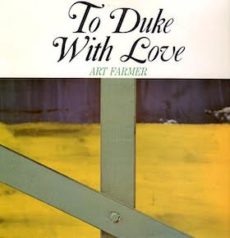
I was looking for something to play a few nights ago when I came across a 1976 album by one of my favorite trumpet players, Art Farmer. To Duke With Love (East-West EW-8012) is this morning’s choice from the library submitted for your consideration. I’d forgotten how much I enjoyed this record and after listening, began writing about it for this week’s column. This album was one of my Mom’s favorites and she loved the velvety softness of Art’s flugelhorn. It was because of her love of jazz and the joy of listening to the albums together that I became a fan also. Art plays the flugelhorn exclusively on this six-song letter to Duke Ellington and he’s working with a brilliant trio, Cedar Walton on piano, Sam Jones on bass, and Billy Higgins on drums. My copy used in this report is the 1978 Stereo reissue (Inner City Records IC 6014).
Arthur Stewart Farmer’s first album as a leader was Work of Art (1954). He co-led The Jazztet with Benny Golson from 1959 to 1962. After the group disbanded, he had a successful twenty-year solo career until the band reformed in 1982 to 1986. Art reunited with The Jazztet again during the nineties to perform live at various festivals. He was comfortable in any setting and could play anything, on an uptempo tune, Farmer played vigorously with a fiery passion. At midtempo, his gift of expression was precisely defined, and with slow-tempo ballads and standards, Art skillfully constructed them with innocence and romanticism.
Cedar Walton was an immensely gifted and prolific pianist who typically built perfect solos from simple ideas, proving himself an exemplary accompanist and versatile leader in large ensembles and small groups.
Sam Jones had a beautiful sound on bass with a splendid technique and a marvelous grasp of harmony, he’s best known as one-third of the rhythm section in The Cannonball Adderley Quintet and Sextet. Sam was among the first to make the cello sound plausible on a jazz album, and his bass lines always enhanced any record as the leader of the date or as a sideman. Billy Higgins was the drummer of choice on some of the most memorable Hard-Bop and Free Jazz recordings. He appeared on over seven hundred records including Funk and Rock albums. There was an unmistakable power in his playing, but when called upon, Billy’s drumming could also be considerate and thoughtful, and he brought his A-game every time he sat behind the drums.
Side One opens with the 1935 jazz standard, In a Sentimental Mood by Duke Ellington and Manny Kurtz. Art makes an enticingly delicate introduction to the melody, then takes the lead on a slow and sultry statement. Cedar follows with an impressively tender interpretation into the foursome’s luscious close. The 1931 Duke Ellington, Irving Mills standard, It Don’t Mean a Thing begins with an energetic introduction by Jones backed by just Higgins before Farmer and Walton come in to state the theme. Walton takes off first with a briskly stated opening chorus after a brief riff by Higgins. Farmer follows, adding some searing heat on the next performance. Jones gets the last word with an exuberant closing statement ahead of the quartet’s exit.
The Star-Crossed Lovers appeared on Such Sweet Thunder (1957) as part of a twelve-part suite based on the works of William Shakespeare. This Duke Ellington, Billy Strayhorn tune gives Farmer a showcase to emerge ever so gently on the theme after a luscious introduction by Cedar. Art gives a pretty presentation as sweet as Johnny Hodges achieved on the original song. Cedar also performs beautifully on a gorgeous finale before the coda. Duke Ellington’s The Brown Skin Girl In The Calico Gown was first recorded by Duke and Ella Fitzgerald on Ella at Duke’s Place (1965). It starts Side Two with a duet by Farmer and Jones, segueing into the ensemble’s touching theme. Farmer has the first spot with an attractive interpretation. Walton takes the reins next and is enchanting preceding the unison ending.
The standard Lush Life is afforded a slow, meditative treatment on the opening chorus. Billy Strayhorn wrote the song in 1933 but fine-tuned it until 1938 when he performed it for Ellington. The song’s lyrics describe the author’s weariness of the nightlife after a failed romance. Art paints from a seductive palette of delicacy and elegance on the first solo. Cedar infuses the next reading with a tender expression of love, culminating an exquisite rendition. The album wraps with Duke Ellington’s Love You Madly, written in 1950 and featured on Duke’s Big 4 (1974). After a short Walton introduction, the ensemble provides a happy aura led by Farmer who grooves at midtempo on the melody and lead solo. Walton eases into a medium groove on the final reading that’s an absolute joy.
To Duke With Love was recorded in 1975 by East-West Music in Japan, less than one year after Ellington passed away. The engineer is Ben Taylor and Stan Ricker mastered the album at JVC Cutting Center. It has an excellent soundstage, effectively capturing the essence of Art’s tastefully restrained tone. Farmer recorded over sixty albums as a leader, over seventy as a sideman, and an additional twelve as a member of The Jazztet. He passed away from a heart attack on October 4, 1999, at age seventy-one. If you’re a fan of Art Farmer and in the mood for some soothing jazz, To Duke With Love is a great session honoring one of the greatest composers of all time, Duke Ellington. It’ll repay its owner with many listens for years to come and I highly recommend it for a spot on your shelf! ~Duke’s Big 4 (Pablo 2310-703), Ella at Duke’s Place (Verve Records V-4070/V6-4070), Such Sweet Thunder (Columbia CL 1033) – Source: Discogs.com ~In a Sentimental Mood, It Don’t Mean A Thing, Lush Life – Source: JazzStandards.com ~Art Farmer, The Star-Crossed Lovers, The Brown Skin Girl In The Calico Gown, Lush Life, Love You Madly – Source: Wikipedia.org © 2021 by Edward Thomas Carter
More Posts: choice,classic,collectible,collector,history,instrumental,jazz,music,trumpet
Requisites
Julie Is Her Name ~ Julie London | By Eddie Carter
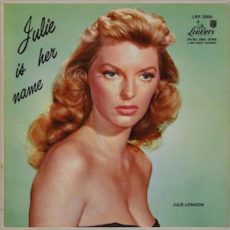
This morning’s choice from the library is the debut album by Julie London. She was a talented actress who starred in several forties and fifties Hollywood films, a sexy pinup model and nightclub singer with a stunning figure to match her luxurious voice. Julie Is Her Name (Liberty LRP 3006/LST 7027), is a half-hour journey of intimate music that’s perfect to enjoy while unwinding after a long day or to help spark a romantic evening ahead. Accompanying Julie on vocals are Barney Kessel on guitar and Ray Leatherwood on bass. My copy used in this report is the 1955 US Mono reissue made at Capitol Records Pressing Plant in Scranton, Pennsylvania. The second pressing turquoise labels are distinguished from the Deep Groove original by a small circle around the center hole on each side.
Side One starts with her biggest hit, Cry Me A River by Arthur Hamilton, a high school classmate. Julie sings the lyrics with elegance and warmth as she turns the tables on a lover who hurt her and now finds himself the recipient of a broken heart. Barney and Ray complement her with their subtle supplement into a gentle fadeout. I Should Care by Sammy Cahn, Alex Stordahl, and Paul Weston was written in 1944, appearing in Thrill of a Romance, a year later. The trio approaches the romantic theme efficiently. Julie caresses the lyrics softly and tenderly, and Kessel has a lush interlude in between that’s seductively silky. Barney and Ray lead the way into I’m In The Mood For Love by Dorothy Fields and Jimmy Hugh. Julie reflects the song’s tenderness with deep sensitivity ahead of a gorgeous ending.
I’m Glad There Is You by Jimmy Dorsey and Paul Madiera is tailor-made for Julie’s provocative delivery of the lyrics. Kessel and Leatherwood are splendidly entertaining in support before the trio’s lush climax. Can’t Help Lovin’ That Man was first heard in the 1927 musical, Show Boat as Can’t Help Lovin’ Dat Man. It’s one of Oscar Hammerstein II and Jerome Kern’s most famous songs. The ensemble presents an exquisite example and Julie shows respect to the lyrics with a bluesy vocal interpretation that flows smoothly. Cole Porter’s I Love You was introduced in the 1944 musical, Mexican Hayride. The trio begins deceptively at a slow tempo before the pace moves upward and Julie turns loose a little gaiety on a swinging statement.
The second side gets underway with Say It Isn’t So by Irving Berlin from 1932. Julie’s indelible opening chorus characterizes a sincere plea to the man she loves to reassure her that the rumor he no longer loves her and is planning to leave isn’t true. Her haunting words are delicately expressed with Barney and Ray providing the gentle groundwork preceding a calm climax. Up next is It Never Entered My Mind, a show tune that premiered in the 1940 musical, Higher and Higher. This well-recorded standard from the pen of Richard Rodgers and Lorenz Hart speaks of loneliness, regret, and remorse. Julie and Kessel make it an intimately personal duet that’s deeply poignant with an emotional emphasis on love and sorrow anyone can identify with.
Julie and her bandmates take a slow tempo trip to Easy Street next. This jazz standard was written by Alan Rankin Jones in 1940 and transports us to a place where life is good, and people are comfortable, content, and happy. Her lyrics are equally carefree and dreamy. Barney and Ray augment the vocalist with a soft supplement and Barney gets a brief solo ahead of the close. George & Ira Gershwin introduced S’ Wonderful in the 1927 musical, Funny Face. It later became a popular jazz standard with many notable recordings. Kessel starts the song vigorously with an enthusiastic introduction segueing into a dazzlingly agile melody by Julie who then slows down to wrap up the song reinforced by Kessel and Leatherwood’s backing.
No Moon At All by David Mann and Redd Evans is a jazz standard that was composed in 1947. It’s a romantic tune, and Julie beckons her lover like a siren with seductively sultry lyrics on the melody. Barney and Ray accompany her as she plans a night of romance beginning with one kiss. Laura by David Raskin and Johnny Mercer needs no introduction. It’s a timeless 1944 standard that became a hit after the Film-Noir drama of the same name. Julie sings the first chorus of the haunting melody without any accompaniment. Kessel and Leatherwood add their serene support as her voluptuous vocals are profoundly moving into a gentle coda. The finale, Gone With The Wind by Allie Wrubel and Herb Magidson is a passionately tender showcase by Julie and the duo who back her delicately into a graceful fadeout.
The Mono copy of Julie Is Her Name was produced by Bobby Troup (who would become her second husband) and engineered by John Neal. John Kraus who also engineered albums on Atlantic, Capitol, Contemporary, Dot, Jazz West, and London worked on the Stereo reissue. I was pleasantly surprised with the sound quality for a record nearly sixty-six years old, it’s quite good. Julie’s vocals are seductive, and Barney Kessel and Ray Leatherwood respond with sheer beauty behind her. The Capitol Records reissues have a misprint, the tracks are reversed on both sides. The Side Two songs are on the Side One label and the Side One songs, on Side Two. How this error was overlooked, I’ll never know, especially since Capitol uses the original Liberty pressing back cover, but that seems to be the only issue with my copy.
Torch singing became Julie’s specialty over her fourteen-year recording career, and she made thirty-one albums at Liberty, earning her the nickname, The Liberty Girl. She also found success on television, becoming most famous for her portrayal of Dixie McCall on the series, Emergency for six years. A chain smoker since she was sixteen, Julie suffered a stroke in 1995 and developed lung cancer a few years later. She passed away from cardiac arrest at age seventy-four on October 18, 2000. If you’re seeking some easy-listening, jazz vocals for your library, make a note to pick up Julie Is Her Name by Julie London on your next vinyl hunt. It marks the beginning of a terrific jazz vocalist and is a lovely way to spend the evening with that special someone!
~Can’t Help Lovin’ That Man, Gone With The Wind, I Love You, I Should Care, I’m Glad There Is You, I’m In The Mood For Love, It Never Entered My Mind, Laura, ‘S Wonderful, Say It Isn’t So – Source: JazzStandards.com ~Cry Me A River, Easy Street, No Moon at All – Source: Wikipedia.org © 2021 by Edward Thomas CarterMore Posts: choice,classic,collectible,collector,history,instrumental,jazz,music,vocal