

Requisites
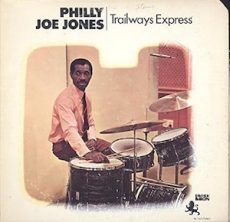
Trailways Express ~ Philly Joe Jones | By Eddie Carter
A few nights ago, I spent the evening listening to albums by three of my favorite drummers: Art Blakey, Elvin Jones, and Philly Joe Jones. This morning’s record from my library inspired me to take a trip aboard the Trailways Express (Polydor – Black Lion Records 2460 142), a 1971 U.K. release by Philly Joe Jones. It was his sixth album as a leader and was recorded in 1968, a year after he moved to London. He’s accompanied on this date by Les Condon on trumpet (track: B1), Kenny Wheeler on flugelhorn (A1 to A3, B2, B3) and trumpet (B1), Chris Pyne on trombone (B3), Peter King on alto sax (A2, A3, B1 to B3), Harold McNair on flute (A2, B2) and tenor sax (A1, B1 to B3), Mike Pyne on piano, John Hart (B1), and Ron Matthewson (A1 to A3, B2, B3) on bass. My copy is the 1975 U.S. Stereo reissue (Black Lion Records BL-142).
The group jumps headfirst into the spirited melody of Mo Jo by Philly Joe Jones. Mike ignites the opening statement with electrifying notes. Harold continues creating a crisp, upbeat solo, and then Kenny glides and soars smoothly on the flugelhorn next. Mike and Philly exchange ideas as the song progresses until the final chorus and conclusion. The tempo shifts as the front line introduces Gone, Gone, Gone by George and Ira Gershwin. It starts with a slower beat that steadily climbs as the septet embarks on their theme. Peter is up first and delivers a vibrant interpretation. Kenny, still on flugelhorn, spreads his wings next. Philly’s exquisite brushwork closes the solos before the ensemble returns to the theme.
Baubles, Bangles, and Beads by Robert Wright, George Forrest, and Alexander Borodin begins with Philly’s short introduction, preceding the group’s lively melody. Peter initiates the good times in the first solo, followed by Kenny, again on flugelhorn, who keeps the brisk mood alive. Mike takes over for a short, jubilant performance, and then Ron walks in vivaciously. Philly Joe precedes the ensemble’s closing chorus with a succinct remark. The title tune, Trailways Express by Philly Joe Jones, kicks off Side Two with Les taking over on trumpet and Philly’s introduction calling the group to action. Harold lights the fuse in the opening presentation; then Peter continues spreading the fire next. Philly fans the flames further toward the theme’s reprise and gradual descent to a fadeout.
Here’s That Rainy Day by Jimmy Van Heusen and Johnny Burke begins with Philly guiding the ensemble’s melody in his introduction. Peter starts with a soothing statement, and Harold narrates the next solo masterfully on the flute. Mike comes in next with a relaxed, easygoing reading. Philly delivers the song’s final festive swing ahead of Harold and Peter’s closing theme and the finale. The final track is Ladybird by Tadd Dameron and Ted Heath. Philly starts with a brief introduction before the septet’s vibrant theme. Mike sets the stage for the goodies to come. Harold follows him cheerfully, and Kenny moves along swiftly with cat-like ease next. Chris amazes in a dazzling interpretation, and Philly concludes with a final flourish, leading the ensemble back to the reprise and climax on a high note.
Alan Bates produced Trailways Express, though the identity of the recording engineer remains a mystery. Nonetheless, the album boasts a strong soundstage that listeners will find delightful. Philly Joe Jones was an outstanding drummer and the powerhouse behind the first great Miles Davis Quintet of the fifties. His nickname, Philly, distinguished him from another renowned drummer, Jo Jones. Although Jones’s discography as a leader is limited, he collaborated with numerous top-tier musicians as a sideman throughout his career. For fans of hard-bop and post-bop who seek exceptional drumming, Trailways Express by Philly Joe Jones is a must-listen. Its exceptional musicianship, led by Jones’s drumming, makes it a pleasure to listen to repeatedly!
~ Here’s That Rainy Day – Source: JazzStandards.com
~ Baubles, Bangles and Beads, Ladybird – Source: Wikipedia.org
© 2025 by Edward Thomas Carter

More Posts: choice,classic,collectible,collector,drums,history,instrumental,jazz,music

Requisites
Repetition ~ Clifford Jordan Quartet | By Eddie Carter
This morning’s record from the library, Repetition (Soul Note SN 1084), is a delightful album by the Clifford Jordan Quartet. Clifford Jordan began playing the piano at a young age, then picked up the tenor sax at thirteen. Early in his career, he played with Max Roach and Sonny Stitt and was a member of a few rhythm and blues groups. He later moved to New York City, recorded three albums for Blue Note, and toured overseas in Africa and Europe. Jordan recorded thirty-six albums as a leader and was featured on many others as a sideman; his most appearances were with Art Farmer, Charles Mingus and Cedar Walton. The superb rhythm section accompanying him on this album is Barry Harris on piano, Walter Booker on bass, and Vernel Fournier on drums. My copy is the 1984 Italian Stereo release.
Side One kicks off with a trip to Third Avenue by Clifford Jordan. The trio sets a lively pace with their introduction before the saxophonist joins in for the melody. Clifford’s initial statement bursts with joyful exuberance, followed by Cedar’s swift and swinging interpretation. A delightful conversation between the leader and Vernel culminates in a reprise of the theme and a satisfying conclusion. Fun is a collaborative creation by Jordan, Harris, Booker, and Fournier. Vernel starts with a short, lively introduction preceding the quartet’s vivacious theme. Clifford sets the stage by diving into an energetic first solo. Barry takes a high-spirited interpretation next, and then Vernel shines in a short statement, leading to an abrupt yet perfect closing chorus.
The tempo slows down for Neal Hefti’s Repetition, a beautiful song where the trio’s introduction begins at a mid-tempo beat before the saxophonist completes the theme. Clifford is up first and whets the listener’s appetite for the following solo. Barry demonstrates how the right choice of notes can tell a compelling story preceding the closing chorus and a climatic finish. The pace remains at a moderate level for Thelonious Monk’s Evidence. The foursome dives straight into the theme, then Barry gets the nod for a first solo as refreshing as a cool breeze on a hot day. Clifford contributes to the outdoorsy feeling with a bluesy statement, and Walter wraps up the solos with an attractive portrait before the group exits.
The second side begins with a melody of Nostalgia by Fats Navarro and Casbah by Tadd Dameron. The quartet embarks on a lovely theme that would fit perfectly in a love story. Walter takes the opening solo and caresses each note delicately. Barry follows with a statement that is equally skillful and caring, and then Clifford closes with a warm, relaxed reading into the restatement of the theme and a velvety climax. The ensemble pays a House Call by Clifford Jordan next. Vernel’s drums introduce the song, segueing to the quartet’s melody. Vernel, Barry, and Walter each have a short word ahead of Clifford, who shares a conversation with Barry. The pianist takes over for a lengthy solo before the theme returns.
Clifford Jordan’s Quit ‘n Time ends the album on an upbeat note, with the rhythm section’s introduction leading to the foursome’s brisk theme. Clifford launches the opening statement with ease and mastery. Barry follows with a display of extreme agility. The leader returns to engage in a lively exchange with Vernel before the drummer gets the final spotlight until the quartet takes the song out. Giovanni Bonandrini produced Repetition, and Dave Baker was the man behind the dials of the recording. This is a beautiful pressing, and the album has a stunning sound. The vibrant soundstage allows the musicians to come alive in your listening room as if playing before you. The record is also silent until the music starts.
Clifford Jordan performed throughout the seventies, eighties, and nineties and was one of the best tenor saxophonists in the annals of jazz. Whether in the studio or when performing live, his music has given jazz fans great pleasure over the years. He led a big band and regularly performed at Eddie Condon’s in Greenwich Village and 52nd Street. He died from lung cancer at age sixty-one on March 27, 1993. If you’re a Clifford Jordan fan or enjoy the tenor sax’s sound, I invite you to consider Repetition by the Clifford Jordan Quartet on your next record hunt. It’s an outstanding album that has aged well, scores on all accounts, and no library should be without it!
© 2025 by Edward Thomas Carter
More Posts: choice,classic,collectible,collector,history,instrumental,jazz,music,saxophone
Requisites
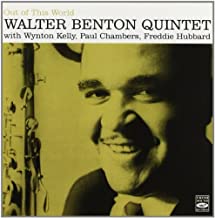
Out Of This World ~ Walter Benton Quintet | By Eddie Carter
Up next from the library is a recent acquisition by a musician I first heard on two Clifford Brown albums, Best Coast Jazz (1955), and Clifford Brown All-Stars (1956). Out of This World (Jazzland JLP 28/928S) is the only album tenor saxophonist Walter Benton recorded as a leader but is brilliant swinging jazz with a stellar cast. Freddie Hubbard (listed as Freddy, tracks: A1, A2, B1, B2) on trumpet, Wynton Kelly on piano, Paul Chambers on bass, Jimmy Cobb (tracks: A2, A3, B2), and Albert Heath (tracks: A1, A4, B1, B3) on drums. Walter began playing the saxophone in high school, he’s also worked with John Anderson, Clifford Brown, Kenny Clarke, Eric Dolphy, Victor Feldman, Slide Hampton, Quincy Jones, Abbey Lincoln, Perez Prado, Max Roach, and Gerald Wilson. My copy used in this report is the 1993 Japanese Stereo reissue (Jazzland VIJJ-30049).
Side One opens with the title song, Out of This World was written in 1944 by Harold Arlen and Johnny Mercer. It grabs hold from the beginning of the collective midtempo melody and doesn’t let go until Freddie’s deceptively easy swing before picking up the pace for a bristling first reading. Walter comes in next exhibiting an optimistic spirit on the next solo, and Wynton works out a few logical ideas on the closer preceding the coda and fadeout. Walter’s Altar is the first of five originals by the leader, and an easy-going blues giving everyone solo space except Cobb who takes over on drums. Benton kicks off the solos leisurely but builds his tone into a delightful interpretation. Hubbard makes a terrific impression on the second solo. Kelly is superbly articulate on the third reading and Chambers takes the bass for some tuneful walking on the final statement ahead of the closing chorus and climax.
Iris is a tender ballad by Benton beginning with a brief intro by Freddie before Walter takes over on the gentle theme. The first of the leader’s two solos is slow, easy, and meaningful possessing a soulful tone. Wynton’s second solo is richly creative, then Walter returns for a few final softly, soothing comments before the close. Night Movement is an uptempo romp by Benton with a brief appearance by Hubbard during the melody, and Heath returning to the drums. The saxophonist gives two brief readings of ferocious intensity with a short speedy statement by Kelly in-between.
Side Two opens with Benton’s A Blue Mood. This tune is a midtempo blues starting with the rhythm section’s brief introduction into the ensemble’s melody. The solo order is Hubbard, Benton, Kelly, Chambers, and each man applies some down-home cooking to each of their solos, making them quite appetizing. Walter’s Azil is fast and swinging, returning the quintet to uptempo speed on the swift-footed melody. Benton begins the solos with a scintillating conversation, then Hubbard comes in for a vigorously energetic reading. Kelly closes with an electrically charged interpretation with Chambers and Cobb supplementing the power into the quintet’s ending.
Lover Man by Jimmy Davis, Roger Ramirez, and James Sherman is a timeless standard from The Great American Songbook. It ends the album with a sensuous performance by the quartet with Heath back behind the drums. Kelly and the trio begin the introduction blossoming into the foursome’s opening chorus. Walter opens with a delicately tasteful first statement. Wynton adds intimate lyricism to the second reading, then Paul performs so warmly you could bask in its glow like a sunbath. Walter wraps up the song with a beautifully phrased chorus into the coda.
Six years after recording this album, Benton retired from music altogether, becoming a real estate agent. He passed away on August 14, 2000, at the age of sixty-nine. Out of The World was originally produced by Orrin Keepnews and engineered by Ray Fowler. Victor Entertainment (formerly Victor Musical Industries) has done an exceptional job with the mastering of the album from the original tapes. The music emerges from your speakers as if the group is playing right in front of your favorite chair. If you’re looking for an excellent Hard-Bop album for your library, and have not heard Walter Benton before, I submit for your consideration, Out of This World by The Walter Benton Quintet. It’s a stellar album of the genre that’s a treat for your ears!
~ Best Coast Jazz (EmArcy MG-36039), Clifford Brown All-Stars (EmArcy MG-36102) – Source: Discogs.com ~ Lover Man – Source: JazzStandards.com ~ Out of This World – Source: Wikipedia.org
More Posts: choice,classic,collectible,collector,history,instrumental,jazz,music
Requisites
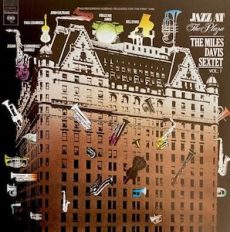
Jazz at The Plaza, Volume 1 ~ The Miles Davis Sextet | By Eddie Carter
Submitted for your approval this morning is the first of two unique 1973 albums, capturing an unforgettable event. Jazz at The Plaza, Volume 1 (Columbia C 32470) is a live recording of a jazz party hosted by Columbia Records in The Persian Room of New York City’s Plaza Hotel on September 9, 1958. This celebration represented a significant moment in Columbia’s history, acknowledging the impressive talent of jazz artists on the label’s roster. The guests enjoyed a performance by The Miles Davis Sextet during the first set: Miles Davis on trumpet, Julian “Cannonball” Adderley (tracks: A1, B2) on alto sax, John Coltrane (A1, B1, B2) on tenor sax, Bill Evans on piano, Paul Chambers on bass, and Jimmy Cobb on drums. My copy is the original U.S. Stereo release.
The album opener is misidentified as Jazz at The Plaza on the back cover and record label, but it is Thelonious Monk’s Straight, No Chaser. The song’s brisk pace sets the stage for the sextet’s lively introduction and theme. Miles delivers a vigorous opening statement, followed by John’s adventurous interpretation. Cannonball provides an energetic solo next. Bill makes a concise contribution before the ensemble returns for the finale and a brief presentation of the sextet’s theme. The pace slows for Bill’s introduction to the Rodgers and Hart classic My Funny Valentine. This highlight of the quartet sees Miles switching to the mute for the gentle melody and a beautiful solo. Bill follows with an enchanting statement, and Paul walks delicately toward the closing chorus and sensitive climax.
If I Were a Bell by Frank Loesser opens the second side with a short piano introduction that segues into the ensemble’s medium melody. Miles takes the lead with an agile, muted opening statement. John continues wailing in a spirited performance. Bill sinks his teeth into a captivating interpretation next, leading to the theme’s restatement and conclusion. Oleo by Sonny Rollins raises the tempo for Miles’s muted introduction, which leads to the sextet’s quick theme. Miles starts the opening statement with infectious heat, while John fuels the following performance with electrifying notes. Cannonball launches into a furiously hard-driving solo next, and then Bill keeps the fire burning with a concise comment. Paul has his turn in a short interlude before Miles guides the way to a speedy culmination.
Teo Macero and Irving Townsend produced Jazz at The Plaza, Volume 1, with recording engineer Russ Payne capturing the event for posterity. While the sound quality may not meet Columbia’s usual high standards, its unique charm conveys the exhilarating energy of the group’s performances. After listening to this album, I’ll be looking to find its companion, Jazz at The Plaza, Volume 2, featuring Duke Ellington and His Orchestra, Billie Holiday, and Jimmy Rushing. If you appreciate the trumpeter’s work from the fifties, I recommend exploring Jazz at The Plaza, Volume 1 by The Miles Davis Sextet, on your next record hunt. It offers a compelling snapshot of the ensemble’s fiery live performance and should make a worthy addition to any jazz enthusiast’s library!
Postscript: The owners of the long-out-of-print Mosaic Records box set, The Complete Columbia Recordings of Miles Davis With John Coltrane, also has a copy of Jazz at The Plaza, Volume 1.
~ Jazz at The Plaza, Volume 2 (Columbia C 32471), The Complete Columbia Recordings of Miles Davis With John Coltrane (Mosaic Records MQ9-191) – Source: Discogs.com
~ Straight, No Chaser – Source: JazzStandards.com
~ If I Were a Bell – Source: Wikipedia.org
© 2025 by Edward Thomas Carter
More Posts: choice,classic,collectible,collector,history,instrumental,jazz,music,trumpet

Requisites
Please Send Me Someone To Love ~ Phineas Newborn Jr. | By Eddie Carter
Phineas Newborn Jr. was an exceptional pianist and one of my favorite musicians growing up. The first album I encountered by him as a teenager is this morning’s selection from the library. Please Send Me Someone To Love (Contemporary Records S7622) hit the stores in 1969 and is an excellent trio album. It was his fourth release for Lester Koenig’s label and is a companion to Harlem Blues, released six years later in 1975. Both albums were recorded during the same sessions, with the superb rhythm section of Ray Brown on bass and Elvin Jones on drums. My copy is the 1969 U.S. deep groove Stereo release.
The first side opens with Percy Mayfield’s Please Send Me Someone To Love, featuring a smooth, slow-tempo melody. Phineas delivers a dreamy solo, evoking a sense of longing and comfort, resulting in one of the album’s most beautiful moments. Ray and Elvin’s gentle accompaniment leads the trio back to the theme and a quiet, reflective conclusion. Rough Ridin’, an upbeat piece by Ella Fitzgerald, Hank Jones, and Bill Tennyson follows with an energetic melody by the ensemble. Phineas showcases his joyful groove with impressive skill as the only soloist, culminating in the group’s lively finish.
Come Sunday by Duke Ellington is a beautiful ballad that starts with Phineas’ tender solo introduction and flows seamlessly into the trio’s lovely melody. The pianist shines as the centerpiece, delivering an attractive, elegant interpretation with great warmth before a soft and gentle ending. Ray’s bass steers the course into Brentwood Blues by Phineas Newborn Jr., setting the stage for the ensemble to swing effortlessly through the melody. Phineas initiates the opening statement, articulating each note and verse with clarity. Ray then takes a brief, soulful walk to the closing chorus and climax.
Side Two starts with He’s A Real Gone Guy by Nellie Lutcher. Elvin’s Latin-flavored introduction breathes life into the track briskly, setting the stage for the trio’s lively theme. Phineas takes the lead with a vigorous interpretation, and Elvin’s electrifying brushwork fuels the finale, bringing the trio’s ending theme to a dynamic close. Black Coffee by Sonny Burke and Paul Francis Webster opens with a profoundly moving piano introduction by Phineas, transitioning into an intimately soft melody. His beautiful performance is anchored by the solid foundation laid by Ray and Elvin ahead of a lovely finale.
Little Niles is a jazz waltz by Randy Weston that is a tribute to his son. The trio’s version is delightfully vibrant, with Ray and Elvin’s introduction effortlessly shifting into the melody. Phineas showcases his impeccable technique during the song’s only solo, leading smoothly to the reprise and the song’s close. Stay On It, by Count Basie and Tadd Dameron, secures a swinging makeover with Phineas’ solo introduction. The trio’s lively opening chorus follows, with Ray and Elvin providing a solid foundation, allowing Phineas to deliver a remarkable interpretation in the song’s only solo, leading to the trio’s exit.
Lester Koenig was the producer and recording engineer for Please Send Me Someone To Love. The album’s impeccable sound quality creates the illusion that the trio is performing live in your listening room. If you seek an outstanding trio album, I wholeheartedly recommend Please Send Me Someone To Love by Phineas Newborn Jr. It is an excellent addition to any jazz library, serving as a perfect introduction for new listeners to his music and a delight for seasoned collectors and fans. This album also pairs beautifully with Harlem Blues and is a must-have for any jazz enthusiast of piano trios!
~ Harlem Blues (Contemporary Records S7634) – Source: Discogs.com
~Come Sunday – Source: JazzStandards.com
~Black Coffee, Little Niles, Please Send Me Someone To Love – Source: Wikipedia.org
© 2025 by Edward Thomas Carter
More Posts: choice,classic,collectible,collector,history,instrumental,jazz,music,piano