

Daily Dose Of Jazz…
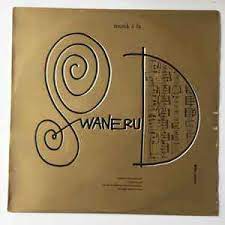
Thore Swanerud was born June 18, 1919 in Stockholm, Sweden. He started out his professional career playing extensively with major Swedish dance bands in the 1940s, such as those of Simon Brehm, Miff Görling, and Stan Hasselgård.
In 1949-1951 Thore led his own six-piece ensemble, then led smaller groups in the 1950s and 1960s. His associations include work with Ernestine Anderson and James Moody.
He is best remembered for an eight-bar improvised solo he made during a 1949 recording of I’m In The Mood For Love, in a quintet headed by Moody while touring Sweden. Eddie Jefferson created the 1952 song Moody’s Mood For Love in vocalese style by adapting lyrics to Moody’s song. The song later became a jazz standard, covered by many singers.
Pianist, vibraphonist, arranger, conductor, and composer Thore Swanerud, who scored three films, appeared in two and recorded five albums and five singles, transitioned in Stockholm on December 8, 1988.

More Posts: arranger,composer,conductor,history,instrumental,jazz,music,piano,vibraphone
Daily Dose Of Jazz…
John Joseph Harold Holmes was born in Montreal, Canada on June 8. 1916 and began playing cornet at 10, briefly studying with C. Van Camp. After playing trumpet for a year in 1940 in a co-operative band, the Escorts, he took over its leadership 1941-50.
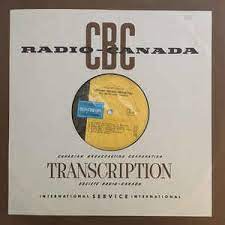
Under the name Johnny Holmes Orchestra, they played Saturday nights at Victoria Hall in Montreal, broadcasted on CBC radio, and occasionally toured Canada’s Quebec and Ontario. One of Montreal’s leading dance bands of the day, it boasted a healthy jazz quotient and benefited from Holmes’ ability to identify talented young musicians. His sidemen included, at various times, Nick Ayoub, Al Baculis, Percy and Maynard Ferguson, Bud Hayward, Art Morrow, and Oscar Peterson. Lorraine McAllister and Sheila Graham, in turn, sang with the band.
Retiring from music from 1951 to 1959, he reemerged and from 1959 to 1969 was heard on CBC radio in The Johnny Holmes Show, Broadway Holiday, and others. Holmes’ orchestras made several broadcast recordings between 1966 and 1973 for the CBC’s LM series. He continued to perform periodically until his final retirement from music in 1978.
Trumpeter, bandleader, arranger, composer Johnny Holmes, who wrote more than 40 songs and many arrangements for his orchestra and his radio shows and has no available recordings online, transitioned on June 11, 1989.
More Posts: arranger,bandleader,composer,history,instrumental,jazz,music,trumpet
Daily Dose Of Jazz…
Billy Robinson was born on May 31, 1939, in Fort Worth, Texas. His jazz roots go back to his father’s nightclub where he played boogie-woogie piano as a child, and watched the adult musicians perform. At the beginning of his musical career he played with John Carter, Ornette Coleman, and Dewey Redman. Living and playing in San Francisco, California in the mid-1960s towards the end of the decade he relocated to New York City, where he collaborated with Charles Mingus in 1969.
During the late 1960s, Robinson converted to Islam and remained a practicing Muslim for the rest of his life. A move to Montreal, Canada is where he married his first wife in 1970. Short-lived, four years later he married Suzanne Cyr and moved to Ottawa, Canada in 1978 and performed sporadically at the local level.
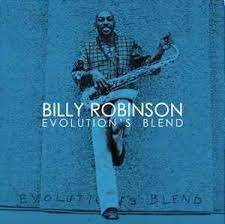
Following his recording debut on Archie Shepp’s Attica Blues, Billy released his first album titled Evolution’s Blend as a leader in 1972. Then in 1973 he played on the Sadik Hakim track Grey Cup Caper. From 1972 to 1998 he was a part of six recording sessions.
Tenor saxophonist, composer, educator and bandleader Billy Robinson, who was dubbed The Mystic by Freddie Hubbard, transitioned from a heart attack on August 11, 2005, in Ottawa, Ontario, at the age of 66.Bestow upon an inquiring mind a dose of a Fort Worth saxophonist to motivate the perusal of the genius of jazz musicians worldwide whose gifts contribute to the canon…
Billy Robinson: 1939 ~2005 | Tenor SaxophoneMore Posts: bandleader,composer,educator,history,instrumental,jazz,music,saxophone
Daily Dose Of Jazz…
Richard Alan Beirach was born on May 23, 1947 in New York City, New York and initially studied both classical music and jazz. While still attending high school, he took lessons from pianist Lennie Tristano. He later studied at the Berklee College of Music, however, after one year he left and began attending the Manhattan School of Music. While there, he studied with Ludmilla Ulehla.
In 1972, graduating from the Manhattan School of Music he took with him a Master’s Degree in Music Theory and Composition. Beirach’s style is influenced by Art Tatum, Bill Evans, McCoy Tyner, and Chick Corea along with his earlier classical training and many touches of his individualism all its own.
He recorded 57 albums as a leader and as a sideman with George Adams, John Abercrombie, John Scofield, Chet Baker, Dave Liebman, Jeremy Steig, Steve Davis, Laurie Antonioli, and the Ron McClure Trio he recorded 17. Pianist and composer Richie Beirach continues to perform, compose and record.

More Posts: bandleader,composer,history,instrumental,jazz,music,piano
Daily Dose Of Jazz…
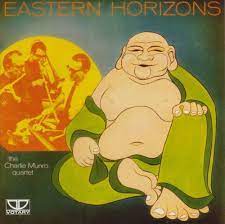
Charles Robert Munro was born on May 22, 1917 in Christchurch, New Zealand. While in his teens he became quite proficient on several saxophones and by 21 had moved to Sydney, Australia where he played in the bands led by Myer Norman and Wally Parks. In addition he worked as a sideman on various nightclub, theater, and ship gigs.
Serving in the military during World War II, Charlie went on to work with Wally Norman at the Roosevelt nightclub in Sydney. In 1950 he played with Bob Gibson, then joined the Australian Broadcasting Commission’s dance band in 1954, continuing to perform with the group through 1976 as a composer and arranger.
He worked extensively with Bryce Rohde in the 1960s, participating in many of Rohde’s Australian jazz experiments. He led his own bands toward the end of his career, and also worked with Georgina de Leon.
Saxophonist and flutist Charlie Munro, who also played the cello and delved into free jazz movement, transitioned on December 9, 1985, in Sydney.
More Posts: arranger,bandleader,cello,composer,flute,history,instrumental,jazz,music,saxophone