

Daily Dose Of Jazz…
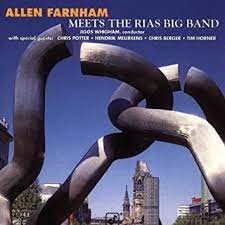
Allen Nicholas Farnham was born May 19, 1961 in Boston, Massachusetts and first played piano when he was 12. In 1983 he graduated from the Oberlin Conservatory of Music in Ohio.
Moving to New York City in the following year Allen freelanced before signing with Concord Records in 1986. Between 1986 and 1990 he led his own quartet, with either Joe Lovano or Dick Oatts on saxophone and Drew Gress and Jamey Haddad filling out the rhythm section and from 1990 he was pianist and music director for Susannah McCorkle.
He has produced more than fifty albums, is on the faculty of New Jersey City University and has recorded several albums under his own name. Pianist, record producer, educator, composer and arranger Allen Farnham continues to pursue all his musical endeavors.

More Posts: arranger,bandleader,composer,history,instrumental,jazz,music,piano,record producer
Daily Dose Of Jazz…
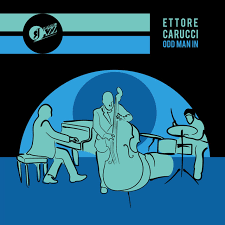
Ettore Carucci was born on May 18, 1969 in Taranto, Italy and began playing the piano at the age of four. Graduating in classical piano he went on to join a jazz band named Taras Jazz Forum in 1989 and played with a jazz quintet composed of experienced jazz musicians from his area. By 1993/94 he attended two workshops, Siena Jazz and Umbria Jazz, where he won two scholarships. He studied jazz with Danilo Rea, Ray Santisi, and Paul Schmelling.
Throughout his career Ettore has had the opportunity to perform with a who’s who list of American musicians not limited to Benny Golson, Jerry Bergonzi, Eric Marienthal, Dennis Chambers, Christopher Thomas, Greg Hutchinson, Mike Moreno, Tony Scott, Bob Mintzer, Sonny Fortune, and Rachel Gould, as well as Anne Ducros, Maria Pia De Vito, Massimo Moriconi, Maurizio Giammarco, Marco Tamburini, Philip Catherine, Massimo Manzi, Fabrizio Bosso, Tullio De Piscopo, the Jazz Studio Orchestra and numerous others.
By 2001 he was participating in the Umbria Jazz Festival workshops where he won a scholarship to the Berklee College of Music in Boston, Massachusetts. Ettore had the opportunity to perform with the Berkee College of Music Trio. In the same year he participated at the jazz festival in Orvieto with the Berklee Award Group during the edition of Umbria Jazz Winter.
2005 saw him playing at the Blue Note in Milan, Italy with the Sonny Fortune Quartet and two years later was playing with his peers in New York City. Pianist, composer and educator Ettore Carucci has recorded nine albums as a leader, thirty-eight as a sideman and has released twenty compilations. He continues to compose, teach, perform and work on various artistic projects..
More Posts: bandleader,composer,educator,history,instrumental,jazz,music,piano
Daily Dose Of Jazz…
Pete Paul George Jacobsen was born on May 16, 1950 in Newcastle upon Tyne, England. Having lost his sight as a baby, due to a growth behind the optic nerve, he studied at the Worcester School for the Blind before forming his own trio, which was good enough to attract local television coverage. In 1969, he moved to London, England to study at the Royal Academy of Music. With a keen memory and perfect pitch, hi’s lack of sight was no obstacle.
In London, Jacobsen played with saxophonists Barbara Thompson, Isotope’s Gary Boyle, and Don Weller. He became a member of the jazz-fusion band Morrissey–Mullen, but it was not until 1985 that he recorded with them on This Must Be The Place and Happy Hour in 1988. Recommended by trumpeter Kenny Wheeler, he landed the piano chair in the Bobby Wellins Quartet and recorded four albums with the group from 1978 to 1989, Live… Jubilation, Dreams Are Free, ERCO Makes Light Work, and Birds of Brazil.
Pete regularly collaborated with Chris Biscoe and recorded tw albums with him and often performed as a duo, recording several BBC Jazz Club performances. He played and recorded with trombonist Jimmy Knepper, and contributed Song For Keith for the recording of the 1980 album Primrose Path. He would also write the song “Black Book” for the album Highly Committed Media Players.
During this time, Jacobsen was part of the resident rhythm section at the Cambridge Modern Jazz Club. He would go on to play with Robin Kenyatta, Alan Skidmore, Peter King, Eberhard Weber, Paul Carmichael, and Chris Fletcher. He gave memorable solo recitals, toured and played on three of their albums with the Celtic-jazz band Cármina.
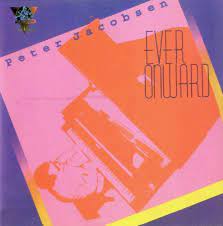
In 1994, Jacobsen released his only solo album Ever Onward. Through the rest of the decade he performed with his own trio and with the Tim Whitehead quartet or trio. He spent much of his time in the East End of London playing obscure clubs with unknown or struggling musicians. Pianist Pete Jacobsen fell ill after a series of rural art center gigs and transitioned on April 29, 2002 at age 51.
More Posts: bandleader,composer,history,instrumental,jazz,music,piano

Daily Dose Of Jazz…
Claus Ogerman, born Klaus Ogermann on April 29, 1930 in Ratibor (Racibórz), Upper Silesia, Germany is now part of Poland. He began his career with the piano but became one of the most prolific arrangers of the 20th century.
In the 1950s, Ogerman worked in Germany as an arranger-pianist with Kurt Edelhagen, saxophonist and bandleader Max Greger, and Delle Haensch. He also worked as a part-time vocalist and recorded several 45 rpm singles under the pen name of Tom Collins, duetting with Hannelore Cremer. He also recorded a solo vocal with the Delle Haensch Jump Combo.
Moving to the United States in 1959, Claus joined producer Creed Taylor at Verve Records, working on recordings with many artists. During this time he also arranged many pop hits, and in 1967 joined Creed Taylor on the A&M/CTi label. Ogerman charted under his own name in 1965 with the RCA single Watusi Trumpets.
In 1980 Ogerman won a Grammy Award for Best Instrumental Arrangement for Soulful Strut and the 2010 Grammy Award for Best Instrumental Arrangement Accompanying Vocalists for Quiet Nights. He composed music for seventeen movies, recorded fifteen albums, and released a compilation in 2002.
He arranged and conducted an impressive 58 albums with George Benson, Solomon Burke, Donald Byrd, Betty Carter, Sammy Davis Jr., Bill Evans, Connie Francis, Michael Franks, Stan Getz, Astrud Gilberto, João Gilberto, João Donato, Lesley Gore, Stephane Grappelli, Al Hirt, Billie Holiday, Johnny Hodges, Freddie Hubbard, Willis Jackson, Cal Tjader, Antônio Carlos Jobim, Dr. John, Wynton Kelly, Ben E. King, Diana Krall, Wes Montgomery, Danilo Perez, Oscar Peterson, Frank Sinatra, Jimmy Smith, Barbra Streisand, Cal Tjader, Mel Tormé, Stanley Turrentine, and Kai Winding.
Having worked in the jazz, top 40, rock, pop, R&B, soul, easy listening, Broadway and classical music fields, it has never been determined the exact number of recording artists for whom he has either arranged or conducted during his career. Arranger, conductor, and composer Claus Ogerman,transitioned on March 8, 2016
More Posts: arranger,bandleader,composer,conductor,history,instrumental
Daily Dose Of Jazz…
Denzil DaCosta Best was born April 27, 1917 in New York City, New York into a musical Caribbean family originally from Barbados. Trained on piano, trumpet, and bass, he concentrated on the drums starting in 1943. Between the years 1943 and 1946 he worked with Ben Webster, Coleman Hawkins, Illinois Jacquet and Chubby Jackson.
Known to sit in at Minton’s Playhouse, he took part in a recording with George Shearing in 1948 and was a founding member of his Quartet, remaining there until 1952. In 1949, he stepped out to play on a recording session with Lennie Tristano for Capitol Records and recorded later with Lee Konitz.
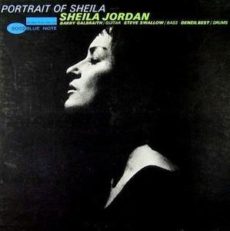
In 1953 a car accident fractured both legs and Best was forced into temporary retirement until 1954. His comeback had him playing with Artie Shaw, and then in a trio with Erroll Garner (1955–57), including Garner’s live album Concert by the Sea. He went on to play with Phineas Newborn, Nina Simone, Billie Holiday and Tyree Glenn. 1962 saw him in the drummer’s seat on Shiela Jordan’s first album Portrait of Sheila.
Best composed several bebop tunes, including Move, Wee, Nothing But D. Best, and Dee Dee’s Dance. With Thelonious Monk he composed Bemsha Swing and his composition 45 Degree Angle was recorded by Herbie Nichols and Mary Lou Williams.
Suffering from paralysis after the Jordan recording session, drummer, percussionist and composer Denzil Best, who was a prominent bebop drummer in the 1950s and early 1960s, transitioned after falling down a staircase in a New York City subway station at the age of 48 on May 24, 1965.