

Daily Dose Of Jazz…
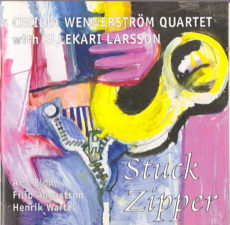
Cecilia Wennerström was born on April 21, 1947 in Stockholm, Sweden and studied saxophone at the music academies in Malmoe and Gothenburg. In 1997 she released her first self-titled album as a leader, Cecilia Wennerström/Minor Stomp on the Four Leaf Records label. Joining her were Ann Blom on piano, Filip Augustson on bass, and Henrik Wartel on drums. Enjoying the small group format she explores classical, bebop/cool-oriented jazz.
Cecilia is currently a member of the Wennerstrom Larsson Explicity with her husband Sven Larsson, who released their first album Tussilago in September 2011. She is also part of the octet LARS 8 which plays compositions by Lars Gullin and other Swedish jazz icons.
In 2013 she released her fourth solo compact disc Lydian Mars with pianist Maria Kvist, bassist Filip Augustson, and drummer Jonas Holgersson. The band on the recording session evolved into the Cecilia Wennerström New Quartet with Chris Montgomery replacing Holgersson on drums.
Saxophonist, flutist, and composer Cecilia Wennerström continues to compose, perform, and record.

More Posts: bandleader,composer,flute,history,instrumental,jazz,music,saxophone
Daily Dose Of Jazz…
Piers Lawrence was born on April 19th in New York City, raised in San Francisco, California and Switzerland, where he attended the Conservatoire de Musique de Lausanne and studied guitar and composition.
An alum of the Harlem-based, Jazz-Mobile Orchestra and studying with Barry Galbraith and Ted Dunbar, he has played Broadway shows including Guys and Dolls, Dancin’, Hubie, and Your Arms Too Short to Box With God, and has toured and recorded with R&B hitmakers Wilson Picket, The Main Ingredient, Esther Phillips, Phyllis Hyman, The Caribbean All-Stars and Merl Saunders.
He has recorded sessions and shared the jazz stages with many great musicians including Narada Michael Walden, Sammy Figueroa, Hiram Bullock, Lou Soloff, Jerry Garcia, John Handy, Steve Kimock, Armando Peraza, Bob Weir, Vince Welnick, Reuben Wilson, Jimmy Heath, and Tommy Flanagan.
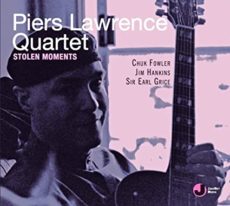
Being based in Manhattan, the jazz guitarist continues to lead the Piers Lawrence Quartet, manage his record label, JazzNet Media, that produced his internationally acclaimed recording Stolen Moments, and produces independent projects and ambient music for film and television.
More Posts: bandleader,composer,guitar,history,instrumental,jazz,music
Daily Dose Of Jazz…
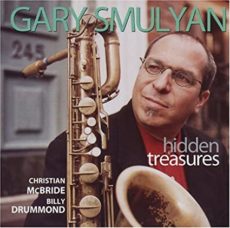
Gary Smulyan was born on April 4, 1956 in Bethpage, New York. He studied at Hofstra University before working with Woody Herman. His biggest influence is Pepper Adams. When Adams died, he recorded an album titled Homage, which featured eight pieces composed by Adams. He has recorded for Criss Cross Jazz and Reservoir Records, including the critically acclaimed High Noon: The Jazz Soul of Frankie Laine, featuring arrangements by Mark Masters.
He has recorded with Jimmy Knepper, Mulgrew Miller, Tommy Flanagan, Dick Oatts, Cedar Walton, Bob Stewart, John Clark, Joe Lovano, Joe Magnarelli, Mike LeDonne, Dennis Irwin, Christian McBride, Billy Drummond, Steve Johns, Peter Bernstein, Dominic Chianese, Gary Versace, Joseph Brent, Martin Wind, and Matt Wilson.
He has worked with an orchestra, as well as with Benny Green, Riccardo Fassi, Gerald Wilson, and Michael Benedict. Since 2006, Smulyan has served as artistic director at the Berkshire Hills Music Academy in South Hadley, Massachusetts.
Baritone saxophonist Gary Smulyan has consistently been ranked best baritone saxophone player in the annual Down Beat magazine readers’ and critics’ polls, continues to lead a trio with bassist Ray Drummond and drummer Kenny Washington.
More Posts: bandleader,composer,history,instrumental,jazz,music,saxophone
Daily Dose Of Jazz
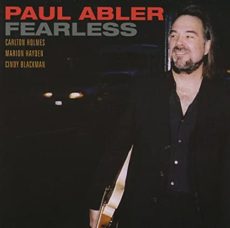
Paul James Abler was born April 3, 1957 in Saginaw, Michigan but grew up in Pontiac, Michigan. He first came into contact with jazz as a child when his grandfather played drums on recordings of Stan Getz, Dave Brubeck and Duke Ellington. Influenced by Jimi Hendrix, he turned to the guitar and in 1982 he moved to Los Angeles, California where he studied with Joe Diorio, Carl Schroeder and Ron Eschete at the Musicians Institute (Guitar Institute of Technology). In 1988 he moved to Boston, Massachusetts where he took improvisation lessons with Jerry Bergonzi.
1990 saw Paul moving back to Michigan where he played in Detroit with Marcus Belgrave, Harold McKinney, James Carter, David McMurray, Roy Brooks, Straight Ahead, and Leonard King. By 2003 he was living in New York permanently and has worked with Cindy Blackman, Allen Farnham, Joe Lee Wilson, Charles Davis, Cameron Brown, Guilherme Franco, Yusef Lateef, the Mingus Big Band, Ted Curson, David Ruffin and The Funk Brothers, among others.
In 2005, Abler released the album In the Marketplace as a leader under his own name, in which Marion Hayden, Cindy Blackman, William Evans, and Robert Pipho had worked. In addition, he worked with his own formations, which in various formations, among others Bobby Battle, Gerald Cleaver, Craig Taborn, Ugonna Okegwo, Helio Alves, Santi Debriano, Adriano Santos and Harvie S belonged.
Abler wrote over 150 compositions, some of which were used in films and television series such as Madam Secretary, Breaking Bad, 20/20, The Big Bang Theory and Mad Men. Abler, who most recently lived in New Jersey, was involved in six recording sessions from 1991 to 2013. On March 3, 2017 in Livingston, New Jersey guitarist and film composer Paul Abler passed away at the age of 69.
More Posts: bandleader,composer,guitar,history,instrumental,jazz,music
Daily Dose Of Jazz…
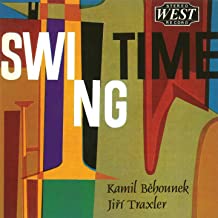
Kamil Běhounek was born on March 29, 1916 in Blatná, Czech Republic and was an autodidact on accordion, having learned to play by imitating recordings and BBC broadcasts. While studying law in Prague he began performing in clubs and recorded his first solo accordion date in 1936. By the late 1930s, he was working with the Blue Music Orchestra, Rudolf Antonin Dvorsky, Jiří Traxler, and Karel Vlach.
In 1943, he was forcibly compelled by the Nazis to go to Berlin and make arrangements for the bands of Lutz Templin and Ernst van’t Hoff. Upon returning to Czechoslovakia in 1945, he used some of these arrangements for his own band, then returned to Germany the following year, where he continued arranging for bandleaders such as Adalbert Luczkowski, Willy Berking, Heinz Schönberger, and Werner Müller.
He played with his own ensemble, including in Bonn, Germany and after 1948 he performed in West Germany at American soldiers’ clubs. Between 1968 and 1977 he recorded several albums of folk music but continued to play swing with his own groups. He also wrote an autobiography, Má láska je jazz (Jazz is my Love), which was published posthumously in 1986.
Bohemian accordionist, bandleader, arranger, composer, and film scorer Kamil Běhounek, who occasionally played tenor saxophone, passed away on November 22, 1983 in Bonn, Germany.

More Posts: accordion,arranger,bandleader,composer,film scorer,history,instrumental,jazz,music,saxophone