Daily Dose Of Jazz…
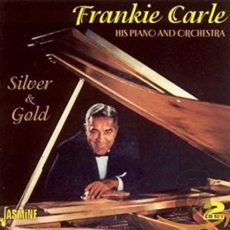
Frankie Carle, born Francis Nunzio Carlone on March 25, 1903 in Providence, Rhode Island. The son of a factory worker who could not afford a piano, he practiced on a dummy keyboard devised by his uncle, pianist Nicholas Colangelo, until he found a broken-down instrument in a dance hall. By 1916, now a teenager, he began working with his uncle’s band as well as a number of local bands around the state. To overcome prejudice against Italians he changed his name to Carle.
In the Thirties, he started out working with a number of mainstream dance bands that included the Mal Hallett Orchestra, had his own orchestra and at one time was billed in an ad for a night club as America’s Greatest Pianist. Joining Horace Heidt and His Musical Knights in 1939, Frankie later became co-leader of the band. His popularity during his time with Heidt’s band allowed him to leave the band in 1944 and form his own band, The Frankie Carle Orchestra and his daughter, Marjorie Hughes, sang with his band. During World War II, with his orchestra, he recorded a couple of V-Disc in a program of the U.S. War Department that featured his new compositions Moonlight Whispers and Sunrise Serenade. Some eleven years later he disbanded, embarked on his solo career in 1955 and until the 1980s, maintained a close following of loyal fans.
He had early exposure on the radio as a pianist for The Four Belles, a singing group distributed by the World Broadcasting System. In the mid-1940s, he and singer Allan Jones starred in the Old Gold Show on CBS radio and was also featured on the shows Pot o’ Gold, Treasure Chest, and The Chesterfield Supper Club. Over the course of his career, he recorded some four-dozen albums, composed over two-dozen popular romantic dance melodies. Pianist and bandleader Frankie Carle, whose #1 hit Sunrise Serenade sold over a million copies, passed away on March 7, 2001.

More Posts: bandleader,composer,history,instrumental,jazz,music,piano

Daily Dose Of Jazz…
David Burns was born on March 24, 1924 in Perth Amboy, New Jersey and began playing trumpet when he was nine years old. As a teenager, he heard bebop performances at Minton’s Playhouse, among others Dizzy Gillespie. His first ensemble was in Al Cooper’s Savoy Sultans, with whom he played from 1941 to 1943, prior to joining the Army Air Force. There he led a band from 1943 to 1945 that included James Moody as a sideman.
He joined Gillespie’s band in 1946 and appeared with Gillespie in Jivin’ in Bebop in 1947. After leaving Gillespie’s band in 1949, he worked with Duke Ellington from 1950 to 1952 and then with James Moody until 1957.
The late 1950s saw Dave playing shows in New York City and in the Sixties recorded for Vanguard Records. He worked with Billy Mitchell, Al Grey, Willie Bobo, Art Taylor, Dexter Gordon, Johnny Griffin, Leo Parker, and Milt Jackson. From the 1970s through the end of his career he increased his work as an educator. Trumpeter, flugelhornist, arranger, composer, and teacher Dave Burns passed away on April 5, 2009 in Freeport, New York.
More Posts: arranger,composer,educator,flugelhorn,history,instrumental,jazz,music,trumpet

Daily Dose Of Jazz…
Sonny Burke, born Joseph Francis Burke on March 22, 1914 in Scranton, Pennsylvania and in the Thirties attended Duke University where he formed and led the jazz big band called The Duke Ambassadors. Graduating in 1937, during the 1930s and 1940s, he was a big band arranger in New York City, working with Sam Donahue’s band.
In the 1940s and 1950s, he worked as an arranger for the Charlie Spivak and Jimmy Dorsey bands, among others. 1955 saw him writing, along with Peggy Lee, the songs to Disney’s Lady and the Tramp. He also wrote songs with John Elliot for Disney’s Toot, Whistle, Plunk and Boom, which won the 1953 Oscar for Best Short Animated Feature.
Burke wrote the music for number of popular songs that continue to be regarded as jazz standards including Black Coffee, with lyric by Paul Francis Webster, and Midnight Sun, co-written with jazz vibraphonist Lionel Hampton. An active arranger, conductor and A&R man at major Hollywood record labels, especially Decca Records, he worked with Charles “Bud” Dant. He also wrote and arranged the theme for the early 1960s television show Hennesey, a jazzy update of the Sailor’s Hornpipe.
Later Sonny went on to become musical director at Warner Bros./Reprise Records. He was responsible for many of Frank Sinatra’s albums and produced Sinatra’s iconic recording of My Way and Petula Clark’s classic This Is My Song written by Charles Chaplin for his movie A Countess From Hong Kong. He was also the bandleader for recordings of leading singers such as Dinah Shore, Bing Crosby, The Andrews Sisters, The Mills Brothers, Ella Fitzgerald, and Mel Tormé.
Arranger, composer, big band leader, and producer Sonny Burke passed away from cancer on May 31, 1980 in Santa Monica, California at the age of 66.
More Posts: arranger,big band leader,composer,history,instrumental,jazz,music,producer
Daily Dose Of Jazz…
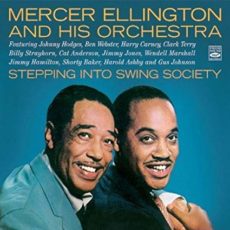
Mercer Kennedy Ellington was born on March 11, 1919 in Washington, D.C. and is the only child of the composer, pianist, and bandleader Duke Ellington and his high school sweetheart Edna Thompson. He grew up primarily in Harlem from the age of eight and by the age of eighteen, he had written his first piece to be recorded by his father, Pigeons and Peppers. He attended New College for the Education of Teachers at Columbia University, New York University, and the Juilliard School.
In 1939, 1946 through 1949, and 1959, Mercer led his own bands, many of whose members later performed with his father, or achieved a successful career in their own right including Dizzy Gillespie, Kenny Dorham, Idrees Sulieman, Chico Hamilton, Charles Mingus, and Carmen McRae. During the 1940s, in particular, he wrote pieces that became standards, Things Ain’t What They Used to Be, Jumpin’ Punkins, Moon Mist, and Blue Serge. He also wrote the lyrics to Hillis Walters’ popular song, Pass Me By in 1946), which was recorded by Lena Horne, Carmen McRae, and Peggy Lee.
Composing for his father from 1940 until 1941, he later worked as the road manager for Cootie Williams’ orchestra in 1941 until 1943 and again in 1954. Ellington returned to work for his father playing alto horn in 1950, and then as general manager and copyist from 1955 until 1959. In 1960, he became Della Reese’s musical director, then later went on to take a job as a radio DJ in New York for three years beginning in 1962. He again returned to his father’s orchestra in 1965, this time as trumpeter and road manager. When his father died in 1974, Ellington took over the orchestra, traveling on tour to Europe in 1975 and 1977.
In the early 1980s, Ellington became the first conductor for a Broadway musical of his father’s music, Sophisticated Ladies which ran from 1981 until 1983. Mercer’s Digital Duke won the 1988 Grammy Award for Best Large Jazz Ensemble Album. From 1982 until the early 1990s, the Duke Ellington Orchestra included Barrie Lee Hall, Rocky White, Tommy James, Gregory Charles Royal, J.J. Wiggins, Onzy Matthews, and Shelly Carrol among others.
Trumpeter, composer, arranger, and bandleader Mercer Ellington, who recorded ten albums as a leader and arranged Clark Terry’s Duke With A Difference album, passed away from a heart attack on February 8, 1996 at age 76 in Copenhagen, Denmark.
More Posts: and bandleader,arranger,composer,history,instrumental,jazz,music,trumpet
Daily Dose Of Jazz…
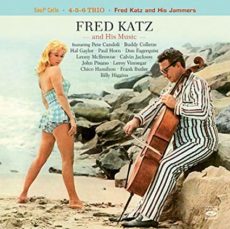
Frederick Katz was born on February 25, 1919 in the Williamsburg section of Brooklyn, New York City and was classically trained. He studied under Pablo Casals and performed with several symphony orchestras. He was a child prodigy on both the cello and piano and performed in public as a teenager and was drawn to the music of Manhattan nightclubs and to folk music. During World War II he conducted concerts and wrote musical revues for the U.S. Seventh Army. He was a member of the National Symphony Orchestra.
Katz was a member of drummer Chico Hamilton’s quintet, one of the most important West Coast jazz groups of the 1950s. His arco cello defined the chamber jazz focus of Chico Hamilton’s Quintet and the group quickly gained popularity. The Chico Hamilton Quintet, including Katz, appeared in the film noir The Sweet Smell of Success in 1957, starring Burt Lancaster and Tony Curtis, where Katz was described in passing as the Quintet’s primary composer. Katz and Hamilton wrote a score for the film which was ultimately rejected in favor of one by Elmer Bernstein.
As a leader Fred recorded several albums, wrote and conducted the arrangements for singer Carmen McRae’s 1958 album Carmen For Cool Ones, and recorded with Dorothy Ashby, Pete Rugolo, Ken Nordine and Paul Horn. He scored nineteen films and television shows including A Bucket of Blood, The Wasp Woman, Creature from the Haunted Sea and The Little Shop of Horrors. Later in his career, Katz became a professor of ethnic music in the Anthropology Department at California State University, Fullerton and California State University, Northridge, where he taught world music, anthropology and religion for over 30 years. One of his students was John Densmore, drummer of The Doors.
Cellist and composer Fred Katz, who was one of the earliest jazz musicians to establish the cello as a viable improvising solo instrument, passed away on September 7, 2013, in Santa Monica, California.