

Daily Dose Of Jazz…
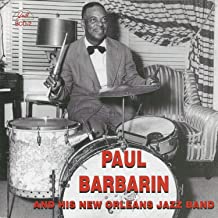
Paul Barbarin was born Adolphe Paul Barbarin on May 5, 1899 in New Orleans, Louisiana into a family of musicians, that included his father, three of his brothers, and his nephew Danny Barker. He was a member of the Silver Leaf Orchestra and the Young Olympia Band.
Moving to Chicago, Illinois in 1917 he worked with Freddie Keppard and Jimmie Noone. For two years beginning in 1925, Paul was a member of King Oliver’s band. The following year, he moved to New York City and played in Luis Russell’s band for about four years. Leaving Russell, he worked as a freelance musician, but he returned to Russell’s band when it backed Louis Armstrong.
For a brief time beginning in 1942, he worked for Red Allen’s sextet, with Sidney Bechet in 1944 and Art Hodes in 1953. Returning to New Orleans in 1955 Barbarin founded the Onward Brass Band where he spent the rest of his life as the leader of that band.
Drummer Paul Barbarin passed away on February 17, 1969, while playing snare drums during a Mardi Gras parade. Record producer Al Rose said that his funeral “attracted one of the great mobs in New Orleans funeral history”.

More Posts: bandleader,drums,history,instrumental,jazz,music

Daily Dose Of Jazz…
Ralf Hübner was born on May 3, 1939 in Berlin, Germany where he attended the Hochschule für Musik from 1958-1962. During his tenure, he studied both double bass and drums and played with Benny Bailey and Nathan Davis.
Upon graduating he joined the Jazzensemble des Hessischen Rundfunks, an ensemble he would work with into the 1990s. He also began a decade-long association with Albert Mangelsdorff.
In the 1970s he worked with musicians and ensembles such as the Frankfurt Jazz Ensemble, Joki Freund, Volker Krieger, Itaru Oki, Michel Pilz, Manfred Schoof, and Eberhard Weber. In the 1980s and 1990s he worked with Christof Lauer among others. At eighty, drummer Ralf Hübner currently resides in Glashütten, Hessen, Germany.
More Posts: bandleader,bass,drums,history,instrumental,jazz,music
Three Wishes
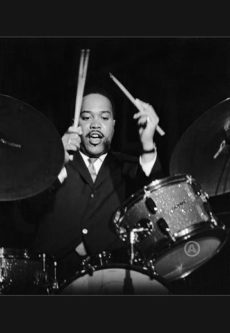
Frankie Dunlop told Pannnica that his three wishes would be:
-
-
“I wish I was rich.”
-
“Did you see that little girl I was talking to over at the bar? I sure wish we could get together.”
-
“I hope my jazz-pantomime act will make a big boom all over the nation.”
-
*Excerpt from Three Wishes: An Intimate Look at Jazz Greats ~ Compiled and Photographed by Pannonica de Koenigswarter

More Posts: baroness,drums,history,instrumental,jazz,music,pannonica,three,wishes
Daily Dose Of Jazz…
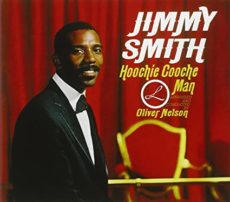
Bobby Rosengarden was born Robert Marshall Rosengarden on April 23, 1924 in Elgin, Illinois and began playing drums when he was 12, and later studied at the University of Michigan. After playing drums in Army bands in World War II, he moved to New York City and worked in several groups between 1945 and 1948 before becoming a busy studio musician.
He played in the orchestras at NBC-TV from 1949–1968 and ABC from 1969–1974 on The Steve Allen Show, The Ernie Kovacs Show, Sing Along With Mitch, Johnny Carson’s The Tonight Show Band, and led the band for The Dick Cavett Show.
Through the years, Rosengarden was an active studio musician, recording with Duke Ellington, Billie Holiday, Skitch Henderson, Quincy Jones, Peter Nero, Gil Evans, Miles Davis, Gerry Mulligan, Benny Goodman, Moondog, Dick Hyman, Arlo Guthrie, Carmen McRae, Ben E. King, Harry Belafonte, Barbra Streisand, Jimi Hendrix, Stan Getz, Oliver Nelson, Jimmy Smith, Sylvia Syms, Milt Hinton, Derek Smith, Bob Wilber, Keny Davern, Walter Wanderley, Kai Winding and Tony Bennett.
In later years, Rosengarden was most often heard as the drummer with a variety of all-star, swing-oriented groups, including the Soprano Summit. Drummer Robert Rosengarden passed away from Alzheimer’s disease on February 27, 2007 in Sarasota, Florida, at the age of 82.

More Posts: drums,history,instrumental,jazz,music
Daily Dose Of Jazz…
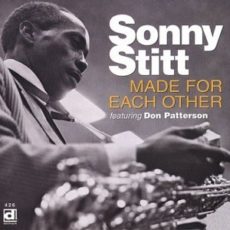
Billy James born William James on April 20, 1936 in Pittsburgh, Pennsylvania. He first came on the jazz scene in the Fifties when he began working with the Lionel Hampton Orchestra, with the bandleader thinking the 15-year-old James was already playing at professional standards. He would then go to work with Booker Ervin. In the early 1960s with played and recorded with James Moody, Candido Camero, Gene Ammons, Sonny Stitt, Don Patterson, and Eddie “Lockjaw” Davis.
With Patterson, he frequently recorded as a duo, and James led his own groups in the latter half of the 1960s. He worked further with Stitt during this time as well as with Eric Kloss. Further associations also include Eddie Harris, Houston Person, Grant Green, and Pat Martino.
Billy’s most illustrious performances including the Patterson side righteously titled Boppin’ and Burnin’ and even better, the Boss Tenors in Orbit! sessions in which Stitt duels with Ammons.
Drummer Billy James, whose most distinctive aspect of drumming is an extremely well-disposed shuffle that he seems able to reinvent endlessly, chorus after chorus, passed away on November 20, 2009.
More Posts: drums,history,instrumental,jazz,music