


Three Wishes
Nica inquired of Sam Woodyard what three things he would wish for if they could come true and his response was:
- “To keep living! That’s all there is. Because we don’t come through here but once.”

More Posts: drums,history,instrumental,jazz,music

Daily Dose Of Jazz…
Ulysses Owens Jr. was born December 6, 1982 in Jacksonville, Florida and began playing the drums at the age of 3. He played many types of music in his younger years, centering on his experience in the church. By the time he was in his early teens, he realized that he would become a jazz musician and received a full scholarship to study at the Juilliard School, in its inaugural jazz program.
After graduating from Juilliard in 2006, Ulysses traveled the world as a jazz drummer. After hearing about Jacksonville’s high dropout rate and other problems with struggling youths, he and his family designed a program to help suspended youths stay in school.
Owens was vocalist Kurt Elling’s drummer on Dedicated to You: Kurt Elling Sings the Music of Coltrane and Hartman, and on bassist Christian McBride’s The Good Feeling, both of which won Grammy Award. He has also played and recorded with pianist Joey Alexander, Gregory Porter and Matthew Whitaker. His composition The Simplicity of Life was commissioned by the string quartet ETHEL for their multimedia show ETHEL’s Documerica.
Drummer and percussionist Ulysses Owens Jr., who is co-founder and artistic director of the charity, Don’t Miss A Beat, continues to perform and compose.

More Posts: bandleader,drums,history,instrumental,jazz,music

Daily Dose Of Jazz…
Kansas Fields was born Carl Donnell Fields on December 5, 1915 in Chapman, Kansas and first played in Chicago, Illinois from the late Twenties and worked with King Kolax and Jimmie Noone in the 1930s. In 1940 he joined Roy Eldridge’s group for a year and returned to play with Eldridge again later in the decade.
He briefly led his own ensemble and played with Ella Fitzgerald and Benny Carter before joining the Marines during World War II. After the war, Kansas played with Cab Calloway, Claude Hopkins, Sidney Bechet, Dizzy Gillespie, and Eldridge again before the close of the decade.
Forming another group early in the 1950s, he then played with Mezz Mezzrow in Europe in 1953. Fields stayed in Europe for more than a decade, relocating to France where he worked as a sideman. In 1965, he returned to Chicago, working once more with Gillespie and doing studio work.
Drummer and bandleader Kansas Fields transitioned on March 7, 1995 in Chicago.
More Posts: bandleader,drums,history,instrumental,jazz,music

Daily Dose Of Jazz…
Denis Alphonso Charles was born December 4, 1933 in St. Croix, Virgin Islands and first played bongos at age seven with local ensembles. 1945 saw him moving to New York City, and gigging frequently around town. Nine years later he was working with Cecil Taylor and the pair collaborated until 1958. Following this he played with Steve Lacy, Gil Evans, and Jimmy Giuffre. Befriending Ed Blackwell, the two influenced each other.
He went on to record with Sonny Rollins on a calypso-tinged set, and then returned to Lacy, with whom he played until 1964. He worked with Archie Shepp and Don Cherry in 1967, but heroin addiction saw him leave the record industry until 1971. In the 1970s and 1980s, he played regularly on the New York jazz scene with Frank Lowe, David Murray, Charles Tyler, Billy Bang, and others. He also played funk, rock, and traditional Caribbean music. He released three discs as a leader between 1989 and 1992. , and died of pneumonia in his sleep in New York in 1998.
Drummer Denis Charles, who released three albums as a leader, thirty-four as a sideman and several with the BMC Trio, transitioned four days after a five week European tour on March 26, 1998 from pneumonia.
More Posts: bandleader,drums,history,instrumental,jazz,music
Daily Dose Of Jazz…
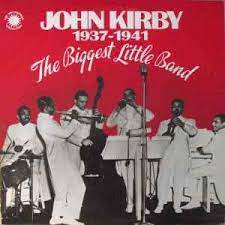
William “O’Neil” Spencer was born on November 25, 1909 in Cedarville, Ohio and began his career with local bands in the Buffalo, New York area. In 1931, he began working for Al Sears before joining up with the Mills Blue Rhythm Band from 1931 to 1936, which later became the Lucky Millinder Orchestra.
However, it wasn’t until 1937 after joining the popular John Kirby Sextet that he truly became an influential force on the jazz scene. Unfortunately, Spencer had to leave for a time in 1941 due to tuberculosis. However, during the late Thirties he recorded with numerous other groups, including Red Allen, Sidney Bechet, Jimmie Noone, Johnny Dodds, Frankie Newton, Milt Hearth, and Lil Armstrong.
He left the Kirby sextet in 1941 to work briefly with Louis Armstrong, but returned in ’42. His career, however, was cut short in 1943 when he contracted tuberculosis. Drummer and singer O’Neil Spencer transitioned on July 24, 1944 in New York City at the age of thirty-five.

More Posts: drums,history,instrumental,jazz,music