

Daily Dose Of Jazz…
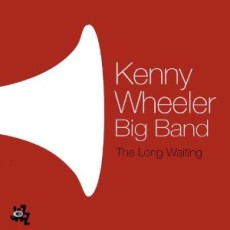
Kenny Wheeler was born Kenneth Vincent John Wheeler and came into this world on January 14, 1930, in Toronto, Canada. He began playing the cornet at the age of 12, becoming interested in jazz in his mid-teens. Spending a year at the Royal Conservatory in Toronto, he moved to Britain in 1952 at the age of 22 and found his way into the jazz scene of London playing with Tommy White, Tubby Hayes and Ronnie Scott.
In the 60’s Wheeler worked with John Dankworth, recording “Windmill Tilter” which is now a collector’s item since the master tapes have been lost. He has also enjoyed being active in free improvisation creating orchestral writing with passages of free improvisation infused in the bi band album “Song For Someone” in 1973 named Album of the Year by Melody Maker magazine in 1975.
Kenny’s lists of recordings or performances are too vast but includes Paul Gonsalves, Dave Holland, Anthony Braxton, Keith Jarrett, Steve Coleman, John Taylor, and Lee Konitz among a host of other notables in jazz.
Highly respected among his peers for his beautiful tone and extensive range on the trumpet and flugelhorn, Wheeler has written over one hundred compositions and is a skilled arranger for small groups and larger ensembles. His compositions blend lyrical melodies with a distinctive and ever changing harmonic palette. He has occasionally contributed to rock music recordings, is the patron of the Royal Academy Junior Jazz course, has been based in the UK since 1950 and remained faithful to the jazz genres of avant-garde, post bop, chamber jazz and free improvisation until his passing on September 18, 2014 at age 84 in London, England.

More Posts: flugelhorn,trumpet
Daily Dose Of Jazz…
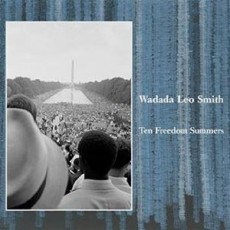
Leo Smith was born Ishmael Wadada Leo Smith on December 18, 1941 in Leland, Mississippi. He started out playing drums, mellophone and French horn before he settled on the trumpet. He played in various R&B groups and by 1967 became a member of the AACM and co-founded the Creative Construction Company, a trio with Leroy Jenkins and Anthony Braxton. In 1971 he formed his own label, Kabell, formed another band, the New Dalta Ahkri, with members including Henry Threadgill, Anthony Davis and Oliver Lake.
In the Seventies, Smith studied ethnomusicology at Wesleyan University and spent this time playing again with Anthony Braxton and recording with Derek Bailey’s Company. In the mid-1980s, Smith became Rastafarian and began using the name Wadada. In 1993, he began teaching at Cal Arts, a position he presently holds and has taught instrument making.
By 1998, Leo and guitarist Henry Kaiser released Yo, Miles! a tribute to Miles Davis’s lesser-known electric period. He has performed and/or recorded with Jack DeJohnette, Malachi Favors, John Zorn, Marion Brown, Frank Lowe and Matthew Shipp among others. In addition to playing the trumpet and flugelhorn, he plays several world music instruments, including the koto, kalimba and the ateneben.

More Posts: flugelhorn,trumpet
Daily Dose Of Jazz…
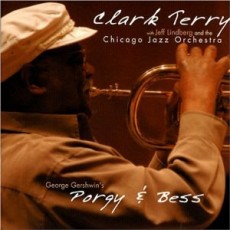
Clark Terry was born on December 14, 1920 in St. Louis, Missouri. After high school he started his professional career in the early 40s playing in local clubs, and then served as a bandsman in the U.S. Navy during World War II. He influenced both Quincy Jones and Miles Davis, teaching the later while in St. Louis.
Terry’s years with Basie and Ellington in the late 1940s and 1950s established him as a world-class jazz artist, blending the St. Louis tone with contemporary styles. After leaving Ellington, Clark’s international recognition soared when he became NBC’s first African-American staff musician. He a ten-year member of The Tonight Show band where his unique “mumbling” scat singing became famous when he scored a hit with “Mumbles.”
Terry continued to play with musicians such as J. J. Johnson and Oscar Peterson, and led a popular group with Bob Brookmeyer in the early 1960s. In the 1970s he concentrated on the flugelhorn, performed studio work and teaching at jazz workshops, toured regularly in the 1980s with small groups and performed as the leader of his Big B-A-D Band.
At the behest of Billy Taylor, early in his career he and Milt Hinton bought instruments and gave instruction to young hopefuls and the idea was planted the seed that became Jazz Mobile in Harlem. He toured with the Newport Jazz All Stars and Jazz at the Philharmonic, recorded for the Red Hot + Rhapsody and Red Hot + Indigo albums, composed more than two hundred songs, performed for seven U.S. Presidents, has been both leader and sideman on more than three hundred albums performing with Clifford Brown, Gary Burton, Charlie Byrd, Tadd Dameron, Eddie “Lockjaw” Davis, Lionel Hampton, Paul Gonsalves and Milt Jackson among others, recorded with symphonies and orchestras and established the Clark Terry Archive at William Paterson University.
Swing and bop trumpeter, pioneer of the flugelhorn and educator Clark Terry has received over 250 awards, medals and honors including a NEA Jazz Masters Award, has received a Grammy Lifetime Achievement Award, 16 honorary degrees, a knighthood, keys to several cities, the French Order of Arts and Letters and over the course of a seventy year career is the most recorded trumpet player of all time appearing on more than 900 known recording sessions.
Trumpeter, and flugelhorn player Clark Terry passed away from complications from advanced diabetes on February 21, 2015 at the age f 94 in Pine Bluffs, Arkansas.
More Posts: flugelhorn,trumpet
Daily Dose Of Jazz…
Chuck Mangione was born Charles Frank Mangione on November 29, 1940 in Rochester, New York. He attended the Eastman School of Music from 1958 to 1963, afterwards joining Art Blakey’s Jazz Messengers, for which he filled the trumpet seat.
In the late 1960s, Mangione was a member of the band The National Gallery, then served as director of the Eastman jazz ensemble from 1968 to 1972, and during this time returned to recording with the album Friends and Love, with the Rochester Philharmonic Orchestra.
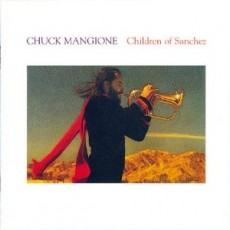
Mangione’s quartet with saxophonist Gerry Niewood recorded “Bellavia” that won him a Grammy for Best Instrumental Composition. His music has been used during two Olympics, performed at the closing ceremonies, and composed the soundtrack for The Children of Sanchez starring Anthony Quinn, winning his second Grammy Award.
Chuck composed and performed the theme for The Cannonball Run among other films. Proficient on both trumpet and flugelhorn, he has performed with a 70-piece orchestra, recorded his hit album Feels So Good, and has worked with Dizzy Gillespie, Steve Gadd, and Chick Corea among other jazz luminaries.
Mangione, along with his brother Gap worked as the Jazz Brothers, recording three albums with Riverside Records. Later worked in one another’s band and orchestra. He has a recurring voice-acting role on the animated King of the Hill, and continues to perform and record with his current band.

More Posts: flugelhorn,french horn,piano,trumpet