

Requisites
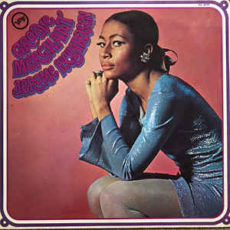
Groove Merchant is a 1967 Verve Records soul jazz album led by tenor saxophonist and flautist Jerome Richardson, who also played soprano, alto and baritone saxophone, clarinet, bass clarinet, alto flute and piccolo. Joining him on the date were Grady Tate, Ernest Hayes, Chuck Rainey, Snooky Young, Joe Newman, Warren Smith and Eric Gale.
The cover design was created by Charles Stewart. The album was comprised with ten compositions with two songs, Groove Merchant and Where Is Love were composed by Richardson, the others by such names as Jimmy Webb, Bobbi Gentry, Neil Diamond, Bobby Webb and Otis Redding among others.
The Tracks are listed as follows equally distributed equally on both A and B sides – Groove Merchant, To Sir With Love, Gimmie Little Sign, No Matter What Shape (Your Stomach’s In), Girl You’ll Be A Woman Soon, Knock On Wood, Ode To Billie Joe, Sunny, Where Is Love and Up, Up And Away.

</p
More Posts: choice,classic,collectible,collector,flute,history,instrumental,jazz,music,saxophone
Daily Dose Of Jazz…
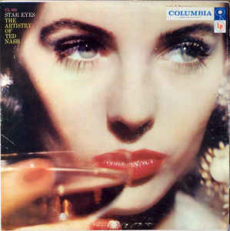
Theodore Malcolm Nash was born on October 31, 1922 in the Boston suburb of Somerville, Massachusetts. His goal was to become a classical flutist until he began playing saxophone in his early teens. His professional career began when he went on the road with a succession of dance bands, landing the solo tenor chair with the Les Brown band in 1944 where he rapidly made a name for himself.
His playing was notable for his mastery of the extreme altissimo register of the saxophone. He authored Ted Nash’s Studies in High Harmonics for Tenor and Alto Saxophone published in 1946, that is still in print.
In the late 1940s Ted became part of the thriving Hollywood movie and television recording industry. In 1956 he recorded with Paul Weston’s orchestra the hit album Day by Day, with vocals by his former colleague and close friend, Doris Day.
He was featured on The Music from Peter Gunn soundtrack album performing the bluesy, high-energy alto sax solo on the theme as well as the wistful alto sax solo on the second bridge of Dreamsville. Henry Mancini composed The Brothers Go to Mother’s from Peter Gunn as a feature for Ted and and his trombonist Dick.
From the mid 50s through the end of the Sixties he recorded sixteen albums with Georgie Auld. Henry Mancini, Elmer Bernstein, Pete Rugolo, Lalo Schifrin. Saxophone, flute and clarinet Ted Nash, who was a first-call session musician in the Hollywood recording studios, passed away on May 12, 2011.

Daily Dose Of Jazz…
Charles Davis was born on September 29, 1946 in Sydney, Australia and started playing flute during his youth. After a short period of studying classical guitar in Sydney, he started playing jazz, rock and folk in groups after moving to Brighton. Hearing a lot of music in a rock music context, I was so fascinated.
A move to Germany in the Seventies saw him playing the flute and later for a short period of time, the saxophone in jazz rock groups. By 1980 he started playing guitar and piano. Being inspired by the various saxophone groups that appeared in the 70s, by the 90s Davis formed one of the first jazz groups composed solely of flutes. This ground breaking group required that the various members compose for this unique formation taking into account the different types of flutes. Later in the decade, after meeting bansuri player Joachim Hübner, his interest turned to the classical north indian music and became a student of the Chanchala and Duo Bubachala.
Charles has attended workshops and masterclasses conducted by James Newton, Robert Dick and Dieter Bihlmeier, Hari Prasad Chaurasia, Jeremy Steig, Hossein Omoumi and Herbie Mann. Alto, bass and double bass flautist Charles Davis currently resides in Germany and continues to compose, record and perform.
Daily Dose Of Jazz…
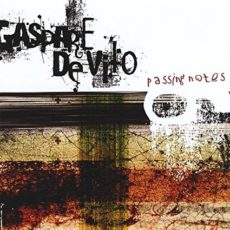
Gaspare De Vito was born on August 17, 1978 in Naples, Italy. He studied with Gianluigi Troversi, Eugenio Columbo and musical composition with Giancarlo Schiaffini. An auspicious meeting of Steve Grossman and Greg Osby was fundamental to the freedom of his original music.
Blending his Neopolitan and Meditteranean roots with hip-hop in his early teens, he would go through funk, jazz, Cuban traditional and South African music gave him the basis for his music. He has performed and recorded as a leader and a session player throughout Europe.
He has performed and recorded with Butch Morris, Alvin Curran, Tristan Hosinger, Giancarlo Schiaffini, Eugenio Colombo, Francesco Bearzatti, Fabrizio Puglisi, Vincenzo Vasi, Nicola Guazzaloca, Pasquale Mirra, Marco Dal Pane, Luisa Cottifogli, Maisha Grant and numerous others.
Alto saxophonist, flautist and composer Gaspare De Vito who has been voted Best Italian saxophonist in 2007 and co-founded the Suoniforme record label, continues to record, tour and perform internationally.

Daily Dose Of Jazz…
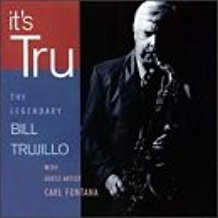
Bill Trujillo was born on July 7, 1930 in Los Angeles, California and started clarinet lessons at the age of four, then switched to tenor saxophone after seeing Lester Young perform with Count Basie in Los Angeles. His mother, a dance teacher at the famous Palomar Ballroom, regularly took him and his older brother to hear big bands when they were in residence at the Palomar, the Paramount, and other popular LA show places.
Learning to read music before he could read words and after Lincoln High School, where his friend and classmate was Lennie Niehaus played, Trujillo started his long professional career at the age of 16 with the West Coast based Glenn Henry Band. The band also boasted a young trombone player named Jimmy Knepper. During the ’40s, Bill played with Alvino Rey and other West Coast groups. In 1953, he joined Woody Herman with whom he remained until the following year when Bill Russo beckoned he joined the quintet but then playing in Chicago. Eventually finding the Windy City too cold, he returned to L.A. where he played in the orchestras of Charlie Barnet and Jerry Gray, and gigged with small groups.
At the behest of his longtime friend Lennie Niehaus, Trujillo joined Stan Kenton band in 1958, however, road trips often lasting a year or more put too much of a strain on his young family. Moving to Las Vegas, Nevada in 1960 he played with Nat Brandywynne and he has been there ever since. He became a mainstay in show orchestras at the Tropicana, Flamingo, Thunderbird and the Dunes playing behind Frank Sinatra, Ella Fitzgerald, Peggy Lee and many other. After a labor dispute in 1989 dried up this source of work, he returned to playing in big bands and small groups throughout the country.
In 1999 he led his debut album It’s Tru followed by his 2006 It’s Still Tru with Carl Fontana on the TNC label. As an educator, saxophonist Bill Trujillo teaches clarinet, flute, and all saxophones while continuing to perform in Las Vegas.
Sponsored By


#preserving genius