


Daily Dose Of Jazz…
Vinnie Cutro was born in New Jersey on September 9, 1953 and received his formal musical training throughout his formative years. He continued his education at New Jersey University, receiving his B.A in Music Education, then got his Masters in Jazz Performance from New York University. He furthered his studies in jazz composition, classical studies, jazz arranging and counterpoint with Dr. Tom Boras and Jim McNeely.
His working education began as a freelance musician in the New York City area. During the past 30 years Vinnie has performed with Horace Silver, Buddy Rich and Lionel Hampton. During his tenure with the latter he performed guest appearances with various American symphonic orchestras.
He has traveled extensively throughout the world appearing at jazz festivals and concerts in Europe, Japan, Africa, Canada, South America and the U.S.A. Cutro’s debut release as a leader, Blues for the Optimist, came in 1995 and featured Bob Mintzer, Jim McNeely, Victor Jones, and Mike Richmond. His sophomore release, Aberration, features guitarist Mike Stern, trombonist Bob Farrel, bassist Martin Wind, Sarah Jane Cion on piano, Victor Jones on drums and pianist Mitch Schechter.
Trumpeter Vinnie Cutro continues to compose, record and perform in the New York City area with his new ensemble New York City Soundscape.

More Posts: bandleader,history,instrumental,jazz,music,trumpet
Requisites
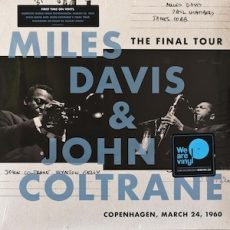
The Final Tour: Copenhagen, March 24, 1960 ~ Miles Davis and John Coltrane | By Eddie Carter
In this morning’s discussion, I’m presenting an album by Miles Davis and John Coltrane from the library for your consideration. The Miles Davis Quintet performed at the distinguished Denmark venue, Tivolis Koncertsal, for the first time as part of The Spring 1960 Jazz at The Philharmonic European Tour. However, changes were on the way, as the album’s title suggests, The Final Tour: Copenhagen, March 24, 1960 (Columbia Legacy 88985498741). It would mark the end of an era as tenor saxophonist John Coltrane was looking to leave and start his group. The rhythm section, Wynton Kelly on piano, Paul Chambers on bass, and Jimmy Cobb on drums, would also leave to become The Wynton Kelly Trio.
Despite the underlying questions facing the trumpeter, the quintet’s three performances for the capacity audience that evening were brilliant and a highlight of the tour. To kick things off, Norman Granz, the master of ceremonies, introduced each man individually, with the crowd’s largest ovations reserved for Paul, John, and Miles. My copy is the 2018 European Mono Limited Edition reissue. With a few snaps of the leader’s fingers, the trio kicks off So What by Miles Davis with a short introduction segueing into Miles’ and John’s infectious melody, a captivating tune that immediately draws you in. Davis ignites the first solo with intense heat. John comes in next to dispense a bit of rhythmic fury, and then Wynton infuses the finale with jubilant enthusiasm ahead of the closing chorus and climax.
The pace slows to mid-tempo as the ensemble begins On Green Dolphin Street by Bronislaw Kaper and Ned Washington from the 1947 film Green Dolphin Street. The first part of this standard opens with the theme unfolding at a leisurely pace and Miles, on the muted horn, leading the way into a delightful opening statement. John soars cheerfully into a captivating, well-behaved performance. Part Two of On Green Dolphin Street starts on the second side, with Wynton cruising at a comfortable speed behind both horns in the following interpretation, as smooth as silk. Paul takes his first opportunity to solo with a brisk footnote on the closing statement that swings masterfully into the theme’s return and finale.
All Blues by Miles Davis affords the leader, John, and Wynton ample solo space. Paul gets things off to a good start with a concise introduction, leading to Miles’s carefree theme back on the muted horn. He removes it to begin the opening statement. John follows him with a relaxing interpretation that is as enjoyable as a day at the beach. Wynton sustains the easygoing pace with a gorgeous performance into the ending theme and soft summation. The closer is an incomplete take of Miles’ The Theme, a deliberate choice that signals the end of the set and album, lasting only thirty seconds until it fades to nothingness. The mastering of The Final Tour: Copenhagen, March 24, 1960, by Mark Wilder is a demonstration class and a great way to show off a mid-level or high-end audio system.
The vinyl is exceptionally quiet until the music starts, and the instruments have outstanding detail. This reveals an incredible soundstage with superbly presented music, thanks to jazz producer George Wein, Danish Radio and the Danish Programming Company, who originally recorded the shows for broadcast. This is my first LP from the We Are Vinyl series from Columbia-Legacy, and judging by its superb sound quality, it won’t be the last. If you’re a fan of either of these giants and are looking for a live jazz album where each musician is at the peak of their creativity. In that case, I enthusiastically invite you to check out The Final Tour: Copenhagen, March 24, 1960, by Miles Davis and John Coltrane. It’s an LP that merits serious consideration for any jazz fan’s library, and I am sure you’ll enjoy it!
~ On Green Dolphin Street – Source: JazzStandards.com
© 2024 by Edward Thomas Carter

More Posts: choice,classic,collectible,collector,history,instrumental,jazz,music,saxophone,trumpet
Daily Dose Of Jazz…
Art Anton was born on September 8, 1926 in New York City. In the early 40’s he was a private student of Irving Torgman, and was a music major at New York University from 1943 through 1944. He returned for further studies from 1946 through 1947. In between, the Navy grabbed him to play its own military paradiddles. From the late ’40s onward, he began working with leaders such as Herbie Fields, Sonny Dunham, Bobby Byrne, Tommy Reynolds, and Art Wall.
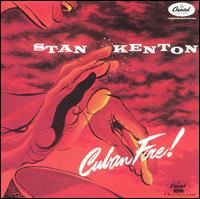
In 1952, he got into the combo of saxophonist Bud Freeman, moving to pianist Ralph Flanagan’s band the following year. Anton’s drumming style stuck closely to straight-ahead jazz swinging or whatever other beat was required. After gigs in 1954 with Jerry Gray and Charlie Barnet, he relocated to the west coast and began freelancing. He performed and recorded with the big band of Stan Kenton to multi-instrumentalist Jimmy Giuffre’s smaller units.
Maintaining steady employment as a jazzman on the stingy Los Angeles, California scene was difficult, and Artie looked for other types of employment. During the ’60s, he turned to selling vacuum cleaners, worked as a private detective, while remaining a highly respected West Coast percussionist.
Drummer and percussionist Art Anton, who is also listed as Artie or Arthur, died on July 27, 2003 in Yakima, Washington.
More Posts: drums,history,instrumental,jazz,music,percussion

MEL BROWN’S B3 ORGAN GROUP
In fact, this true all-star band (all four members are Oregon Music Hall Of Fame inductees) has been a sensation going back to 1997, when they began a 20-year run on Thursday evenings at Portland’s legendary “Jimmy Mak’s” (The Oregonian dubbed them “Jimmy Mak’s signature group”). They’ve continued their Thursday night tradition at the Jack London Revue for the past 6 years. With a collective resume that reads like a “Who’s Who” of NW jazz, blues, and soul, this group has the talent and confidence to be completely spontaneous–from their blistering solos to their improvised arrangements and segues. No wonder they’ve thrilled audiences wherever they’ve played.
More Posts: bandleader,club,drums,history,instrumental,music,organ,preserving,travel
GEORGE COLLIGAN QUARTET
George Colligan Quartet Featuring Devasate’ Phelps
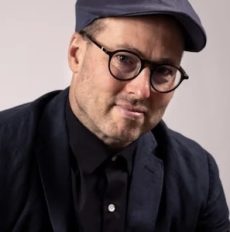
Jazz pianist and Portland State University Professor, George Colligan has made a name for himself not only as an impressive, world-class performer, but also as a mentor and collaborator with younger musicians on the Portland jazz scene. George will be hosting an intimate evening at The 1905 with some of the most talented, young musicians in Portland.
He will be joined by versatile drummer and band leader, Cory Limuaco, virtuoso bassist, Robert Rodriguez, and extraordinary pianist and promising vocalist, Devasate’ Phelps.
More Posts: adventure,bandleader,club,genius,history,instrumental,music,piano,preserving,travel,vocal