Requisites
Patented By Edison ~ The Harry “Sweets” Edison Quintet | By Eddie Carter
Harry “Sweets” Edison was one of the most sought-after musicians in jazz. This morning’s album from the library is a little-known 1960 release titled Patented By Edison (Roulette R-52041/SR-52041) by The Harry “Sweets” Edison Quintet. He was one of the most talented trumpeters of the Swing and hard bop eras, performing with some of the great jazz orchestras. “Sweets” got his nickname from Lester Young and eventually settled on the West Coast to become a successful arranger, composer and musician. On his eleventh date, he assembled a stellar group: Jimmy Forrest (tracks: A1 to A3, A6, B5, B6) on tenor sax, Tommy Flanagan on piano, Tommy Potter on bass, and Elvin Jones on drums. My copy is the 1967 U.S. Stereo reissue.
The album opens with Witchcraft by Cy Coleman and Carolyn Leigh. The rhythm section introduces the tune before the ensemble starts the easy-flowing melody. “Sweets” is on muted trumpet and glides through the song’s only solo with meticulous execution ahead of the reprise and soft ending. Blues Skies by Irving Berlin begins with Jimmy’s brief introduction, setting the tone for the leader taking charge of the beautifully articulated muted theme and a fine solo spot ahead of the saxophonist leading the ensemble out. Confessin’ That I Love You by Doc Daugherty, Ellis Reynolds and Al Nieburg begins with a pleasant presentation by the quintet. “Sweets” shows off his sentimental side in a performance of innocence and loveliness before the close.
Ain’t Misbehavin’ by Harry Brooks, “Fats” Waller, and Andy Razaf was introduced in the 1929 all-black musical revue Hot Chocolates. It became a huge hit among musicians and vocalists. It is a quartet showcase for “Sweets” doing the honors using the mute for the song’s opening chorus and a delightful solo that concludes softly. The first of three creations from Edison’s pen is up next. Candied Sweets is the album’s second quartet presentation beginning with Flanagan’s introduction. “Sweets” unfolds an attractive muted melody anchored by the trio’s gentle groundwork into his opening statement. The pianist complements the leader in a short, relaxing interpretation, leading to his return for the theme’s restatement and a slow dissolve.
The first side closes with They Can’t Take That Away From Me by George, and Ira Gershwin opens with the mute removed for “Sweets” to lead the quintet through the theme. “Sweets” ignites the first solo with an impeccable display of his playing. Flanagan follows him with a short, sparkling statement leading back to the closing chorus and climax. Side Two starts with the mute back on for the album’s third quartet performance, Tea For Two by Vincent Youmans and Irving Caesar. A catchy tune, with the foursome laying down a gorgeous mid-tempo beat for the theme. “Sweets” blends comfortably with the rhythm section’s accompaniment in the song’s only spotlight displaying a marvelous tone into the theme’s reprise and fadeout.
Up next is There Is No Greater Love by Isham Jones and Marty Symes. This gorgeous standard receives a gorgeous treatment beginning with Flanagan’s introduction to a thoughtfully tender melody by “Sweets.” The leader continues with a soft touch of elegance in the first interpretation. Flanagan also adds a dreamlike softness in a short solo preceding the theme’s restatement and climax. Harry Edison’s Twenty–Forty picks up the pace in a swinging quartet showcase. “Sweets” gets things off to a good start during the muted melody and then makes quick work in the opening statement. Potter gets his first opportunity to solo, and he moves sprightly along off the drive of the rhythm section into the ending theme and close.
It’s Easy To Remember (So Hart To Forget) comes from the pen of Richard Rodgers and Lorenz Hart. The rhythm section’s gentle introduction sets the mood for “Sweets,” who handles the muted melody and song’s only solo with so much emotion and sensitivity that it’ll bring tears to your eyes. We’re invited to join the quintet for some Sweetcakes by Harry Edison next. Jimmy is featured in the opening and closing choruses but does not solo. The melody begins with a bluesy beat that might get some fingers popping and toes tapping along. “Sweets” starts the solos with a delightful interpretation that flows with smooth efficiency. Flanagan comes in next to make a concise comment, which wraps everything up nicely ahead of the reprise of the theme.
The album’s final track is Angel Eyes by Matt Dennis and Earl K. Brent. Jimmy introduces the standard alongside the rhythm section before “Sweets” removes the mute to deliver the intimately personal melody. He has the showcase to himself in a beautiful and deeply moving statement that’s romantic and touching into a gorgeous ending. Teddy Reig produced Patented By Edison, and the recording engineer is unknown. However, the album’s sound quality is very good, possessing an excellent soundstage that brings the musicians to the sweet spot in your listening room with stunning fidelity. If you’re a fan of the trumpet, Harry “Sweets” Edison, or enjoy the sound of swing, I offer for your consideration and highly recommend Patented By Edison by The Harry “Sweets” Edison Quintet. It’s an underrated, excellent album by one of jazz’s best trumpet players and shouldn’t be missed on your next record hunt!
~ Ain’t Misbehavin’, Angel Eyes, Blue Skies, Confessin’ That I Love You, It’s Easy To Remember (So Hard To Forget), Tea For Two, There Is No Greater Love, They Can’t Take That Away From Me – Source: JazzStandards.com ~ Witchcraft – Source: Wikipedia.org © 2024 by Edward Thomas CarterMore Posts: choice,classic,collectible,collector,history,instrumental,jazz,music,trumpet

Daily Dose Of Jazz…
Pierre Cullaz was born July 21, 1935 in Paris, France and was the son of jazz writer Maurice Cullaz. He learned piano and cello in 1949, then moved to guitar as his main instrument.
In 1955 he started his professional career with Dexter Gordon, Johnny Griffin, and Hal Singer. Two years later he worked with Michel Hausser, Sarah Vaughan, Claude Bolling and Stéphane Grappelli.
After serving in the military Pierre became a studio musician and worked with Martial Solal and Eddy Louiss. In 1965 he formed Guitars Unlimited with Victor Apicella, Raymond Gimenez, Francis Lemaguer, and Tony Rallo. The band recorded for Barclay.
Over the course of his career he collaborated with Elvin Jones, Andre Hodeir, Ivan Jullien, and Guy Lafitte, accompanied singer Claude Nougaro and was an arranger for Michel Legrand.
Besides being a musician, he taught guitar at the CIM in Paris and wrote the textbook Methode de Guitare. Guitarist and cellist Pierre Cullaz died on January 1, 2014.
More Posts: guitar,history,instrumental,jazz,music

Daily Dose Of Jazz…
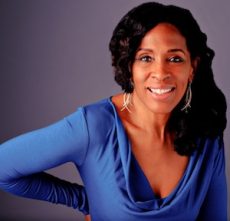
Yve Evans was born in El Paso, Texas on July 20, 1950 into an Army family and was around music while growing up as her mother was a gospel singer. When she was three years old she made her first recording of The Lord’s Prayer acapella. In addition to the church music, she began singing and memorizing songs from the radio including all the cartoon favorites like the Mickey Mouse Club.
She learned to play the piano at the age of nine while rehabilitating from injuries she sustained after being struck by a car. The family followed her dad to Germany at age 12 and she began taking lessons from piano virtuoso Frau Anna Benkel, who introduced her to her love of classical piano. In 1964 Yve was hit by a truck and told she would never walk again or have children. The doctors were wrong and while bedridden at home she would still sit up to practive her piano lessons, take a correspondence course in behavioral psychology plus her regular homework.
Yve eventually walked again and began producing in addition to performing and pursuing the art of storytelling while living in Germany. She spent her summers from age13 to 16 playing in a big band, light opera productions and touring Germany with choral groups. At 16 after moving back to America a teacher attempted to discourage her to not rely on a career in music. She continued in the high school and University choral, mentored and encouraged by Carmen Dragon and Jester Harriston.
Evans cites Sarah Vaughn, Ernie Andrews, Joe Williams, Ella Fitzgerald, June Christie, Della Reese, Bobby Darin and Rosemary Clooney as her main influences. As a pianist, she has leaned over the shoulders of, swapped chord changes with and stolen licks from Dorothy Donegan, Bill Evans, Erroll Garner, George Gafney, Carmen McCrae and Shirley Horn.
Vocalist and pianist Yve Evans, who has seven live recordings and is a Grammy nominated artist, continues to tell stories through her music, sing on the local jazz scene and perform around the world at festivals.
More Posts: bandleader,history,instrumental,jazz,music,vocal

Daily Dose Of Jazz…
Matthew Mitchell was born July 19, 1975 and grew up in Exton, Pennsylvania. He first played the piano aged six, and composed from the age of 10. He had lessons in jazz and theory at a university from the age of twelve and at this stage he was influenced by pianists Keith Jarrett and Herbie Hancock.
He attended Indiana University for three years and then completed a master’s degree at the Eastman School of Music in the late Nineties before settlling in New York City. After holding down several jobs in the city Matt decided to move to Philadelphia, Pennsylvania where he worked in a library at The University of the Arts for nine years before leaving when he had too many gigs to fit in.
2011 saw him leading the sextet Central Chain, the following year he introduced a new trio with bassist Chris Tordini and Dan Weiss on drums. During this decade Mitchell was also part of Berne’s Snakeoil band, and John Hollenbeck’s Large Ensemble and Claudia Quintet. He joined and recorded with saxophonist Rudresh Mahanthappa’s band.
Mitchell was awarded a Pew Fellowships in the Arts in 2012. He has released fifteen albums as a leader or co-leader and recorded as a sideman on thirty albums.
Pianist and composer Matt Mitchell, who is a faculty member at New York’s Center for Improvisational Music, continues to expand his jazz catalogue through performance, composition and recordings.
More Posts: composer,educator,history,instrumental,jazz,music,piano

Daily Dose Of Jazz…
Ivor Mairants was born in Rypin, Poland on July 18, 1908 and moved with his family to the United Kingdom in 1913 where he attended Raine’s Foundation School in Bethnal Green. He began learning the banjo at the age of 17 and became a professional musician three years later.
In the 1930s he was a banjoist and guitarist for British dance bands led by Bert Firman, Ambrose, Roy Fox, Lew Stone, Geraldo, and Ted Heath. In 1950 Mairants established the Central School of Dance Music in London, England which he ran for 10 years. All instruments were taught at this establishment, but emphasis was given to guitar. Among the teaching staff at the school were Johnny Dankworth, Jack Brymer, Kenny Baker, Bert Weedon and Ike Isaacs, and Eric Gilder. In 1960 Mairants handed the school over to Gilder, who renamed it as the Eric Gilder School of Music.
In the Sixties and Seventies his guitar playing was often heard on television, radio, film soundtracks, and many recordings with the Mantovani orchestra and with Manuel and his Music of the Mountains. His 1976 recording of the Adagio from Joaquin Rodrigo’s Concierto de Aranjuez with Manuel sold over one million copies.
He wrote many occasional pieces for jazz bands, was a columnist for Melody Maker, BMG, and Classical Guitar, and was a member of the Worshipful Society of Musicians, a British guild, and a Freeman of the City of London. In 1997 the Worshipful Society inaugurated an annual competition for the Ivor Mairants Guitar Award.
Guitarist, composer and teacher Ivor Mairants, who with his wife Lily in 1958 he created the Ivor Mairants Musicentre, a specialist guitar store in London, died on February 20, 1998.
More Posts: composer,educator,guitar,history,instrumental,jazz,music