

Daily Dose Of Jazz…
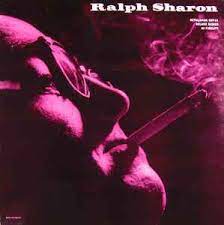
Ralph Simon Sharon was born in London, England on September 17, 1923 to a British mother and Latvian-born father. He emigrated to the United States in early 1954 and became a naturalized citizen five years later.
By 1958, Ralph was recording with Tony Bennett as accompanist. That was the start of a more than 50 year working relationship. He found the song I Left My Heart in San Francisco for Bennett, which became his signature song.
A jazz pianist in his own right, Sharon recorded nineteen albums as a leader, 15 with Bennett and two with Johnny Hartman. However, he also accompanied the likes of Robert Goulet, Chris Connor and nemerous others. Retiring to Boulder, Colorado, from on-the-road work when he reached 80, he continued to perform in the Denver metropolitan area until shortly before his death.
Pianist and arranger Ralph Sharon, best known as one of the finest accompanists who backed up popular singers, transitioned from natural causes on March 31, 2015.

More Posts: arranger,bandleader,history,instrumental,jazz,music
Daily Dose Of Jazz…
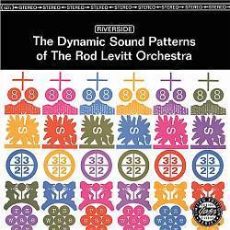
Rodney Charles Levitt was born on September 16, 1929 in Portland, Oregon and studied composition at the University of Washington, where he took his BA in 1951.
He was in the Radio City Music Hall orchestra from 1957 to 1963, and during those years he performed with Dizzy Gillespie, Ernie Wilkins, Kai Winding, and Sy Oliver. In 1959 Rod worked with Gil Evans when his orchestra accompanied Miles Davis. The following year he played with Gerry Mulligan and Mundell Lowe, with Quincy Jones in ‘61, and with Oliver Nelson in 1962.
He recorded four albums as a leader of an octet between 1963-66 and continued to work with this combination into the 1970s, when he played with bassist Chuck Israels.
Later in his career he worked with Cedar Walton and Blue Mitchell, and wrote music for commercials with a company he ran from 1966-1989. The late Seventies saw him teaching at Fairleigh Dickinson, Hofstra University, CUNY, and Hunter College.
Trombonist, composer, and bandleader Rod Levitt transitioned from Alzheimer’s disease in Wardsboro, Vermont at the age of 77 on May 8, 2007.
More Posts: bandleader,composer,history,instrumental,jazz,music,trombone
Daily Dose Of Jazz…
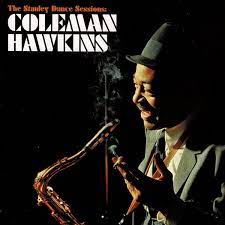
Stanley Frank Dance was born in Braintree, Essex, England on September 15, 1910. As a youth, he claimed he was “fortunate” to have been sent to boarding-school at Framlingham College, where he first encountered American recordings of bands fronted by Jelly Roll Morton and Benny Moten, among others. While working in the family business he continued to pursue his interest in music and soon learned of Louis Armstrong, Fats Waller and Duke Ellington through the music newspaper Melody Maker.
Focusing on the music of black bands he started writing opinion pieces about the jazz scene for Hugues Panassié’s French-language magazine Jazz Hot in 1935, modeling his articles on those written by John Hammond. A 1937 three week visit to New York City’s jazz scene had Stanley at the Savoy Ballroom and similar venues in the evenings, listening in on recording sessions during the day and an introduction to Canadian writer Helen Oakley.
Joining the RAF he was assigned to the Royal Observer Corps in East Anglia, and for a period of nine years his opportunity to listen to Black American bands was curtailed. He missed the start of Bebop, which developed during the war and a recording-musicians’ strike in the US, but he found Oakley when the American OSS assigned her to London late in the war.
Dance and Oakley married in 1947, resided in England until 1959 then moved to Connecticut. He wrote a monthly jazz column for Jazz Journal, he coined the term mainstream to describe those in between revivalist Dixieland and modern bebop. In 1958, Decca’s Felsted Records commissioned him to produce a series of New York recordings of Coleman Hawkins, Cozy Cole/Earl Hines, Billy Strayhorn/Johnny Hodges, Buddy Tate, and several others, which were released under the collective title Mainstream Jazz.
Leaving England for Connecticut with a commission from EMI’s English Columbia label to make proprietary jazz recordings, Stanley used his and Helen’s contacts with the Ellington players to produce seven albums that were quite successful in Europe. He also assembled two albums for RCA as well as writing liner notes and shared a 1963 Grammy with Leonard Feather for his liner notes to The Ellington Era, Vol. 1.
He went on to publish five books on jazz, write articles for several magazines, helped Duke Ellington write his autobiography and is credited with helping to revive the careers of several musicians including Helen Humes and Earl Hines. By 1979 the Dances moved to Southern California where he consulted with Ken Burns during the development of his documentary television series Jazz, served as book editor for Jazz Times and donated their journals, photographs, and recordings to the Yale Music Library’s Special Collections.
Over his career, his priority was advocating for the music of black ensembles performing sophisticated arrangements, based on Swing-era dance music. Jazz writer, business manager, record producer, and historian Stanley Dance who was personally close to Duke Ellington which put him in a position to author official biographies, transitioned from pneumonia at 88 on February 23, 1999 in Vista, California.
More Posts: historian,history,instrumental,jazz,music,producer,writer
Daily Dose Of Jazz…
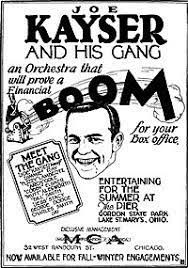
Joe Kayser was born St. Louis, Missouri on September 14, 1891 and at age 26 in 1917 he relocated to New York City to join Earl Fuller’s band, which played at a restaurant called Rector’s. He enlisted in the U.S. Navy during World War I, forming a band which included Benny Kubelsky on violin. Following the war, the Meyer Davis Organization hired him to lead a dance band which played in North and South Carolina.
Forming his own self-named dance jazz band in 1921 and shortly after he attempted to tour across the Carolinas. Three years later he relocated to Chicago, Illinois where his band performed through 1936.
During those Chicago days Joe began in 1929 to take positions as musical director of theater orchestras with the Diversey Theater in Chicago, followed by the Midland Theatre in Kansas City, Missouri. He continued to tour with his orchestra while holding these positions.
He played at the 1933 World’s Fair, accompanying Sally Rand but by 1963 had dissolved the band to work for NBC. Afterwards Kayser became an executive for MCA in 1943, remaining there until his retirement in 1955.
Drummer and bandleader Joe Kayser transitioned on October 3, 1981 in Evanston, Illinois.
More Posts: bandleader,drums,history,instrumental,jazz,music
Daily Dose Of Jazz…
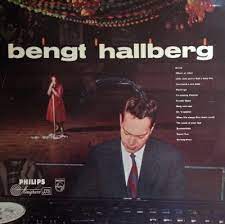
Bengt Hallberg was born on September 13, 1932 in Gothenburg, Sweden and studied classical piano from an early age. He wrote his first jazz arrangement at the age of 13. By 15 he recorded his first record as a member of a group led by bassist Thore Jederby and in 1949 he recorded with the Swedish alto saxophonist Arne Domnérus for the first time. The two musicians continued to play together for several decades.
During the Fifties, Bengt played with leading visiting American musicians tenor saxophonist Stan Getz and altoist Lee Konitz in 1951, and trumpeters Clifford Brown and Quincy Jones in 1953. During the same period he worked with Swedish baritone saxophonist Lars Gullin.
Hallberg had a versatile style and in his later years he wrote music for film and television, as well as choral arrangements. With Domnerus and Georg Riedel among others, he participated in the Jazz at the Pawnshop sessions in 1976.
Pianist, composer and arranger Bengt Hallberg, who also played accordion, transitioned on July 2, 2013 from congestive heart failure at the age of 80 in Uppsala, Sweden.
More Posts: arranger,bandleader,composer,history,instrumental,jazz,music,piano