

Three Wishes
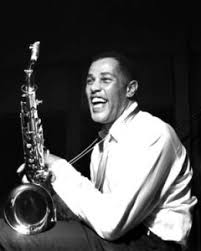
Dexter Gordon was hanging out with Nica when the subject of three wishes came up and he shared with her his one wish:
- “The things I want you can’t put in your book.”
*Excerpt from Three Wishes: An Intimate Look at Jazz Greats ~ Compiled and Photographed by Pannonica de Koenigswarter

More Posts: baroness,history,instrumental,jazz,music,pannonica,saxophone,three,wishes
Daily Dose Of Jazz…
Joseph Shulman was born on September 12, 1923 in New York, New York. His first professional experience was with Scat Davis in 1940 followed with a stint alongside Les Brown in 1942.
Joining the military in 1943 he recorded with Django Reinhardt while a member of Glenn Miller’s wartime band. Upon his return to the States he played with Buddy Rich and Claude Thornhill, then he played with Miles Davis on the Birth of the Cool sessions.
He went on to work with Peggy Lee from 1948 to 1950 and with Lester Young in 1950. Shulman did a recording session with Billy Strayhorn and Duke Ellington that same year.
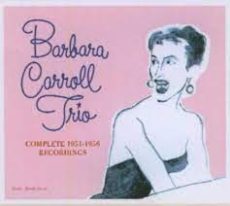
Marrying Barbara Carroll in 1954, the two toured together until his death. Bassist Joe Shulman transitioned from a heart attack on August 2, 1957 in New York City.

More Posts: bandleader,bass,history,instrumental,jazz,music
Daily Dose Of Jazz…
Ian Wilfred Hamer was born on September 11, 1932 in Liverpool, England, the son of a successful Merseyside dance band leader. Together with his two brothers he played in the band run by his mother until serving in the Royal Air Force.
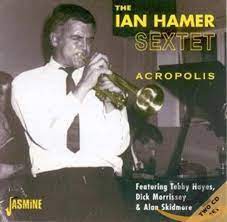
Moving to London, England in 1953 he worked for clarinettist Carl Barriteau and for a brief period with the Oscar Rabin Band. For a year beginning in 1955 he was part of the Tubby Hayes octet then later joined the Vic Ash quintet. In 1963, together with Harry South, he led a band called The Six Sounds, featuring Ken Wray and Dick Morrissey. By 1966 the band had developed into the Ian Hamer Sextet. In 1966 Ian joined the Top of the Pops studio orchestra conducted by Johnny Pearson.
Hamer played in big bands led by Tubby Hayes, Ted Heath, Mike Gibbs, Jack Parnell and Harry South. He also played with Kenny Wheeler, Dizzy Gillespie, Ella Fitzgerald, as well as in smaller bands with Stan Tracey, Benny Golson, Lalo Schifrin, Gary McFarland, Woody Herman’s Anglo-American Herd, Barbara Thompson, the Thad Jones-Mel Lewis band, Eric Delaney, John Dankworth and Joe Harriott.
As a session musician, he played on recordings by The Beatles, Bing Crosby, Tom Jones, Dusty Springfield, Shirley Bassey, Barbra Streisand, James Last, Matt Monro, and Peter Herbolzheimer. Ian played trumpet on the theme tune for The Sweeney, written and arranged by Harry South.
In 1987, Hamer moved to Brighton, England and founded the group Ian Hamer and the Sussex Youth Jazz Orchestra, later dropping Youth. On September 3, 2006, trumpeter Ian Hamer transitioned in Brighton at 73.
More Posts: bandleader,history,instrumental,jazz,music,trumpet
Requisites
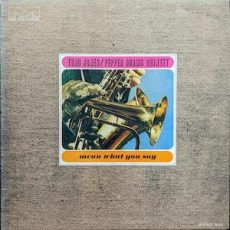
Mean What You Say ~ Thad Jones-Pepper Adams Quintet | By Eddie Carter
This morning’s album offered for your consideration brings together two of my favorite musicians, Thad Jones and Pepper Adams, for their only quintet release. Mean What You Say (Milestone MSP-9001) is their only collaborative effort and was recorded around the same time as The Thad Jones-Mel Lewis Orchestra album. Both titles hit the stores in 1966. Thad is heard exclusively on flugelhorn, and Pepper is on baritone sax. The supporting cast is a first-class rhythm section: Duke Pearson on piano, Ron Carter on bass, and Mel Lewis on drums. The program consists of six originals and two popular songs. My copy is the original US Stereo pressing.
Side One opens with the title tune, Mean What You Say, the first of four originals by Thad Jones and one of his prettiest tunes from Presenting Thad Jones-Mel Lewis & The Jazz Orchestra. The quintet opens with a wonderful melody. Duke has the first solo and states his case comfortably. Mel makes a brief comment before Thad’s relaxing statement. Pepper provides the song’s happy ending in the closer ahead of the reprise and the ending. H and T Blues begins with the ensemble’s smooth theme. Pepper takes the lead on the opening solo and cooks, then Thad thrives on the following reading. Duke swings with a smooth tone next, and Ron has a brief word before the closing chorus.
The group takes a spirited turn on Wives and Lovers by Burt Bacharach and Hal David with a lively melody. Thad launches the first reading slowly, then picks up speed to a brisk conclusion. Pepper answers him passionately, and Duke serves up a sparkling statement preceding the closing chorus and quick stop. Bossa Nova Ova is a festive tune with an infectious melody that’s sure to have your toes tapping along to the beat. Pepper is up first; his bubbling enthusiasm lets us know we’re in for a treat. Thad takes a gorgeous solo next; then Duke provides a perfect ending in a well-constructed performance into the song’s reprise and climax.
Side Two gets underway with No Refill. It’s a pretty song that flows like a summer breeze, beginning with the quintet’s theme. Ron starts with a beautiful first reading, and then Thad follows with a leisurely statement. Pepper shines brightly like the sun next, and Duke gives an interpretation as sweet as honey ahead of the theme’s reprise. Little Waltz by Ron Carter is a haunting ballad that opens with the front line’s melancholy melody. Pepper opens with a deeply moving interpretation, followed by Thad’s wonderfully warm statement. Duke is equally polite and respectful next, then Ron walks in last with a lovely finale before the theme’s restatement and tender ending.
Up next is Duke Pearson’s Chant, the pianist first performed on Donald Byrd’s A New Perspective. The ensemble starts slowly for their melody, but the pace picks up for the hearty opening statement by Pepper. Thad comes in next and delivers the second solo efficiently, then Duke delivers the knockout with a splendid performance, leading to the reprise and close. Yes Sir, That’s My Baby by Walter Donaldson and Gus Kahn is an old song from the twenties that the quintet has fun with in the opening and closing choruses with a ragtime feel. In between are three great solos by Thad, Pepper, and Duke, who are all having a blast playing.
Orrin Keepnews produced Mean What You Say, and Elvin Campbell was the recording engineer. The sound quality is exceptional, with a stunning soundstage that transports listeners to the studio as the quintet works. It’s a pity that this group didn’t get to record again because it’s a terrific studio session worthy of adorning a spot in any jazz library. Thad and Mel would assemble The Jazz Orchestra and Pepper Adams would become a significant member of the band’s early Solid State albums. Duke Pearson was a wonderful bandleader and composer who made his home on Blue Note, and Ron Carter was a member of the Miles Davis Quintet before branching out on his own in the seventies.
If you’re in the mood for an excellent Hard-Bop album and are a fan of either musician, I invite you to consider Mean What You Say by The Thad Jones-Pepper Adams Quintet for a spot in your library. It’s an absolute gem in their discography and a terrific release I’m sure you’ll enjoy!
~ A New Perspective (Blue Note BLP 4124/BST 84124), Presenting Thad Jones-Mel Lewis and The Jazz Orchestra (Solid State SS 18003) – Source: Discogs.com ~ Wives and Lovers, Yes Sir, That’s My Baby – Source: Wikipedia.org © 2023 by Edward Thomas Carter

More Posts: choice,classic,collectible,collector,flugelhorn,history,instrumental,jazz,music,saxophone
Daily Dose Of Jazz…
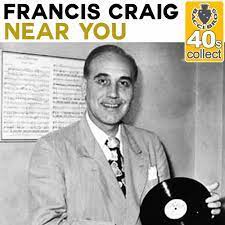
Francis Craig was the son of a minister born on September 10, 1900 in Dickson, Tennessee. He studied mathematics and political science at Vanderbilt University in Nashville, Tennessee. While he was at Vanderbilt, he formed an orchestra, the Vanderbilt Jazz Band. When the university’s chancellor told him to change the name of the group, disband it, or leave Vanderbilt, he dropped out and changed the orchestra’s name.
Craig went on to have three stints on WSM radio in Nashville and his Francis Craig Orchestra played on the station from 1926 to 1928 and again in 1935~1939. He returned to the station in 1947 to work as a disc jockey on the program Featured by Francis Craig. He also worked on WGN in Chicago, Illinois, in 1940.
The recording of his own composition Near You was released by Bullet Records and reached the Billboard Best Seller chart in 1947, peaked at #1 and lasted 21 weeks on the chart. It was the first pop hit record ever to come out of Nashville. His other compositions were Dynamite, Beg Your Pardon and Red Rose, among others.
Songwriter, pianist and dance band leader Francis Craig, who played honky~tonk transitioned at age 66 on November 19, 1966, in Sewanee, Tennessee.
More Posts: bandleader,history,instrumental,jazz,music,piano