


Daily Dose Of Jazz…
Born on September 21, 1927 Ward Lamar Swingle grew up in Mobile, Alabama and studied music, particularly jazz, from a very young age. He learned clarinet, oboe and the piano as a child and played in Mobile-area big bands before he was out of high school. He continued his music studies at the Cincinnati Conservatory of Music, graduating summa cum laude in 1950.
Moving to France in 1951 on a Fulbright scholarship, he studied piano with Walter Gieseking and worked as a rehearsal pianist for Les Ballets de Paris. He met a French-born violin student, Françoise Demorest, and got married in 1952. 1959 saw Swingle as a founding member of Les Double Six of Paris, which specialised in scat singing of jazz standards.
This concept of scatting to Johann Sebastian Bach was the foundation for The Swingle Singers, which became fully established by 1962. They released their albums Jazz Sebastian Bach and Bach’s Greatest Hits in 1963 and their early recordings won five Grammy Awards. Disbanding the original Swingle Singers in 1973 he moved to London, England and formed a new group, and expanded their repertoire to include classical and avant-garde works along with the scat and jazz vocal arrangements.
Returning to live in America in 1984 he remained musical advisor for his London-based group, but devoted most of his time to workshops, guest conducting and the dissemination of his printed arrangements through his publishing company, Swingle Music. He went on to conduct several chamber and philharmonic choirs, and conduct workshops and seminars at universities in Europe and North America.
In 1994 he moved back to France, where he continued his work in arranging, composing and guest conducting. He wrote an autobiography and treatise titled Swingle Singing, in which he defined ‘Swingle Singing’ techniques with illustrations from his arrangements and compositions.
Vocalist, pianist and arranger Ward Swingle, who was named Officier de l’Ordre des Arts et des Lettres (Officer of the Order of Arts and Letters) by the French Minister of Culture and Information, transitioned in Eastbourne, England, on January 19, 2015.

More Posts: arranger,bandleader,history,instrumental,jazz,music,piano

Daily Dose Of Jazz…
Sir John Phillip William Dankworth was born on September 20, 1927 in Woodford, Essex, England. He grew up within a family of musicians and attended Selwyn Boys’ Junior School and later Sir George Monoux Grammar School. Prompted by hearing a Benny Goodman Quartet album at 16, before settling on the clarinet he took violin and piano lessons. Soon afterwards he was inspired by Charlie Parker and learned to play the alto saxophone.
Beginning his career on the British jazz scene after studying at London’s Royal Academy of Music and then national service in the Royal Air Force, during which he played alto sax and clarinet for RAF Music Services. By 1947 he was working on the Queen Mary in Bobby Kevin’s band, and in London with Les Ayling. Through the rest of the decade he performed with Tito Burns, with Charlie Parker at the Paris Jazz Festival, and a tour of Sweden with Sidney Bechet. In 1949, Johnny was voted Musician of the Year.
The Fifties saw him forming a small group, the Dankworth Seven, as a vehicle to showcase his writing as well as several young players, Jimmy Deuchar, Eddie Harvey, Don Rendell, Bill Le Sage, Eric Dawson, Tony Kinsey and Frank Holder. also sang and recorded with this ensemble. Forming his big band in ‘53 and Cleo Laine was now a regular voice on appearances and recordings.
The band came to the States and performed at Newport, Birdland had Louis Armstrong sit in for a set and shared several stages with the Duke Ellington Orchestra. In 1959, John became chair of the Stars Campaign for Inter-Racial Friendship, set up to combat the fascist White Defence League.
The following decades saw him working and recording with numerous American and British jazz musicians, began composing for film and television, and received commissions all while performing live and on the radio.
As an educator his enthusiasm for jazz education led him to run for many years the Allmusic summer schools at the Stables in Wavendon and from 1984 to ‘86 he was a professor of music at Gresham College in London, where he gave free public lectures.
He was awarded an Honorary Doctorate of Music from Berklee College of Music, was made a Knight Bachelor in the 2006 New Year’s Honours List, and was made a Commander of the British Empire (CBE). In 2009 he fell ill and while he had to cancel several concerts he made one last appearance in December.
Saxophonist, clarinetist, composer, educator John Dankworth, who along with his wife Dame Cleo were one of a few couples to hold British titles, transitioned on February 6, 2010 at the age of 82, on the afternoon before a show celebrating the 40th anniversary of the foundation of The Stables.
Confer a dose of a Woodford saxophonist to those seeking a greater insight about the musicians around the world who are members of the pantheon of jazz…
More Posts: bandleader,clarinet,composer,educator,history,instrumental,jazz,music,music director,saxophone
Three Wishes
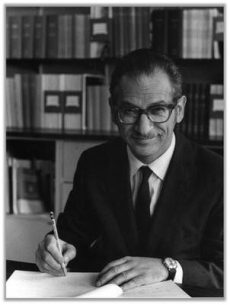
Pannonica made an inquiry about three wishes when she was talking with Walter Miller and he responded with the following:
- “It should be very simple to answer. How do I start? Well, number one is freedom. I have never been actually able to accept the fact that I’ve ever been that way.”
- “Then, I’d like to be fully secured~towards my obligations to others, I mean. Neighbors, you know, sometimes you feel you have to run from them. You don’t have an answer for them. Though I usually have an answer.”
- “I wan to say that no one is really independent. Everyone is dependent on others. So I would think-how can I explain this? My life has been devoted to music. I don’t know. I’d like to further my studies. And yet most of the good people are naturally talented. There seems to be a conflict. You don’t know which way to start. It’s bad to be ignorant. I’d like to help the teenagers. They’re so fiery, so sensitive. You know? The kids, today? They don’t seem to be content, at all! I’d like to help them.”
*Excerpt from Three Wishes: An Intimate Look at Jazz Greats ~ Compiled and Photographed by Pannonica de Koenigswarter

More Posts: anthropology,baroness,history,instrumental,jazz,music,pannonica,three,trumpet,wishes
Daily Dose Of Jazz…
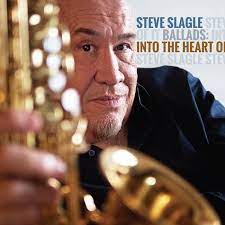
Hailing from Los Angeles, California on September 18, 1951 Steve Slagle was born. He grew up in suburban Philadelphia, Pennsylvania and received a scholarship to the Berklee College of Music and received a master’s degree in music from Manhattan School of Music. In 1976 New York City saw him first working with Machito and his Afro-Cuban orchestra, before touring and recording with Ray Barretto, Steve Kuhn, Lionel Hampton, Brother Jack McDuff, and Carla Bley. He has also performed and traveled with Woody Herman and Cab Calloway.
In the mid-1980s he began leading his own combos, first with Mike Stern and Jaco Pastorius, and then with Dave Stryker. He has played frequently with Joe Lovano and has been featured on several of Lovano’s albums, including the Grammy-winning 52nd Street Themes.
The mid-1980s had Steve recording with Milton Nascimento and recorded Rio Highlife in Brazil. He toured frequently worldwide during the 1990s and 2000s, in Western Europe, Japan, South America, Russia and Bulgaria. During the 1990s, he was a leading figure in the Charles Mingus Big Band, and co-leads a band with guitarist Dave Stryker.
He has played with such diverse artists as St. Vincent, Elvis Costello, the Beastie Boys, and Dr. John. As an educator Slagle has taught at the Manhattan School of Music, Rutgers, The New School, NYU, and clinics through the Thelonious Monk Institute, the Mingus Jazz Workshop and master classes and clinics worldwide.
He recorded a duo album with pianist Bill O’Connell in tribute album to Kenny Drew Jr. was released as The Power of Two. He has published a composition and improvisation workbook for the creative musician titled Scenes, Songs and Solos. He has released eighteen albums as a leader, six as a collaborator and 41 as a sideman. Saxophonist Steve Slagle continues to perform, record, teach.
More Posts: bandleader,flute,history,instrumental,jazz,music,saxophone
Requisites
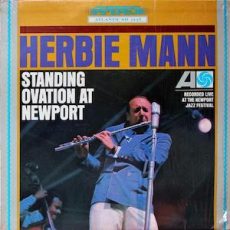
Standing Ovation at Newport ~ Herbie Mann | By Eddie Carter
After an exceptionally long week, I was ready to unwind and relax for the evening. So, I began listening to one of Herbie Mann‘s best live performances from the sixties, Standing Ovation at Newport (Atlantic 1445/SD 1445). Three tracks were recorded at the 1965 Newport Jazz Festival, while the fourth is from an earlier date at the Village Gate. The musicians joining the flutist on stage are John Hitchcock and Mark Weinstein on trombone, Dave Pike on vibraphone, Chick Corea on piano, Earl May (tracks: A1, A2, B1), and Ben Tucker (B2) on bass, Bruno Carr on drums, and Carlos “Patato” Valdes on congas. My copy is the 1971 US Stereo reissue.
The set opens with Patato, Dave Pike’s tribute to Carlos Valdes. The rhythm section sets the mood for the ensemble’s festive theme with a lively introduction. Herbie launches the opener energetically; Dave works wonders in the following solo. Carlos answers them with authority next. John and Mike bring the heat in the finale before the octet’s big finish. Stolen Moments by Oliver Nelson begins with the ensemble’s collective introduction, leading to Herbie’s carefree melody. Chick takes charge with a breezy opening statement; next, Herbie goes to work in an enjoyable performance. Dave tickles your ears in the closing chorus before the climax.
Herbie Mann’s Mushi Mushi starts Side Two with a perfect beat for a neighborhood block party. The title’s definition in Japanese means humid and begins with the ensemble’s joyously happy theme. Herbie’s opening solo will put everyone in a festive mood, but the song’s highlight comes with John and Mark’s sensational exchange ahead of the group’s upbeat finale. Herbie introduces the group’s finale, Comin’ Home Baby, by Ben Tucker and Bob Dorough. Ben takes over on bass, with Herbie and Dave as the featured soloists. Both musicians give electrifying performances that bring the crowd to their feet until the song’s upbeat conclusion calls for a well-deserved encore with player introductions.
Buddy Graham and Frank Laico were the recording engineers at The Newport Jazz Festival. Joe Atkinson, Tom Dowd, and Phil Lehle were behind the dials at The Village Gate. The album has a solid soundstage that reflects the enthusiastic energy of both audiences. It’s also a good pressing for a seventies reissue and quiet until the set begins. If you’re in the mood for an outstanding live album with lively performances and tight musicianship, I invite you to check out Standing Ovation at Newport by Herbie Mann on your next record-shopping trip. It’s a wonderful document of two great shows with Herbie at his best that sparkles from start to finish and is a high point in his list of albums!
~ Comin’ Home Baby, Stolen Moments – Source: Wikipedia.org © 2023 by Edward Thomas Carter

More Posts: choice,classic,collectible,collector,flute,history,instrumental,jazz,music