

Daily Dose Of Jazz…
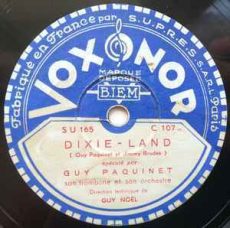
Guy Patrick Paquinet was born in Tours, France on August 13, 1903, Tours, France. He played in an army band in the early 1920s, then worked with Paul Gason, Lud Gluskin, Fred Mélé, and Don Parker.
Guy led his own ensemble from 1934 to 1936, then worked as a sideman for Alix Combelle, Django Reinhardt, and Ray Ventura. In the 1940s he returned to bandleading, leading his own ensembles through the 1950s and working with, among others, Sidney Bechet, Dizzy Gillespie, and Tony Proteau.
Trombonist Guy Paquinet, whose son André became a noteworthy trombonist, transitioned on January 5, 1981 in Selle-sur-le-Bied.

More Posts: bandleader,history,instrumental,jazz,music,trombone
Daily Dose Of Jazz…
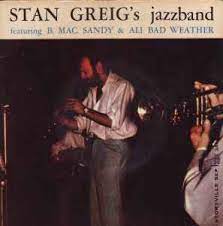
Stanley Mackay Greig was born on August 12, 1930 in Joppa, Edinburgh, Scotland to a father who was a drummer and piano tuner. While still in high school he played with Sandy Brown in 1945, then played piano and drums with him from 1948 to 1954. Moving to London, England in the mid-Fifties he played with Ken Colyer, Humphrey Lyttelton, and Bruce Turner, then with the Fairweather-Brown All-Stars in 1958-59.
He played with Turner again briefly before becoming a member of Acker Bilk’s Paramount Jazz Band from 1960 to 1968. After 1969 Greig made piano his primary instrument, leading his own small groups and playing boogie woogie and blues piano. He played with Dave Shepherd and Johnny Hawksworth as a sideman in the early 1970s, then formed the London Jazz Big Band in 1975.
From 1977-80 he played with George Melly, then toured as a bandleader in Europe in the early Eighties. He worked again with Lyttelton for a decade beginning in 1985, then worked with Wally Fawkes later in the 1990s. The Stan Greig Trio played many gigs in and around London, with the Rolling Stones’s Charlie Watts sometimes turning out on drums.
Pianist, drummer, and bandleader Stan Greig transitioned on November 18, 2012 after suffering from Parkinson’s disease.
More Posts: bandleader,drums,history,instrumental,jazz,music,piano
Daily Dose Of Jazz…
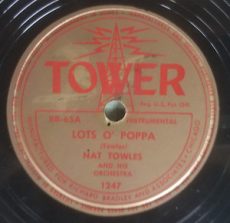
Nat Towles was born August 10, 1905 in New Orleans, Louisiana, the son of string bassist Phil “Charlie” Towles. He started his musical career as a guitarist and violinist at the age of eleven but switched to the bass at 13. Performing in his hometown through his teenage years with Gus Metcalf’s Melody Jazz Band, he eventually played with a number of bands, including Buddie Petit, Henry “Red” Allen, Jack Carey, and the Original Tuxedo Jazz Orchestra.
In 1923 he formed The Nat Towles’ Creole Harmony Kings. This jazz band became one of the prominent territory bands in Texas, Oklahoma, Kansas, and Nebraska. By 1925 he was playing bass for Fate Marable, and reformed his own band the next year. 1934 saw Towles organizing a band of young musicians studying music at Wiley College in Austin, Texas. He also worked the club circuit in Dallas, Texas during this period, when T-Bone Walker and Buddy Tate worked for him.
In the 1930s he transformed his band into The Nat Towles Dance Orchestra, signed with the National Orchestra Service, and focused on swing music through the 1930s and 1940s. In 1934 Towles took up residence in North Omaha, Nebraska, where his band was stationed for the next 25 years. With this outfit Towles dueled with Lloyd Hunter for dominance over the much-contested Near North Side in North Omaha, where he was held over at the Dreamland Ballroom for several weeks. In 1936 and 1937 Towles’ band held residence at Omaha’s Krug Park.
Over the course of his career Billy Mitchell, Buster Cooper, Red Holloway, Buster Bennett, Preston Love, Paul Quinichette, Neal Hefti, Jimmy Heath, Duke Groner, Buddy McLewis and Oliver Nelson were members of his band at one time or another. He continued leading bands throughout the 1950s until retiring to California in 1959 where he opened a bar.
Never finding true national recognition and fearing the limelight would then steal away his best players, there are very few recordings of Nat Towles’ Band. Bassist, big band leader and educator Nat Towles, whose band is considered one of the greatest territory bands of all time by musicians who played in it and by others who heard it, transitioned in Berkeley, California of a heart attack in January 1963.
More Posts: bandleader,bass,educator,history,instrumental,jazz,music
Daily Dose Of Jazz…
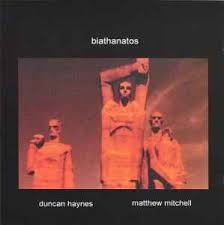
Matthew Mitchell was born in Hamilton, New Zealand on August 9, 1973 and didn’t start studying jazz until late in his teens, beginning on guitar at the age of 17. Four years later he attended what became the Massey University Wellington School of Music majoring in jazz. By 1998 he became a member of the New Zealand Youth Jazz Orchestra and toured with ex-Buddy Rich trumpeter John Hoffman.
First achieving prominence on the New Zealand jazz scene the following year when he won the Wellington Fringe Festival Music Award. His study of Indian classical music produced cohesive results and Matthew toured the country with Master Tabla drummer Dr. Tarlochan Singh from Delhi, India and then with New York vibraphonist Arthur Lipner. He then put together his own trio featuring Paul Dyne and Rick Cranson and they released two CDs, one of which was a big band work.
Moving to London, England in 2000 he continued work with his trio and rapidly became a prominent member of the jazz scene and joined Byron Wallen’s As Is project touring the UK and performing at a number of international festivals. He went on to perform and tour with German saxophonist Ingrid Laubrock, as well as Japanese electronic music artists Takagi Masakatsu and Ogorusu Norihide and with countryman electronics artist Signer.
Guitarist Mattewh Mitchell continues to tour regularly throughout Europe with his own groups and release recordings.
More Posts: bandleader,guitar,history,instrumental,jazz,music
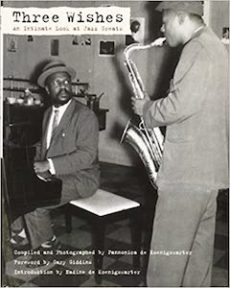
Three Wishes
When Nica approached James Weaver the one thing on her mind was to inquire what his three wishes would be if they could be granted. He responded:
- “To be able to play.”
*Excerpt from Three Wishes: An Intimate Look at Jazz Greats ~ Compiled and Photographed by Pannonica de Koenigswarter
More Posts: baroness,history,instrumental,jazz,music,painter,pannonica,three,wishes