

Daily Dose Of Jazz…
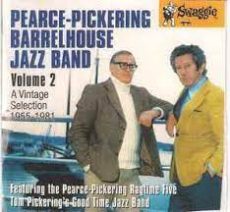
Thomas Mansergh Pickering was born on August 8. 1921 in Burra, South Australia, Australia. When the family moved to Australia’s island state of Tasmania from Burra in the mid-l930s and settled in the house next door to where Ian Pearce lived, the stage was set for the beginning of what was to become a significant part of Tasmania’s jazz history.
In his mid teens, he and Ian discovered British dance bands and over timethey embraced Benny Goodman, Louis Armstrong and the Swing Era musicians. Pee Wee Russell and Bud Freeman came later. At sixteen Tom received his first clarinet, doubling on saxophone and with his brother Cedri on drums, friend Ian playing cornet, pianist Rex Withers-Green, they gave birth to The Barrelhouse Four. He started playing in local bands and the four hit at local jam sessions. With the oncoming of WWII in 1939 they went their separate ways, reuniting in 1946 to record their first commercial pressing.
Pickering played traditional jazz in various parts of Australia during the late 30s and 40s. He continued working throughout succeeding decades, continuing his preference for older styles but also playing effective tenor saxophone in mainstream settings. His playing and recording career continued apace into the 80s, and his contribution to the musical life of his country has been rewarded with a number of honours.
Pickering went on to form his Good Time Jazz Band, which found success until the rising popularity of rock music led to the band’s eventual break up. A trio followed untilhe and Ian put together the Pearce- Pickering Ragtime Five. They had two very long and successful runs at the Tattersall’s Bar and Bistro, and then at Wrest Point Casino.
Ill-health led to Tom’s eventual retirement from music and the end of his playing career. Having qualified as a librarian in 1948, he would go on to work in the State Library of Tasmania, then became Parliamentary Librarian in 1974. He was made a member of the Order of Australia (AM), won the Australian Jazz Convention Composition Competition twice, and received the Satchmo Award.
Clarinetist Tom Pickering transitioned in Hobart, Tasmania on October 26, 2001.

More Posts: bandleader,clarinet,history,instrumental,jazz,music,saxophone
Daily Dose Of Jazz…
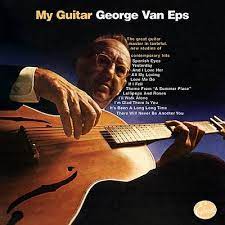
George Abel Van Eps was born on August 7, 1913 in Plainfield, New Jersey into a family of musicians. His mother was a classical pianist, his father was a ragtime banjoist and sound engineer and his three brothers were musicians. He began playing banjo at eleven years old but after hearing Eddie Lang on the radio, he devoted himself to guitar. By thirteen, in 1926, he was performing on the radio.
Through the middle of the 1930s, he played with Harry Reser, Smith Ballew, Freddy Martin, Benny Goodman, and Ray Noble. Van Eps moved to Los Angeles, California and spent most of his remaining career as a studio musician, playing on many commercials and movie soundtracks.
In the 1930s, he invented a model of guitar with another bass string added to the common six-string guitar. The seven-string guitar allowed him to play bass lines below his chord voicings, unlike the single-string style of Charlie Christian and Django Reinhardt. He called his technique “lap piano”, as it anticipated the fingerpicking style of country guitarists Chet Atkins and Merle Travis and inspired jazz guitarists Bucky Pizzarelli, John Pizzarelli, and Howard Alden to pick up the seven-string.
Dixieland had a following in Los Angeles during the 1940s and 1950s, and he played in groups led by Bob Crosby and Matty Matlock and appeared in the film Pete Kelly’s Blues. He played guitar on Frank Sinatra’s 1955 album. In The Wee Small Hours.
Playing guitar into his eighties, he built a career that lasted over sixty years. Swing and mainstream guitarist George Van Eps, who recorded eleven albums as a leader and thirty~two as a sideman, transitioned from pneumonia on November 29, 1998 in Newport Beach, California at the age of 85.
More Posts: guitar,history,instrumental,jazz,music
Requisites
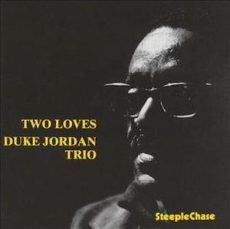
Two Loves is an album led by pianist Duke Jordan recorded on November 25th and December 2, 1973, at Sound Track in Copenhagen, Denmark. My Old Flame, Wait And See, and I’ll Remember April was recorded during the December session. The album was released the following year in 1974 on the Danish label, SteepleChase.
The producer was Nils Winther, the engineer was Ole Hansen, the liner notes were written by Roland Baggenæs and the photography, design, and cover was taken and created by Lissa Winther.
A bebopper of the first generation, this album is evidence of Jordan’s gentle touch, his simply constructed chords, and his preference for medium tempos.
Track List | 40:55 ~ 62:27 with CD Bonus Tracks-
- Subway Inn – 8:11
- My Old Flame (Sam Coslow, Arthur Johnston) – 8:45
- Blue Monk (Thelonious Monk) – 5:14
- Two Loves – 3:05
- Embraceable You (George Gershwin, Ira Gershwin) – 7:15
- Wait And See – 2:44
- I’ll Remember April (Gene de Paul, Patricia Johnston, Don Raye) – 5:34
- Lady Dingbat – 4:08
- Jordu – 5:19
- Duke Jordan – piano
- Mads Vinding – bass
- Ed Thigpen – drums

More Posts: choice,classic,collectible,collector,history,instrumental,jazz,music,piano
Daily Dose Of Jazz…
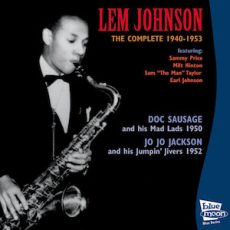
Lemuel Charles Johnson was born August 6, 1909 in Oklahoma City, Oklahoma. He played clarinet in local ensembles in the 1920s, however, he picked up saxophone in 1928, playing with Walter Page’s Blue Devils.
Early in the 1930s he played in the band of Grant Moore from 1931 to 1935 in the Milwaukee, Wisconsin area. Then he went to work with Eli Rice and Earl Hines. By 1937 he was moving to New York City where he played with Fess Williams, Luis Russell and Louis Jordan, before joining Skeets Tolbert’s band in 1939. In Tolbert’s group Johnson sang in addition to playing saxophone.
Lem recorded with Buster Harding, Eddie Durham, Edgar Hayes, Sidney Bechet, Claude Hopkins, St. Louis Jimmy, Sam “The Man” Taylor and Sammy Price. He also recorded with Johnny Long and his Orchestra on Coral Records. He cut several sessions as a leader, which have subsequently been released on compact disc.
After the 1940s he went into semi-retirement and occasionally played into the Sixties. Tenor and soprano saxophonist Lem Johnson transitioned in New York City on April 1, 1989.
More Posts: history,instrumental,jazz,music,saxophone
Daily Dose Of Jazz…
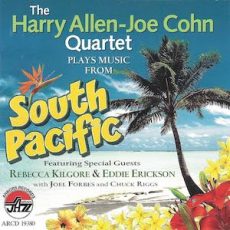
Charles “Chuck” Riggs was born on August 5, 1951 in Westerly, Rhode Island. Beginning in 1976 he played with Scott Hamilton and their association lasted well into the 1990s.
In the late 1970s and 1980s, he played with Bob Wilber, the World’s Greatest Jazz Band, Chris Flory, Benny Goodman, Kenny Davern, Dick Wellstood, Flip Phillips, Ruby Braff, and Jay McShann.
He was a member of the Concord Jazz All-Stars alongside Hamilton, Dave McKenna, and Gray Sargent in the early 1990s. Later in the decade he worked with Keith Ingham, Jon-Erik Kellso, and Ken Peplowski.
Riggs was featured on The Cotton Club, the soundtrack for the 1984 film of the same name.
Drummer Chuck Riggs continues to perform and record.
More Posts: drums,history,instrumental,jazz,music