


Daily Dose Of Jazz…
Thomas Robert Talbert was born on August 4, 1924 in Crystal Bay, Minnesota and grew up listening to big band music on the radio. He learned to play piano before he became a composer. He got started as a band leader when he was drafted in the Army in 1943, becoming composer for a military band at Fort Ord, California, performing for War Bond drives throughout California.
In the late 1940s he led his own big band on the West Coast, much of his work foreshadowing what became known as West Coast jazz. During the decade in Los Angeles he worked with Johnny Richards, Lucky Thompson, Dodo Marmarosa, Hal McKusick, Al Killian, Art Pepper, Steve White and Claude Williamson…….
Moving to New York in the early 1950s after being denied a recording contract in Los Angeles, California he worked with Marian McPartland, Kai Winding, Don Elliott, Johnny Smith, Oscar Pettiford, Herb Geller, Joe Wilder, Eddie Bert, Barry Galbraith, Aaron Sachs and Claude Thornhill. In 1956, Talbert recorded two records that would become his best known works, Wednesday’s Child and Bix Duke Fats, which gained him fleeting fame.
When rock and roll eclipsed jazz in popularity, in 1960 he moved to his parents’ home in Minnesota. He tried his hand at cattle ranching in Wisconsin but eventually moved back to Los Angeles and a musical career in 1975. As a sideman he recorded with the Boyd Raeburn Orchestra, Johnny Richards, and Patty McGovern.
In addition to composing for TV and movie studios, he became involved in music education, and set up a foundation to help talented young musicians, with one of the first recipients in 1996 was Maria Schneider.
Pianist, composer and band leader Thomas Talbert, who recorded eighteen albums as a leader, transitioned on July 2, 2005 in Los Angeles.

More Posts: bandleader,composer,history,instrumental,jazz,music,piano
Daily Dose Of Jazz…
Kat Edmonson was born in Houston, Texas on August 3, 1983 and is the only child of a single mother who enjoyed songs from the Great American Songbook and traditional pop from the 1940s and ’50s. She wrote her first song at age nine while riding the school bus. In 2002, after a year at the College of Charleston in South Carolina, she moved to Austin, Texas, to pursue a music career.
The same year Edmonson auditioned for the second season of American Idol and was one of the Top 48 contestants invited to Hollywood in Losa Angeles, California. Returning to Austin from Los Angeles and spent several years as a regular in the Austin club scene. She worked briefly in real estate but quit her day job in 2005 making the decision to pursue music full time.
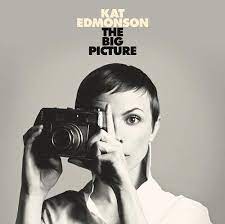
2009 saw Kat self-release her debut album, Take to the Sky, which reached the Top 20 on the Billboard magazine jazz chart. Her sophomore release Way Down Low in 2012 was the result of a successful Kickstarter campaign. It received a warm critical reception from The New York Times and NPR, reaching No. 1 on the Billboard Heatseekers chart. Her third album, The Big Picture, was released in 2014, which also reached No. 1 on the Billboard Heatseekers chart.
She would go on to open for Lyle Lovett’s tour, perform on The Tonight Show with Jay Leno, on NPR’s Tiny Desk, Austin City Limits and A Prarie Home Companion. By 2013 she had her first U.S. tour and an invitation to play the Montreux Jazz Festival. Opening for Jamie Cullum the same year she toured France, Germany, the Netherlands, Portugal, Spain, and the UK. She went on to tour with Michael Kiwanuka, Chris Isaak, and Gary Clark Jr.
All this led to film appearances in Angels Sing and Café Society, her songs used in Admission, her song Dark Cloud in the opening sequence of Closure, her song If in Netflix’s Russian Doll, and a Cocca~Cola Winter Olympics commercial.
Vocalist Kat Edmopnson continues to stretch the boundaries of her talent with performances and recordings.
More Posts: bandleader,history,instrumental,jazz,music,vocal
Daily Dose Of Jazz…
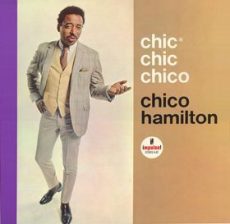
Albert Stinson was born on August 2, 1944 in Cleveland, Ohio and learned to play piano, trombone, and tuba before settling on bass at age 14. After graduating from John Muir High School in Pasadena, California in 1962, he began playing professionally in the early 1960s in Los Angeles, California. There he worked with Terry Gibbs, Frank Rosolino, Chico Hamilton, and Charles Lloyd in 1965.
Later in the decade around 1967 he worked with Larry Coryell, John Handy, Miles Davis, Bobby Hutcherson, and Gerald Wilson’s Los Angeles-based big band.
Never recording as a leader, Stinson appeared on Hamilton’s Impulse! albums, Hutcherson’s Blue Note album Oblique, Handy’s Koch Records album New View! and Clare Fischer’s album Surging Ahead. He recorded thirteen albums with the above as well as with Coryell, Lloyd and Joe Pass
Double-bassist Albert Stinson, whose ebullient personality, bright tone, and aggressive attack contributed to his being nicknamed Sparky, transitioned from a drug overdose while on tour on June 2, 1969 at the age of 24.
More Posts: bass,history,instrumental,jazz,music
Three Wishes
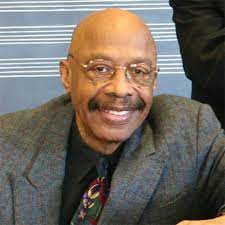
Dwike MItchell was hanging out at the house of the Baroness when she questioned his three wishes and told her:
- “To be able to play for people every night, that is my very special wish. To be able to play consistently well for everyone, to be able to give the best of myself every day. Love me like I love you, darling! For every day is different. Today is dark and black. And if one could give one’s best to everyone, that would be the greatest wish of every musician.”
*Excerpt from Three Wishes: An Intimate Look at Jazz Greats ~ Compiled and Photographed by Pannonica de Koenigswarter
More Posts: baroness,history,instrumental,jazz,music,pannonica,piano,three,wishes

Daily Dose Of Jazz…
Petra Van Nuis was born in Cincinnati, Ohio on August 1, 1975. Her initial exposure to music came from her father who was a classical pianist. She made her professional debut at the age of eleven with the Cincinnati Opera Company and the following year her first national tour was underway.
Middle and high school saw her attending Cincinnati’s School for the Creative and Performing Arts and continued summer studies at New York City Ballet’s School of American Ballet and San Francisco Ballet School. Van Nuis went on to get her BFA in Musical Theater from the University of Cincinnati’s College~Conservatory of Music. She then performed in regional theaters and national tours until 1999 when she hung up her dancing shoes to sing.
Entering the world of jazz singing she spent nights in her hometown listening to vocalists Ann Chamberlain and Mary Ellen Tanner who supported her early efforts. By 2001 she and husband, guitarist Andy Brown, moved to New York City where she met Marion Cowings and Barbara Lea. Two years later she’s in Chicago, Illinois under the wings of Jeannie Lambert, Judy Roberts and Marc Pompe who mentored her. Forming her own band she sings at all the major venues and festivals around the city.
Vocalist Petra van Nuis, who has five Japanese released CDs, continues to perform, record and tour nationally and internationally.
More Posts: bandleader,history,instrumental,jazz,music,vocal