

Daily Dose Of Jazz…
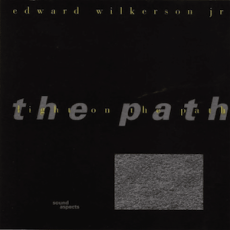
Edward L. Wilkerson Jr. was born in Terre Haute, Indiana on July 27, 1953. Over the course of his career he has associated himself with medium-to large-scale projects and has been a major presence in Chicago, Illinois’s Association for the Advancement of Creative Musicians (AACM), teaching and serving a term as president.
The AACM collective has been a nurturing force for Wilkerson and has informed much of his work. He was an original member of the Ethnic Heritage Ensemble formed by percussionist Kahil El’Zabar and remained with the group from 1976 until 1997. Though he recorded on three albums with the group he was becoming more involved in leading his own projects. His most ambitious project, Shadow Vignettes, was initiated in 1979 with 25 musicians and incorporated dance, poetry, and visual arts. The ensemble’s influences include the big band work of Muhal Richard Abrams, Duke Ellington, Count Basie and Sun Ra.
Wilkerson’s best-documented octet as a leader is 8 Bold Souls, a series of concerts that led Wilkerson to establish the group as a working band. They have released four albums, 8 Bold Souls, Sideshow, Ant Farm, and Last Option. Their music is influenced by the small groups of Duke Ellington and Jimmie Lunceford, but leaves room for adventurous experimentation.
In addition to his work with the preceding groups he has played with the AACM Big Band, Roscoe Mitchell, Douglas Ewart, the Temptations, Chico Freeman, the late Geri Allen, the Lyric Opera of Chicago, Muhal Richard Abrams, Aretha Franklin, and George Lewis.
Wilkerson has received grants from the Illinois Arts Council, the National Endowment for the Arts, Meet the Composer, and the Community Arts Assistance Program, and has been cited in numerous music polls.
Saxophonist, clarinetist, pianist, composer, arranger and educator Ed Wilkerson Jr., who has recorded 14 albums and two soundtracks, continues to teach composition at the AACM School of Music and explore the realms of jazz from his base in Chicago.

More Posts: arranger,bandleader,clarinet,composer,educator,history,instrumental,jazz,music,saxophone
Daily Dose Of Jazz…
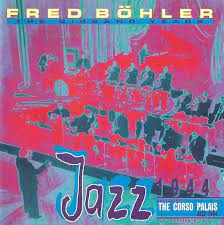
Alfred “Fred” Böhler was born July 26, 1912 in Zurich, Switzerland. He started on violin as a child but later switched to piano. He led his own ensemble starting in 1936, which featured Eddie Brunner and Hazy Osterwald, among others, as sidemen. This group made several tours of Switzerland during World War II and recorded copiously for Columbia Records.
In 1943, Böhler conducted an orchestral ensemble that played symphonic jazz. While he recorded most often on piano, he also used Hammond organ early in a jazz context. He would eventually play with Marcel Bianchi, Edith Piaf, Josephine Baker, and Pierre Cavall among others.
Pianist, Hammond organist and bandleader Fred Böhler transitioned on January 10, 1995 in Zumikon, Switzerland.
More Posts: bandleader,history,instrumental,jazz,music,organ,piano
Three Wishes
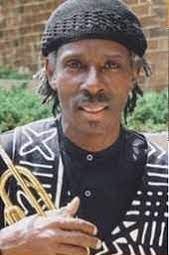
Jothan Callins was in good company with Baroness Pannonica and during their conversation she tossed the question of three wishes to him and he said:
- “I wish everyone would live together in peace and harmony.”
- “I wish I had met Clifford Brown in Person.”
- “I wish I could play and write more and more beautiful music.”
*Excerpt from Three Wishes: An Intimate Look at Jazz Greats ~ Compiled and Photographed by Pannonica de Koenigswarter

More Posts: baroness,composer,history,instrumental,jazz,music,pannonica,three,trumpet,wishes
Daily Dose Of Jazz…
Günter Lenz was born July 25, 1938 in Frankfurt am Main. He first taught himself guitar and studied with Carlo Bohländer, playing jazz in the clubs of the U.S. Army from 1954 onwards. During national service in 1959/1960 he switched to the bass.
In 1961 Albert Mangelsdorff picked him up as a member of the Albert Mangelsdorff Quintet. Since then Lenz has also become a member of the hr-jazz ensemble, for which he arranged and composed. 1965 saw him working in the Krzysztof Komeda Quintet, recording the album Astigmatic. Three years later he was playing with Joachim Kühn and Aldo Romano in a band led by Barney Wilen at the Berlin Jazz Days. With The German All Stars he toured internationally in 1969 and 1971.
He played with the George Russell Sextet, and with a band led by Leon Thomas. This allowed him to collect big band experience. During the 1970s he was a member of the Kurt Edelhagen Big Band and with Peter Herbolzheimer Rhythm Combination & Brass. He would go on to be engaged for their concert tours and record productions by Chet Baker, Coleman Hawkins, Oliver Nelson and Benny Bailey, as well as German musicians such as Eugen Cicero, Horst Jankowski and Volker Kriegel.
Dipping into the blues field in 1972 Günter played with Lightning Hopkins. The mid-1970s saw Lenz joining drummer Peter Giger in Clarinet Contrast, an avant garde band around the clarinetists Perry Robinson, Theo Jörgensmann, Bernd Konrad and Michel Pilz. As a member of the Manfred Schoof Quintet he recorded for ECM/Japo.
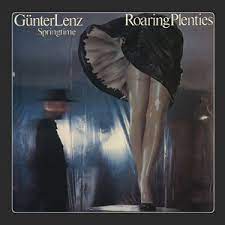
In the late 1970s Günter founded his combo, Günter Lenz Springtime, an international jazz-fusion band with members as Bob Degen, Claus Stötter, Frank St. Peter, Johannes Faber, Leszek Zadlo and Joe Nay. He recorded as part of the Berlin Contemporary Jazz Orchestra. In 1991 he recorded “Life at the Montreux Music Festival” in trio-formation with Uli Lenz and Allen Blairman
Lenz created orchestral arrangements for Plácido Domingo, and from 2001 to 2006 as a professor he taught bass at the Musikhochschule Stuttgart. During that period of education he received the Hesse state Jazz prize awarded by the State Minister for Higher Education, Research and the Arts Udo Corts.
Bassist Günter Lenz continues to perform, compose, arrange and educate.
More Posts: arranger,bandleader,bass,composer,history,instrumental,jazz,music
Daily Dose Of Jazz…
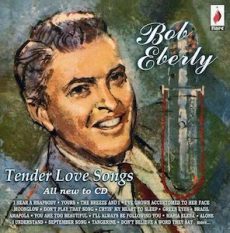
Robert Eberly was born Robert Eberle on July 24, 1916 in Mechanicville, New York. He changed the spelling of his surname slightly to the homonymous Eberly. His father was a policeman, sign-painter, and tavern-keeper.
He was hired by the Dorsey Brothers Orchestra in 1935 shortly after winning an amateur hour contest on Fred Allen’s radio show. He stayed with Jimmy Dorsey after Tommy left to form his own band and would be a fixture with the orchestra until drafted into the service late in 1943. In the early 1940s the Jimmy Dorsey Orchestra scored a string of hits featuring Bob and Helen O’Connell, with Eberly singing a slow, romantic baritone version of songs such as Amapola and Tangerine, followed by a lighter, up-tempo reprise by O’Connell. He recorded the original version of I’m Glad There Is You in 1942 for Dorsey’s orchestra on Decca Records. The song has become a jazz and pop standard.
In 1953, Eberly and Helen O’Connell headlined a summer replacement program for Perry Como’s CBS television show. The program also featured Ray Anthony and his orchestra.
In 1980, he had one lung removed but still continued to sing. Vocalist Bob Eberly transitioned from cancer on November 17, 1981 in Glen Burnie, Maryland, at the age of 65.
More Posts: history,instrumental,jazz,music,vocal