


Requisites
All Day Long ~ The Prestige All-Stars | By Eddie Carter
This morning’s discussion is about an album I initially discovered as a youngster and have wanted in my library for a long time. All Day Long (Prestige PRLP 7081) is one of three 1957 jam sessions released by The Prestige All-Stars. It was recorded on January 4 and is the companion album to All Night Long, which the group recorded a week earlier. The sextet on this date is an exceptional ensemble of musicians, Donald Byrd on trumpet, Frank Foster on tenor sax, Tommy Flanagan on piano, Kenny Burrell on guitar, Doug Watkins on bass, and Arthur Taylor on drums. My copy is the 1979 Prestige Jazz Masterpieces Series Japanese Mono reissue (Prestige SMJ-6604M) by Victor Musical Industries.
The album opens with the title tune, Kenny Burrell’s All Day Long, a laid-back blues occupying the entire first side. Burrell, Watkins, and Taylor provide the foundation in the opening chorus, then Byrd, Foster, and Flanagan enter to complete the melody. Frank gets the solos underway with an inspired performance, and Donald follows with a down-home statement as satisfying as a delicious meal. Kenny takes the following solo with exemplary poise, then Tommy soars effortlessly into the following interpretation. Doug adds a few elaborate ideas to the finale preceding the closing chorus. Slim Jim by Donald Byrd begins Side Two with a Latin-flavored introduction by piano, drums, and the front line. Foster, Byrd, Flanagan, and Burrell cruise comfortably in each solo, leading to the closing theme and dissolution.
Say Listen, also by Donald Byrd, starts with the sextet’s finger-popping theme in unison. Kenny steps up first with an opening solo as smooth as satin. Frank gets into a spirited groove on the second interpretation, then Donald takes over for an incredibly effective reading. Tommy has the last word and makes his point convincingly ahead of the ending theme and conclusion. A.T. by Frank Foster pays homage to Art Taylor, with the ensemble collectively taking flight on a lively melody. Foster takes the lead and gives a scintillating reading; next, Burrell takes a quick romp on the second statement. Byrd takes over for a presentation of aggressive energy, then Flanagan adds fresh fuel to the fire in a short solo. Taylor engages in a brief conversation with his fellow soloists into the sextet’s vigorous close.
Bob Weinstock supervised the initial album, and Rudy Van Gelder was the recording engineer. The sound is superb, and Victor Musical Industries has done a stellar job remastering this reissue. The highs sparkle, the midrange is crisp, and the low end is stunning, transporting the musicians to your listening room with exceptional sound quality. If you’re a Hard-Bop fan, I offer All Day Long by The Prestige All-Stars for your consideration on your next vinyl shopping trip. Like its companion, All Night Long, the two albums complement each other perfectly; either is a title you won’t regret adding to your library
~ All Night Long (Prestige PRLP 7073), Earthy (Prestige PRLP 7102) – Source: Discogs.com ~ © 2023 by Edward Thomas Carter

More Posts: choice,classic,collectible,collector,ensemble,history,instrumental,jazz,music
Daily Dose Of Jazz…
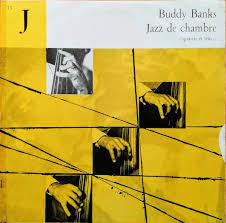
Alvin “Buddy” Banks was born on January 15, 1927 in St. Thomas, Ontario, Canada and grew up in the United States. He became interested in music during high school, starting out on piano before switching to saxophone. During World War II he joined the United States Army Band as a bass player.
Making his first appearance on record was in Vienna, Austria with Thurmond Young, this group also played live at the Colored Club. He played in Paris, France with Gerry Wiggins in 1950, and then with Bill Coleman in Bern, Switzerland, Le Havre, France and Belgium. After problems with his passport in Switzerland, he left for Paris in 1953, where he recorded often with expatriate American jazz musicians as well as local performers.
These include Hazel Scott, Buck Clayton, Lionel Hampton, Mezz Mezzrow, Don Byas, Albert Nicholas, and André Persiany. He toured with Michel Attenoux and with Sidney Bechet through Western and Central Europe in 1954.
Double bassist Buddy Banks transitioned on August 7, 2005 in Las Vegas, Nevada.

More Posts: bass,history,instrumental,jazz,music
Daily Dose Of Jazz…
Anthony Frank “Tony” Inzalaco, Jr. was born January 14, 1938 in Passaic, New Jersey. From childhood drumming he went on to obtain bachelor’s and master’s degrees from the Manhattan School of Music. He was active in the United States from 1959 to 1968, performing and/or recording with Vinnie Burke, Jaki Byard, Donald Byrd, Chris Connor, Maynard Ferguson, Jim Hall, Roger Kellaway, Morgana King, Lee Konitz, Morris Nanton, Duke Pearson, Benny Powell, Buddy Rich, Charlie Shavers, Johnny Smith, Billy Taylor, and Ben Webster.
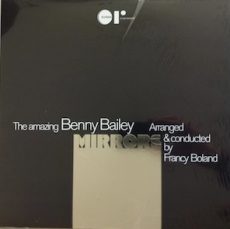
Moving to Germany in 1968 he lived there for a decade as a member of the bands of Kurt Edelhagen and Eugen Cicero. He worked with Benny Bailey, Don Byas, Kenny Clarke and Francy Boland, Kenny Drew, Art Farmer, Dizzy Gillespie, Dexter Gordon, Johnny Griffin, Peter Herbolzheimer, Carmen McRae, Sal Nistico, Horace Parlan, Fritz Pauer, Oscar Peterson, Idrees Sulieman, Ben Webster again, Jiggs Whigham, Jimmy Woode, and Leo Wright during his time in the country.
After moving back to the States, he was active principally in Boston, Massachusetts in the 1980s, working with Byrd, Griffin, and Farmer again, as well as with Ruby Braff, Al Cohn, and Dakota Staton.
Relocating again to Los Angeles in the 1990s, drummer Tony Inzalaco has led his own ensemble for the past decade.
More Posts: bandleader,drums,history,instrumental,jazz,music
Daily Dose Of Jazz…
Nathan Peck was born on January 13, 1925 in New York City and began playing the trombone as a teenager. After leaving high school he was drafted into the army and became part of Glenn Miller’s band. He remained with the band until after World War II ended.
He played with Don Redman in 1947 and studied classical music at the Paris Conservatory from 1949 to 1951, while playing and recording with leading jazz musicians such as Coleman Hawkins, James Moody, and Roy Eldridge. During the 1950s Peck played on television in New York, and in 1953 he recorded with Dizzy Gillespie. He shuttled between Paris and New York until 1957, when he married dancer Vera Tietz, then settled in France.
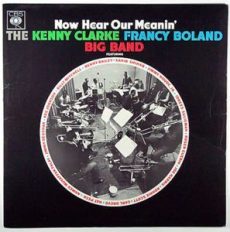
In France, he played with Michel Legrand, André Hodeir and Duke Ellington. Spending some time in England and Germany, Nathan worked as a staff musician at Sender Freies Berlin and played with Quincy Jones and the Clarke-Boland Big Band from 1963 to 1969. Relocating to London, England in 1965, he became active in the studios, film, and television. He played with Benny Goodman in the early Seventies and with Peter Herbolzheimer by the end of the decade.
Later he worked mainly as a contractor with his company, London Studio Orchestras. While this led to him ending his playing career, he shifted his talents to putting together the best blend of session musicians that he could find. ‘The Italian Job’, ‘Yentl’, ‘The 3 Muskateers’, and many more great films, especially with French composers Michel Legrand and Philippe Sarde.
Trombonist Nathan Peck transitioned on October 24, 2015.
More Posts: history,instrumental,jazz,music,trombone
Daily Dose Of Jazz…
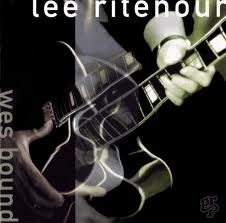
Lee Mack Ritenour was born January 11, 1952 in Los Angeles, California and at the age of eight he started playing guitar. Four years later decided on a career in music and by 16 he was playing on his first recording session with the Mamas & the Papas. He developed a love for jazz, influenced by guitarist Wes Montgomery. A year later he worked with Lena Horne and Tony Bennett, then studied classical guitar at the University of Southern California.
His solo career began with his debut album First Course in 1976 which was a jazz-funk sound of the 1970s. Lee followed with Captain Fingers, The Captain’s Journey, and Feel the Night to close out the decade. The Eighties saw Ritenour adding pop elements to his music, which got him charting so he stayed the course. During this period he added vocals to his music, recruiting such artists as Djavan, Bill Champlin, Eric Tagg, Patti Austin, Ivan Lins, Phil Perry, João Bosco, Kate Markowitz, Maxi Priest, Lisa Fischer and Michael McDonald.
In 1988, his Brazilian influence came to the forefront on Festival, an album featuring his work on nylon-string guitar. He changed direction with his straight-ahead jazz album Stolen Moments which he recorded with saxophonist Ernie Watts, pianist Alan Broadbent, bassist John Patitucci, and drummer Harvey Mason.
Then 1991 had Ritenour and keyboardist Bob James forming the group Fourplay, where he stayed until 1997. He released the career retrospective Overtime in 2005. Smoke n’ Mirrors came out the next year with the debut of his thirteen-year-old son, Wesley, on drums.
Guitarist Lee Ritenour has recorded 34 albums, garnered 16 Grammy nominations, received one Grammy Award and has been a judge for the Independent Music Awards. He continues to explore, record, compose and perform.
More Posts: bandleader,guitar,history,instrumental,jazz,music