

Requisites
Nica’s Dream ~ Red Holloway Quartet | By Eddie Carter
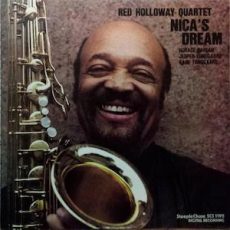
For my discussion this morning, I’ve chosen a swinging 1984 session by The Red Holloway Quartet. Nica’s Dream (SteepleChase Records SCS 1192) highlights the group in a program of jazz standards and original tunes. Red was born James Wesley Holloway in Helena, Arkansas. He began playing the banjo and harmonica as a child before graduating to the tenor sax at age twelve. In this session, he is equally skilled on the alto sax (tracks: A2, B2, B4) and tenor sax (A1, A3, B1, B3). Red is joined on this date by an excellent rhythm section, Horace Parlan on piano, Jesper Lundgaard on bass, and Aage Tanggard on drums. My copy used in this report is the original Danish Stereo release.
Side One starts with Reshma Rani Barnase, an uptempo original by Red Holloway. Red initiates the song’s lively theme, then gives an enthusiastic opening solo. Horace takes the baton and sprints through the following reading. Jesper does a bit of brisk walking next; afterward, Red returns to add a few more spirited remarks ahead of the finale. The leader switches to the alto for a gorgeous rendition of Lover Man by Jimmy Davis, Roger Ramirez, and Jimmy Sherman. The quartet begins with a lovely melody that leads to a stunning opening statement by Holloway. Parlan demonstrates his affection for this song in the next delicately tender performance. The saxophonist concludes the piece in fine form with a dreamy climax.
Love For Sale by Cole Porter places Red back on tenor for a gentle introduction that climbs to the ensemble’s festive theme. Red opens with a lusty statement that’s full of energy. He shares the next reading with Jesper in a robust exchange before the quartet’s closing chorus fades into nothingness. Side Two starts with Nica’s Dream by Horace Silver. It was composed in honor of Baroness Kathleen Annie Pannonica de Koenigswarter, a friend and patron of jazz musicians. This one starts from the group’s swift melody and does not let up until the final note. Holloway charges into the opening statement with a blazing interpretation. Parlan ignites the second statement with intense heat, and Red and Aage get their licks in an immensely satisfying finale.
Georgia on My Mind by Hoagy Carmichael and Stuart Gorrell gets going with Red back on alto for the medium theme and the tasty treat he delivers with deceptive ease on the opening solo. Horace takes the second spot with an endearing presentation he handles skillfully. Aage gets the last word and strolls in the finale toward the foursome’s closing chorus. Red Holloway’s 369 Blues is a happy groove that commences with the quartet’s collective melody that gets your foot tapping along from the outset. Holloway provides plenty of enjoyment on the opening tenor solo. Parlan steps up next to take a short, exhilarating ride, then Red and Tanggard engage in a delightful conversation ahead of the theme’s return.
Wee by Denzil Best brings the album to a close with the quick notes of the ensemble’s melody. Red takes his final turn on the alto sax and flies furiously through the first solo. Horace continues the aggressive pace on the second interpretation. Red and Aage bring a few more fireworks in a fleet interchange of ideas before the quartet wraps it up. Nils Winther produced Nica’s Dream, and Thomas Brekling was the recording engineer. The sound quality is superb, and the musicians draw the listener into the music. If you’re new to Red Holloway or are a longtime fan, I would like to offer Nica’s Dream by The Red Holloway Quartet for your consideration. It’s an enjoyable album that would make a terrific addition to any library and is worth every penny!
~ Georgia on My Mind, Love For Sale, Lover Man – Source: JazzStandards.com ~ Nica’s Dream, Red Holloway – Source: Wikipedia.org ~ © 2022 by Edward Thomas Carter

More Posts: choice,classic,collectible,collector,history,instrumental,jazz,music,saxophone
Daily Dose Of Jazz…
Marky Markowitz was born Irwin Markowitz but also known as Irving Markowitz on December 11, 1923 in Washington, DC. The youngest of seven children of Russian-Jewish immigrants, he learned the trumpet at the local Police Boys’ Club. He played early in his career in a number of big bands during the Forties, including those of Charlie Spivak, Jimmy Dorsey, Boyd Raeburn, and Woody Herman. He played in Buddy Rich’s orchestra in 1946–47, then returned to service under Herman in 1947–48.
Moving his family from Washington, D.C. to New York City in 1958 he eventually settled in Nyack, New York where he worked primarily as a studio musician in the 1960s, 1970s, and 1980s. During this period in his career he did appear on stage with Herman, Gene Krupa, Lee Konit, Ralph Burns, George Russell, Al Cohn, Paul Desmond, and Bill Evans. Marky was a first call trumpeter for many top artists of the time including Paul Simon, Aretha Franklin, Stevie Wonder, the Young Rascals, Frank Sinatra, Tony Bennett, Dionne Warwick, Maynard Ferguson, George Segal, and many others. He played as well on hundreds of advertising jingles, TV ads and movie scores.
He was a perennial on the Jerry Lewis Labor Day Telethon for Muscular Dystrophy, had a vocal impression of Louis “Satchmo” Armstrong, and performed in his hometown with an All-Star band, led by Nelson Riddle, at the Inaugural Ball for President Ronald Reagan’s 2nd term.
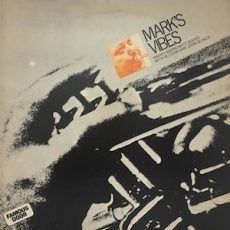
Trumpeter and flugelhornist Marky Markowitz, who recorded one album as a leader titled Marks Vibes, transitioned on November 18, 1986.

More Posts: bandleader,history,instrumental,jazz,music,trumpet

Daily Dose Of Jazz…
Pekka Juhani Pöyry was born on December 10, 1939 in Helsinki, Finland and became interested in jazz music at school and began studying the violin and clarinet. However, he was more taken with playing the alto saxophone, having been inspired by Charlie Parker. In addition, he played the flute and soprano saxophone.
After graduating with a Master of Laws in 1966, Pöyry decided to become a professional musician. In the same year he represented YLE, Finland’s national public broadcasting company at EBU’s concert in London, England. By the mid-1960s, he had his own quartet with pianist Eero Ojanen, bassist Teppo Hauta-aho and drummer Reino Laine. Joining the group was Norwegian-Finnish singer Pia Skaar to form a quintet, going on to perform at festivals and gain recognition from the likes of Bill Evans.
Increasingly interested in progressive rock and jazz fusion in the late 1960s and 1970s, with his later groups he attempted an international breakthrough, including the Reading Festival in England in 1973. However, his band Tasavallan Presidentti, broke up in 1974.
By 1975, Pekka was touring northern Europe with the North Jazz Quintet, later joining the orchestra of Heikki Sarmanto, later the UMO Jazz Orchestra, playing in what was then Yugoslavia, as well as, Poland, Czechoslovakia, Cuba, the Soviet Union, Britain and the United States with other bands.
Saxophonist and flutist Pekka Pöyry, was part of the Pekka Pöyry Quartet and Quintet, being a manic depressive committed suicide and transitioned in Helsinki on August 4, 1980. The Pekka Pöyry Award is named in his honor and given to young, talented saxophonists in Finland since the early-1980s.
More Posts: bandleader,flute,history,instrumental,jazz,music,saxophone

Daily Dose Of Jazz…
Matty Malneck born Matthew Michael Malneck on December 9, 1903 in Newark, New Jersey and his career as a violinist began when he was age 16. He was a member of the Paul Whiteman orchestra from 1926 to 1937. During the same period he recorded with Mildred Bailey, Annette Hanshaw, Frank Signorelli, and Frankie Trumbauer.
He led a big band that recorded for Brunswick, Columbia, and Decca. His orchestra provided music for The Charlotte Greenwood Show on radio in the mid-1940s and Campana Serenade in 1942–1943. His group played in the film St. Louis Blues in 1939 and You’re in the Army Now in 1941. At this point in his career he changed the group’s name to Matty Malneck and His St. Louis Blues Orchestra.
Malneck’s credits as a songwriter and composed hit songs such as Eeny Meeny Miney Mo and Goody Goody, both with lyrics by Johnny Mercer, I’ll Never Be The Same, with music by Malneck & Frank Signorelli, lyrics by Gus Kahn, and I’m Thru With Love, music by Malneck & Fud Livingston, lyrics by Kahn.
Violinist, songwriter, and arranger Matty Malneck transitioned on February 25, 1981.
More Posts: arranger,bandleader,composer,history,instrumental,jazz,music,violin

Daily Dose Of Jazz…
Mathias Rüegg was born on December 8, 1952 in Zurich, Switzerland and began playing jazz in secondary school. Trained as a schoolteacher, he taught for a while in special-needs schools. From 1973 to 1975 he attended the Musikhochschule in Graz, Austria, studying classical composition and jazz piano. While in Vienna, Austria he performed in a nightclub as a solo jazz pianist, joined later by saxophonist Wolfgang Puschnig. The duo formed the core of an ensemble that in 1977 became the Vienna Art Orchestra (VAO).
His distinctive, often humorous compositions have drawn on a range of influences, from traditional folk music to classics. He has also led the VAO to explore the big band repertory of American jazz composers such as Duke Ellington. Besides the traditional big-band complement, his orchestrations have prominently featured such instruments as the tuba, piccolo, bass clarinet, alphorn, exotic percussion, and wordless vocals. Beyond jazz, Mathias has composed for big bands, and classical orchestras, as well as theatre music, film music, soloist and chamber orchestra.
Rüegg has conducted workshops, worked as artistic director for music festivals, and headed multimedia and music-related projects. Rüegg founded the Porgy & Bess music club in Vienna and the Hans Koller Prize for Austrian jazz.
Composer, bandleader and educator Mathias Rüegg continues to compose and direct orchestras.
More Posts: composer,director,educator,history,instrumental,jazz,music