


Daily Dose Of Jazz…
Bent Jædig, born September 28, 1935 in Copenhagen, Denmark. He first studied clarinet before playing saxophone. In the 1950s, he settled in Germany and led a band with trombonist Rudi Fuesers, later joining another band with trombonist Peter Herbolzheimer in Munich, Germany.
By the 1960s, he returned to Denmark and worked with trumpeter Allan Botschinsky and pianist Bent Axen, with whom he recorded for Denmark’s Debut label. Bent would go on to play with the Dollar Brand Quintet which included Don Cherry. As a side-man he was constantly in demand and worked with Tete Montoliu, Jimmy Woode, Philly Joe Jones/Dizzy Reece, and Louis Hjulmand.
Jædig recorded his first album as a leader in 1967 titled, Danish Jazzman, with Axen, Botschinsky, Dusko Goykovich, Niels-Henning Ørsted Pedersen and Alex Riel. He would later form a trio, played in a duo and recorded live shows in 2002 which were compiled for a release from Timeless Records.
In the Seventies and 1980s he worked with Wild Bill Davison, Art Farmer, Stan Getz, the Thad Jones Big Band, Duke Jordan, Horace Parlan, Sahib Shihab, and Ernie Wilkins Almost Big Band. He was also a member of the Erling Kroner Tentet, played in the Danish Radio Big Band, and recorded on the Miles Davis album Aura. In 1987, Jædig was a member of Pierre Dørge’s New Jungle Orchestra.
At the end of the 1990s he was performing in a quintet. Tenor saxophonist and flutist Bent Jædig transitioned on June 9, 2004. Saxophonist Charles Davis recorded the album Charles Davis Plays the Music of Bent Jædig in 2006.

More Posts: bandleader,flute,history,instrumental,jazz,music,saxophone
Three Wishes
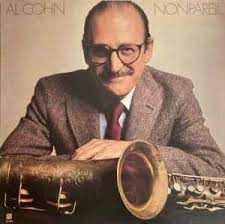
The inquiry of three wishes arose during a conversation between the Baroness and Al Cohn. His response to her question of fulfillment was:
- “A healthy world. What I mean by that is a world of peace and goodwill.”
- “Secondly, I’d wish for a long life, and a quick death, and the same for my wife.”

More Posts: baroness,history,instrumental,jazz,music,pannonica,saxophone,three,wishes
Daily Dose Of Jazz…
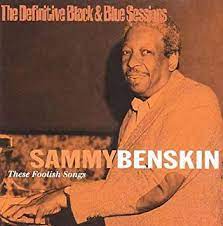
Samuel Benskin was born in The Bronx, New York on September 27, 1922 and made his professional debut around 1940 as piano accompanist to singer and guitarist Bardu Ali. He worked throughout the 1940s with among other jazz musicians Stuff Smith, Benny Morton and Don Redman. The 1950s witnessed Sammy leading his own piano trio, appearing as a soloist and accompanying singers Roy Hamilton, Dinah Washington and Al Hibbler. In 1954 he also joined a group, The Three Flames, which also featured Tiger Haynes.
By the end of the decade with a band credited as The Spacemen, Sammy recorded an instrumental, The Clouds, written and produced by Julius Dixson for his Alton record label. A departure from jazz, the song’s original vocals were removed and presented as an instrumental. It went to No. 1 on the Billboard R&B chart, and No. 41 on the pop chart. The song was the first number one on any chart released by an African-American owned independent record label, predating Motown’s first No. 1 by a year.
From the 1960s Benskin worked primarily as a vocal coach, arranger and producer. In 1986, he recorded an album in Paris, France for Black & Blue Records, These Foolish Songs. Pianist Sammy Benskin transitioned in Teaneck, New Jersey on August 26, 1992 at 69.
More Posts: arranger,bandleader,history,instrumental,jazz,music,piano,producer
Daily Dose Of Jazz…
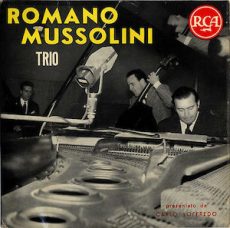
Romano Bruno Mussolini was born on September 26, 1927 in Villa Carpena, Forlì,Italy. He was the fourth child and youngest son of Il Duce, Benito Mussolini. He studied music as a child, playing classical pieces with his father on the violin. After World War II, he started playing jazz under the alias Romano Full.
By the mid-1950s, he formed a trio and in 1956 released a self-titled record featuring Lilian Terry on vocals and trumpeter Nunzio Rotondo on RCA Records. The Sixties saw him form the Romano Mussolini All Stars, which became one of Italy’s foremost jazz bands.
The All Stars recorded a well-received record Jazz Allo Studio 7 in 1963 with At the Santa Tecla following a year later. Romano’s band toured internationally with Dizzy Gillespie, Duke Ellington, Helen Merrill and Chet Baker, among others. In the 1990s he recorded two more albums, Perfect Alibi and Soft and Swing.
His playing style has been described as “like a slightly melancholic Oscar Peterson. Occasionally inspired, he was always efficient; he made the refrains run on time.
Pianist Romano Mussolini, who was also a painter and film producer, transitioned on February 3, 2006, at the age of 78, in a hospital in Rome, Italy from heart problems.
More Posts: bandleader,history,instrumental,jazz,music,piano
Requisites
A Date With Jimmy Smith, Volume Two ~ Jimmy Smith | By Eddie Carter
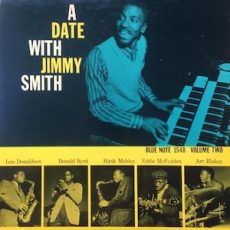
This morning’s subject brings us back to The Manhattan Towers Hotel Ballroom for A Date With Jimmy Smith, Volume Two (Blue Note BLP 1548/BST 81548). Jimmy Smith was an accomplished pianist who began playing the organ at the age of twenty-eight. He made the instrument popular for jazz improvisation and would lead me to discover the other organists who followed him. Joining the organist again are Donald Byrd (tracks: A1, B2) on trumpet, Lou Donaldson (tracks: A1, B1, B2) on alto sax, Hank Mobley (tracks: A1, B2) on tenor sax, Eddie McFadden (tracks: A1, B2) on guitar, and Art Blakey (tracks: A1, B2) on drums. The copy used in this report is a friend’s 1984 Toshiba-EMI Limited Japanese Mono reissue sharing the original catalog number.
Side One is occupied by an extended version of I Let A Song Go Out Of My Heart by Duke Ellington, Irving Mills, Henry Nemo, and John Redmond. The rhythm section swings easily into the melody stated by Lou. Donald sets the pace with a relaxed attitude on the first solo, next Hank gives a cheerfully buoyant reading. Eddie follows with a simple, bluesy statement, then Lou brings a good deal of enthusiasm to his interpretation. Jimmy is just a pleasure in the finale leading to Lou’s closing chorus and Jimmy’s ending. Side Two opens with I’m Getting Sentimental Over You by George Bassman and Ned Washington. This is a duet by Donaldson and Smith who embrace the jazz standard with elegant simplicity on the melody and during two touching interpretations before a pretty finale.
Hank Mobley’s Groovy Date is a blowing session that coaxes everyone to great heights and allows each member a chance to shine. Lou wastes no time getting down to business on the first solo, then Donald takes us on an eventful ride. Hank makes an indelible imprint on the third interpretation. Eddie responds with a spirited contribution and Jimmy offers a zestful joy on the next reading. Art gets the last word in a lively conversation with the front line into the close. A Date With Jimmy Smith, Volume Two was produced by Alfred Lion and the man behind the dials was Rudy Van Gelder. This Toshiba-EMI reissue is a wonderful recording with an impressive soundstage that brings the group to your listening room with superb definition. If you’re a fan of jazz organ, make A Date With Jimmy Smith, Volume Two on your next vinyl hunt. Like its companion, it’s a solid album with a superb ensemble that gives a glimpse into what was to come from Jimmy Smith in the next few years!
~ A Date With Jimmy Smith, Volume One (Blue Note BLP 1547/BST 81547) – Source: Discogs.com ~ I Let a Song Go Out of My Heart, I’m Getting Sentimental Over You – Source: JazzStandards.com © 2022 by Edward Thomas Carter

More Posts: choice,classic,collectible,collector,history,instrumental,jazz,music,organ