

Daily Dose Of Jazz…
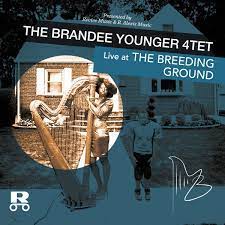
Brandee Younger was born on July 1, 1983 in Hempstead, New York and grew up between her birth city and Uniondale, New York. She began her harp studies as a teen under the tutelage of Karen Strauss and continued with several harpists and bassist Nat Reeves. On to undergrad she earned degrees in Harp Performance and Music Business from The Hartt School of the University of Hartford. While at the latter she was mentored by Jackie McLean and the faculty of the Jackie McLean Institute of Jazz and African American Studies.
Off to New York University for grad school six months later with an impressive résumé, she opened for Slide Hampton as a member of Hartford-based collective The New Jazz Workshop. Younger then developed a working relationship with Grammy-nominated producer and artist Ryan Leslie and Grammy Award-winning producer Omen. Building upon that foundation, Younger began working with saxophonist Ravi Coltrane on a series of concerts honoring the music of his late mother, harpist Alice Coltrane.
Over time, Younger has built her career as an educator, concert curator, performer, and bandleader of the Brandee Younger Quartet. Her debut recording as a leader came with Prelude, released in 2011 with Dezron Douglas, E.J. Strickland and vocalist Niia. Since that auspicious moment she has performed with The Harlem Chamber Players, the Hartford Symphony Orchestra, Waterbury Symphony, Soulful Symphony, Ensemble Du Monde, Camerata New York and the Red Bull Artsehcro.
Younger is on the teaching artist faculty (harp) at New York University and The New School College of Performing Arts. She has taught at Adelphi University, Nassau Community College, The Hartt School Community Division at the University of Hartford and has lectured on both sides of the pond. As a leader she has released 6 albums and two compilations since her debut album Prelude in 2011. As a sidewoman/contributor since 2006 she has 38 albums to her credit with folks like E. J. Strickland, Ravi Coltrane, Jeremy Pelt, Common, Robert Glasper, Jane Monheit, Christian McBroide, Lauryn Hill, Drake, and more.
Harpist Brandee Younger infuses classical, jazz, soul, and funk influences to the harp tradition pioneered by her predecessors and idols Dorothy Ashby and Alice Coltrane. She continues to explore and expand her musical vocabulary.

More Posts: bandleader,educator,harp,history,instrumental,jazz,music
Daily Dose Of Jazz…
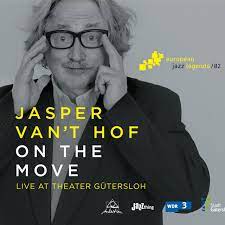
Jasper van ‘t Hof was born on June 30, 1947 in Enschede, Overijssel, Netherlands. He began studying piano at the age of five. He played in jazz bands at school and by 19 was playing at jazz festivals with drummer Pierre Courbois. In 1969, he became a member of Courbois’ early European jazz rock band Association P.C. with German guitarist Toto Blanke.
In 1974, Van’t Hof founded Pork Pie and teamed up with guitarist Philip Catherine, saxophonist Charlie Mariano, drummer Aldo Romano, and bass guitarist Jean-François Jenny Clark, He went on to join the band Eyeball with saxophonist Bob Malach and violinist Zbigniew Seifert.
Jasper had two bands ~ Face to Face with Danish bassist Bo Stief and saxophonist Ernie Watts; and Pili Pili featuring African singer Angelique Kidjo. He played keyboards with Archie Shepp, although he is best known for his solo piano playing.
As part of Piano Conclave he played with pianists George Gruntz, Joachim Kühn, Wolfgang Dauner, and Keith Jarrett. He has recorded more than four dozen albums as a leader and another nineteen as a sideman. Pianist and keyboardist Jasper Van’t Hof, who is a textural player, comfortably blends impressionistic writing with freer concerns, continues to compose, perform and record.

More Posts: bandleader,history,instrumental,jazz,keyboard,music,piano
Daily Dose Of Jazz…
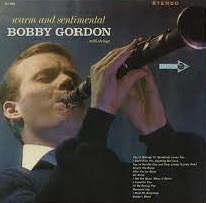
Robert Cameron Gordon was born June 29, 1941 in Hartford, Connecticut and taught himself by listening intently to the stylings of Jimmie Noone, Jimmy Dorsey and Frank Teschmacher, among others. He studied with Chicago clarinetist Joe Marsala. As a teenager he would go to Eddie Condon’s jazz club in New York’s Greenwich Village, sit at a table near the bandstand and nurse a Coke all night as he listened.
Early in his career, he played with Wild Bill Davison, Bobby Hackett, Zutty Singleton, Muggsy Spanier and had a long run with Jim Cullum’s Happy Jazz Band in San Antonio, Texas. Moving to San Diego, California in the 1970s, he played with numerous groups around the county. By the mid-1970s Gordon frequently recorded and toured with singer Leon Redbone, and appeared on the Johnny Carson Show. In 1979, the two survived injuries in a crash of a twin engine prop jet in Clarksburg, West Virginia.
In the late 1990s, Bobby joined the Roadrunners, a popular quintet on the West Coast festival circuit. During this time, he played with Marty Grosz, the Orphan Newsboys and Destiny’s Tots. His longest gig was at Milligan’s Bar & Grill in La Jolla, California leading a quartet.
Clarinetist and bandleader Bobby Gordon, who had been in poor health for years, transitioned from cardiopulmonary arrest on December 31, 2013.
More Posts: bandleader,clarinet,history,instrumental,jazz,music

Three Wishes
Sun Ra had three wishes for the Baroness when she inquired what his would be:
- “A flexible instrument which could reflect every mood of any being, even a cat’s or a bird’s.”
- “A center where I would be free to present what I am actually doing to the world in the proper manner. Lights, shadows, colors, music would all be working at the same time, and it would be a synopsis of cosmic things so concentrated that, in an hour, you could be enlightened about the entire universe.”
- “The means to do things precisely, directly, and unhampered.”
*Excerpt from Three Wishes: An Intimate Look at Jazz Greats ~ Compiled and Photographed by Pannonica de Koenigswarter

More Posts: baroness,history,instrumental,jazz,music,organ,pannonica,percussion,piano,three,vocal,wishes
Daily Dose Of Jazz…
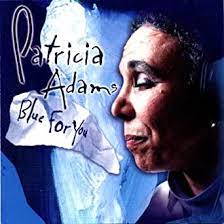
Patricia Adams was born on June 28th in Westchester, New York. She earned a Bachelor of Science and a Masters in Business Administration degrees in the 1960’s. She studied music theory, harmony, and improvisation at the New England Conservatory in Boston and at the Performing Arts School of Worcester in the Nineties. Her continued studies have led her to Semenya McCord, Dominique Eade, Frank Wilkins, Jim Carson, Jeannie Lovetri, Sheila Jordan and Kirk Nurock.
Stepping onto a nightclub stage for the first time in 1992 at Scullers Jazz Club in Boston, many open mics and pro bono gigs later, she traded her thirty-five year career in human resources management for life as a full time artist. Her venues now attract those who enjoy the jazz and blues standards of the 1930’s and ’40’s. She plays with some of the world’s renowned jazz artists, including Ray Santisi, Marshall Wood, Bob Moses, Joe Hunt, Bill Wurtzel, John Repucci, Frank Wilkins, Fred Hunter, Ross Schneider, Joe Lovano, Stanley C. Swann, III and the late Jimmy Hill, so far.
As an educator she is at Berklee College of Music in Boston, Massachusetts with her leadership skills workshop for the entrepreneurial musician. Vocalist and bandleader Patricia Adams, who is a voting member of the National Academy of Recording Arts & Sciences, also served on the board of the New England Conservatory, continues to perform.
More Posts: bandleader,history,instrumental,jazz,music,vocal