

Daily Dose Of Jazz…
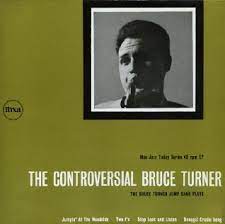
Malcom Bruce Turner was born July 5, 1922 in Saltburn-by-the-Sea, North Yorkshire, England. He received his education at Dulwich College, learning to play the clarinet as a schoolboy. He began playing alto saxophone while serving in the Royal Air Force in 1943 during World War II.
From 1948-53 he played with Freddy Randall and worked on the Queen Mary in a dance band and in a quartet with Dill Jones and Peter Ind. He briefly studied under Lee Konitz in New York City in 1950. His first period with Humphrey Lyttelton ran from 1953 to 1957 but leaving Lytteltonin he led his Jump Band from until 1965, which was featured in the 1961 film, Living Jazz.
Turner arranged and recorded the music for this film and the album Jumpin’ at the NFT (National Film Theatre) was issued to coincide with the film’s release. He then took part in the biggest trad jazz event to be staged in Britain at Alexandra Palace. Returning to Randall’s group from 1964 to 1966, he played with Don Byas and Acker Bilk. He continued to work with Lyttelton and Ind into the 1980s, played with the Jump Band intermittently, and led small ensembles in the 1990s.
Turner’s autobiography Hot Air, Cool Music, was published by Quartet Books, appeared in 1984. He wrote a column on jazz for the Daily Worker. Saxophonist, clarinetist and bandleader Bruce Turner transitioned on November 28, 1993.

More Posts: bandleader,history,instrumental,jazz,music,saxophone
Daily Dose Of Jazz…
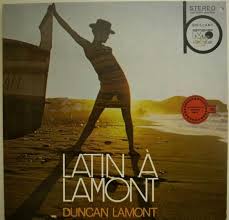
Duncan Lamont was born on July 4, 1931 in Greenock, Scotland. His first instrument was trumpet and he clearly showed promise right from the start. His father played accordion and soon he was joining him on the many gigs all over town. Falling in love with music he practiced all the time and began making a name for himself. In his teens he formed a jazz band with some of his fellow teenage enthusiasts and after taking part in a ‘Melody Maker’ magazine contest, received an offer to join Kenny Graham’s band and turn professional. Initially turning down the offer for work in the shipyards, friends persuaded him to go to London, England and joined the band. It was here that he met and eventually married vocalist Bridget Harrison.
Struggling with his lip he decided to quit the band and return home at just 21 years old. Once again a friend interceded and suggested he try the tenor saxophone, and found an affinity with it. Mastering the instrument he hit the road withthe big bands which led him back to London. A call to become a part of the Swinging Scots recording with Johnny Keating proved fortuitous and he became Keating’s go to saxophonist.
For the next thirty years, session work for TV, films and radio was to be a big part of his life. In this capacity, it’s fair to say he worked with most of the 20th century icons of popular entertainment, from Bing Crosby to Paul McCartney. During the 1960’s, to fuel his jazz needs he became a member of the Johnny Scott Quintet. Encouraged to write for the band’s book, Duncan gravitated to leading his own big band on the BBC.
His most enduring musical partnership was with trumpeter Kenny Wheeler, which lasted decades. As the industry changed Lamont turned his attention to songwriting, composing and lyrics. Having written hundreds of songs, many were recorded by the likes of Blossom Dearie, Natalie Cole, George Shearing, Cleo Laine and a long list of great vocalists. Returning home to Greenock a month towards the end of his career, he performed a homecoming gig with singers Esther Bennett and Daniela Clynes. Tenor saxophonist Duncan Lamont transitioned on July 2, 2019 at 87.
More Posts: bandleader,history,instrumental,jazz,music,saxophone
Requisites
Minor Move ~ Tina Brooks | By Eddie Carter
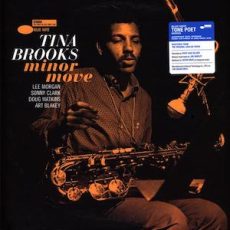
This morning’s choice from the library is Minor Move (Blue Note GXF 3072), a 1958 recording by tenor saxophonist Tina Brooks. It was his first session as a leader and should have resulted in his debut but remained shelved until 1980 when it hit the stores in Japan. He’s joined here by Lee Morgan on trumpet, Sonny Clark on piano, Doug Watkins on bass, and Art Blakey on drums. My copy used in this report is the 2019 Blue Note Tone Poet Series Stereo reissue (B0030487-01). Nutville by Tina Brooks opens Side One with the quintet’s blissfully happy theme. Sonny offers a welcoming smile on the opening statement, then Lee invites us to make ourselves at home next. Tina continues the lighthearted mood with an easy-going interpretation. Doug adds a few cool notes leading to the group’s finale.
The Way You Look Tonight by Jerome Kern and Dorothy Fields debuted in the film, Swing Time (1936). Tina and Lee accelerate the beat to uptempo for the melody, then Brooks dives straight into an invigorating lead solo. Morgan moves through the second interpretation with surgical precision, followed by Clark who applies infectious enthusiasm to the third reading. Blakey engages in a brief exchange with the front line before everyone reassembles for the ending. Side Two starts with Star Eyes by Gene De Paul and Don Raye from the musical-comedy, I Dood It! (1943). Lee begins with a brief muted intro preceding the midtempo theme. Tina steps up first with a relaxing performance, then Sonny and Lee follow with two satisfying performances of sheer delight.
Minor Move by Tina Brooks gets underway with the quintet’s collective theme, then Brooks settles into a bluesy groove on the lead solo. Lee and Sonny follow with two interpretations that will have your fingers popping and toes tapping to the inviting beat before the ensemble’s closing chorus dissolves into nothingness. Everything Happens To Me by Matt Dennis and Thomas Adair is one of the most beautiful songs from The Great American Songbook. This is a showcase for Tina who gives two emotionally touching performances of lyricism and poignancy. Sandwiched between them is a gorgeous presentation of reflective beauty by Lee and a warm insightful interpretation by Sonny leading to the tenor’s soft conclusion.
Minor Move was produced by Alfred Lion and Rudy Van Gelder was the recording engineer. Joe Harley supervised the reissue and Kevin Gray did the mastering. The packaging is superb with great photos of the session. The recording is fantastic with an exceptional soundstage and outstanding detail that comes through your speakers as clear as Waterford Crystal. The record was pressed on 180-gram audiophile vinyl and is very quiet until the music starts. Tina Brooks released only one album during his lifetime and appeared on several Blue Note sessions. Sadly, he never got the recognition he deserved. He passed away from liver failure at age forty-two on August 13, 1974. If you’re a fan of tenor sax and don’t already own the Mosaic box set, I offer for your consideration, Minor Move by Tina Brooks. It’s a terrific recording by one of the underrated jazz musicians and an album I highly recommend for your library!
~ The Complete Blue Note Recordings of The Tina Brooks Quintets (Mosaic Records MR4-106), True Blue (Blue Note BLP 4041/BST 84041) – Source: Discogs.com ~ The Way You Look Tonight, Star Eyes, Everything Happens To Me – Source: JazzStandards.com © 2022 by Edward Thomas Carter

More Posts: choice,classic,collectible,collector,history,instrumental,jazz,music,saxophone
Daily Dose Of Jazz…
John William Heard was born on July 3, 1938 in Pittsburgh, Pennsylvania and in his early years he played saxophone. He began playing bass at the age of 14. His professional career began in a band that included sax player Booker Ervin, drummer J.C. Moses, pianist Horace Parlan and trumpet player Tommy Turrentine. While in high school, he attended special classes at the Carnegie Museum of Art.
Joining the United States Air Force in 1958 John was sent to Germany. Because of his art experience he was given a job of designing posters for events. He also did some art teaching, teaching the wives of officers. He left the Air Force in 1961 and enrolled at the Art Institute of Pittsburgh. He returned to music and went to Buffalo, New York with a later move to California.
The Sixties saw him playing double bass with Turrentine, Al Jarreau, Jean-Luc Ponty, Sonny Rollins and Wes Montgomery. The 1970s he was with Toshiko Akiyoshi, Count Baie, Louie Bellson, Joe Henderson, Ahmad Jamal, John Cillins, Blue Mitchell and Oscar Peterson. By the Eghties he had moved on to perform with Eddie “Lockjaw” Davis, Buddy Montgomery and Pharoah Sanders and Larry Vuckovich. During the decade he teamed with Tom Ranier and Sherman Ferguson to create the group Heard, Ranier, Ferguson in which they released an album in 1983.
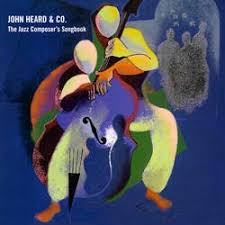
Desiring to retire from music in order to spend more time painting, Heard managed to record with Tete Montoliu, Eddie “Lockjaw” Davis, Art Pepper, Clark Terry, Pharoah Sanders, Zoot Sims and Joe Williams. He would return to music, record with Benny Carter, release his album The Jazz Composer’s Songbook and form his group, The John Heard Trio that played at Charlie O’s club in Van Nuys, California. With over 52 recording dates as a sideman with a who’s who list of jazz musicians from the 60’s to 2010, double bassist, bandleader and painter John Heard transitioned on December 10, 2021 at the age of 83.
More Posts: bandleader,bass,history,instrumental,jazz
Daily Dose Of Jazz…
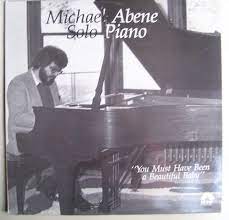
Michael Abene ( was born July 2, 1942 in Brooklyn, New York. Growing up in a musical family he was influenced and inspired by his father, grandfather, and aunt who were musicians. He studied composition at the Manhattan School of Music
His reputation for accompanying singers and for arranging music led Michael to accompany Susannah McCorkle, Julius La Rosa, and others. His debut album was a solo piano project recorded in 1984 and released in 1986 titled You Must Have Been a Beautiful Baby.
He recorded with Maynard Ferguson, Dizzy Gillespie, Cal Tjader during the Sixties and Urbie Green in the Seventies. Abene co-produced the album Avant Gershwin, which won the Grammy Award for Best Jazz Vocal Album in 2007.
Pianist Michael Abene continues to perform, produce and conduct.
More Posts: arranger,bandleader,conductor,history,instrumental,jazz,music,piano