

Daily Dose Of Jazz…
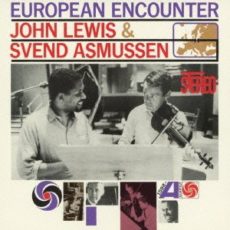
Svend Asmussen was born on February 28, 1916 in Copenhagen, Denmark into a musical family. He started taking violin lessons at the age of seven and by 16 he first heard recordings by jazz violinist Joe Venuti and began to emulate his style. He started working professionally as a violinist, vibraphonist, and singer at 17, leaving his formal training behind for good.
Early in his career he worked in Denmark and on cruise ships, with artists such as Josephine Baker and Fats Waller. Asmussen later was greatly influenced by Stuff Smith, whom he met in Denmark. During World War II he played with Valdemar Eiberg and Kjeld Bonfils, during which time jazz had moved to the underground and served as a form of political protest.
The late 1950s saw Svend forming the successful trio Swe-Danes with singer Alice Babs and guitarist Ulrik Neumann. The group gained a dance hall reputation and toured the United States. He worked with Benny Goodman, Lionel Hampton, and Duke Ellington. Asmussen was invited by Ellington to play on his Jazz Violin Session recording in 1963 with Stéphane Grappelli and Ray Nance.
In 1966, Asmussen performed alongside Grappelli, Stuff Smith, and Jean-Luc Ponty in a jazz Violin Summit in Switzerland, appeared at the ‘67 Monterey Jazz Festival,and guested on Snakes in a Hole, an album by the jazz-rock band, Made in Sweden.
Actively playing violin at the age of 94, he became a centenarian in 2016, and his collection of jazz music, photographs, posters and other material is held in the jazz collections at the University Library of Southern Denmark. Violinist Svend Asmussen transitioned peacefully in his sleep on February 7, 2017.

More Posts: bandleader,history,instrumental,jazz,music,violin
Requisites
The Chase ~ Gene Ammons & Dexter Gordon | By Eddie Carter
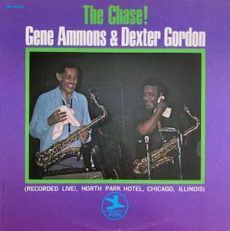
Throughout the chronicles of jazz, there have been many great tenor sax duos who have recorded some legendary battle albums that are among some of the greatest records ever made. Gene Ammons and Sonny Stitt, Arnett Cobb and Buddy Tate, Al Cohn and Zoot Sims, Dexter Gordon and Wardell Gray, Coleman Hawkins and Don Byas, Illinois Jacquet and Lester Young to name a few. This morning’s choice from the library is an exciting live date by Gene Ammons (A1, B1, B2) and Dexter Gordon (A1, A2, B1). The Chase (Prestige PRST 10010) was recorded live at the North Park Hotel before an enthusiastic audience on the afternoon and evening of July 26, 1970, during Gordon’s cross-country tour. The quintet is anchored by Jodie Christian (A1, B1), John Young (A2, B2) on piano, Rufus Reid (A1, B1), Cleveland Eaton (A2, B2) on bass, Wilbur Campbell (A1, B1), Steve McCall (A2, B2) on drums, and Vi Redd (B1) on vocals. My copy used in this report is the original 1971 Stereo album.
Side One opens with the title tune, The Chase is Dexter Gordon’s uptempo tribute to the great tenor duels beginning with a high-spirited, energetic theme. Dexter has the lead solo and produces an exceptionally high level of creativity including his famous big top circus quotes. Gene delivers an aggressive workout on the next reading, then Jodie swings strongly on a brief statement. Wilbur gets the final word in a vigorous conversation with both horns into the lively finale. Polka Dots and Moonbeams by Jimmy Van Heusen and Johnny Burke is a quartet tune with Young, Eaton, McCall, and Dexter as the solitary horn. The quartet starts with a slow-paced, sensuous melody by Gordon, who picks up the pace slightly on the subtly stated first solo. Young follows with a luxuriously, lovely statement, then Dexter delivers a few more rhythmically relaxing verses into the elegant ending and appreciative approval of the audience.
Lonesome Lover Blues is a mid tempo reworking of Blowing The Blues Away by Billy Eckstine and George Valentine. Both Gene and Dexter decided to do a new vocal version utilizing the talents of Vi Redd who was in the audience during their set. Vi gives the crowd and listener an imaginative improvised vocal with Christian, Reid, and Campbell returning to the stage. Gordon and Ammons exchange a few choruses before Dexter takes an extended interpretation. Gene gets busy on the next performance and Jodie lays down a soulful groove preceding both horns returning for the finale. The Happy Blues by Art Farmer debuted on Hi Fidelity Jam Session (1956), and Gene is the lone horn backed by Young, Eaton, and McCall. John opens with a swinging solo segueing into Gene’s invigorating opening chorus and first statement. Cleveland takes a short reading before the quartet’s vivacious finale and the crowd’s ovation.
The Chase was produced by Joe Segal, founder of The Jazz Showcase and one of the best places to hear jazz in Chicago. The man behind the dials is Leon Kelert who has worked on blues and jazz albums for Blackbird, Delmark Records, and G.H.B. Records. The sound quality on the album is quite good with the instruments providing an impressive treble, midrange, and bass soundstage that transports the listener to the audience as each performance is happening. Dexter Gordon is at his peak, and Gene Ammons is in exquisite form throughout. The stellar musicianship of their bandmates makes The Chase a splendid choice to add to your jazz library and well worth the listening time, once you do!
~ Hi Fidelity Jam Session (Prestige PRLP 7039/PRST 7654) – Source: Discogs.com ~ Polka Dots and Moonbeams – Source: JazzStandards.com © 2022 by Edward Thomas Carter
*The remastered cd added two bonus tracks not on the original album ~ Wee Dot & Ballad Medley

More Posts: choice,classic,collectible,collector,history,instrumental,jazz,music,saxophone
Daily Dose Of Jazz…
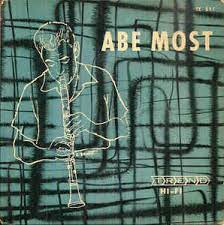
Abe Most was born on February 27, 1920 in New York City, New York. He began his career in 1939 as a member of Les Brown’s Big Band. After serving three years in the Army during World War II beginning in 1942, he became a member of Tommy Dorsey’s Big Band.
Most made a few albums with smaller labels between 1946 and 1984, including Superior, Trend, Annunciata and Camard. His last two albums were Abe Most Live! and I Love You Much Too Much.
He was a studio musician for seven decades, recording on albums by Ted Gärdestad, Dick Haymes, Randy Newman, Dory Previn, Laurindo Almeida, Dominic Frontiere, Henry Mancini, Peggy Lee, Carmen McRae, Ray Conniff, and George Shearing, as well as Joni Mitchell, Cher, Earth, Wind & Fire, and B. B. King among others. He can also be heard playing on the soundtrack of the film How to Marry a Millionaire.
Clarinetist Abe Most, the older brother of flautist Sam Most, recorded three albums as a leader and thirty-one as a sideman, transitioned on October 10, 2002.
More Posts: bandleader,clarinet,history,instrumental,jazz,music
Daily Dose Of Jazz…
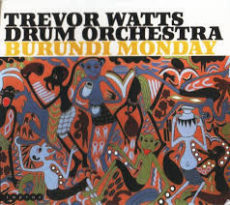
Trevor Charles Watts was born in York, England on February 26, 1939 and is largely self-taught, having taken up the cornet at age 12 then switched to saxophone at 18.
While stationed in Germany with the RAF from 1958 to 1963, he encountered the drummer John Stevens and trombonist Paul Rutherford. After his service he returned to London, England and in 1965, he and Stevens formed the Spontaneous Music Ensemble (SME), which became one of the crucibles of British free improvisation.
Leaving the band to form his own group Amalgam in 1967, Trevor returned to SME for another stretch that lasted until the mid-1970s. Collaborating with bassist Barry Guy and his London Jazz Composers’ Orchestra, they performed until their disbandment in the mid-1990s.
Though he was initially strongly identified with the avant-garde, Watts was versatile, working in everything from straight jazz contexts to rock and blues. His own projects blended jazz and African music, notably the Moiré Music ensemble which he led since 1982. He has collaborated with jazz musicians including Archie Shepp, Steve Lacy, Don Cherry, Jayne Cortez and Stephen Grew.
Free-improvising alto and soprano saxophonist Trevor Watts, who recorded 31 albums as a leader, and two as a sideman, continue to explore the music.
More Posts: bandleader,history,instrumental,jazz,music,saxophone

Daily Dose Of Jazz…
Åke Persson was born on February 25, 1932 in Hässleholm, Sweden and started his music career by playing valve trumper in school. Known as The Comet, he moved to Stockholm, Sweden in 1951, where he played in Simon Brehm’s quintet until 1954. During the Fifties he led several sessions for labels such as Metronome, Philips, and EmArcy.
Following this Persson worked through the Sixties and into the 1970s with Arne Domnérus, Hacke Björksten, Harry Arnold’s Radio Band, Quincy Jones, Lars Gullin, the RIAS Berlin Band, and the Kenny Clarke-Francy Boland Big Band.
Persson played with many American musicians, including George Wallington, Roy Haynes, Benny Bailey, Count Basie, Duke Ellington, and Dizzy Gillespie.
He drowned in the Djurgården canal as a result of him driving his car into the canal either accidentally or deliberately. A biography was written, Trombonist Åke Persson, authored by Bo Carlsson.
Trombonist Åke Persson, who flourished in the bebop and big band tradition, transitioned on February 5, 1975.
More Posts: bandleader,history,instrumental,jazz,music,trombone