

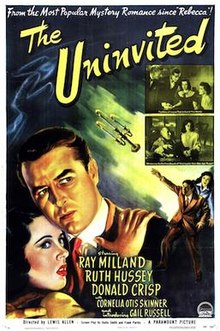
Hollywood On 52nd Street
Stella by Starlight is a popular song by Victor Young that was drawn from thematic material composed for the main title and soundtrack of the 1944 Paramount Pictures film, The Uninvited. Appearing in the film’s underscore as well as in source music as an instrumental theme song without lyrics.
It was turned over to Ned Washington, who wrote the lyrics for it two years later in 1946. The title had to be incorporated into the lyrics, which resulted in its unusual placement: the phrase appears about three-quarters of the way through the song, rather than at the beginning or the end.
At one point in the film, the main character, Rick (Ray Milland) tells Stella (Gail Russell) that he is playing a serenade, To Stella by Starlight.
Plot
Rick (Ray Milland) and his sister Pamela (Ruth Hussey) unknowingly buy a seaside home that is haunted by the ghost of Mary Meredith. Meredith’s husband was a painter who had an affair with his gypsy model, Carmel, Meredith discovers the affair, takes Carmel to and leaves her in Paris, where she gives birth to a child, which ultimately Mary took. Subsequently, Carmel returned to England, takes the infant Stella from Windward, and, during the confrontation, pushes Mary off the cliff to her death. So Mary haunts the house and when Stella returns her affinity to the place is cemented. Rick falls for her but wants her to leave. Seances, ghost visitations by both Camel and Mary, and a sanatorium reveal that Carmel, not Mary is Stella’s mother. This frees Carmel’s spirit from Windward House and with Rick confronting Mary’s spirit announcing he is no longer afraid, the spirit also departs.
Recordings
“Stella by Starlight” is one of the most popular standards, its May 1947 recording by Harry James and his orchestra reached 21st place in the pop charts. Two months later, the recording by Frank Sinatra with Axel Stordahl and his orchestra also rose to the 21st position.
Early adaptations of the song were performed and recorded by Charlie Parker, Stan Getz in December 1952, trumpeter Chet Baker, Bud Powell, Stan Kenton, Nat King Cole. Other recordings have been made by Miles Davis, Red Garland, Earl Grant, Joe Pass, Bill Evans, Art Blakey and the Jazz Messengers, Lou Donaldson, Charlie Rouse, Dexter Gordon, Billy Eckstine, Dick Haymes, Ray Charles, Anita O’Day, Helen Reddy, Tony Bennett, Ella Fitzgerald, Mina, Al Hirt, Larry Coryell, among others.

Daily Dose Of Jazz…
William McLeish Smith was born on November 25, 1910 in Charleston, South Carolina, and raised in Cleveland, Ohio. His first instrument was the clarinet and his education was in chemistry, receiving his degree from Fisk University, an HBCU.
In 1929 Smith became an alto saxophonist for Jimmie Lunceford’s band, becoming one of the main stars in the group. 1940 had him leading his own quintet as a side project. His success with Lunceford had lost its charms by 1942 as he now wanted more pay and less travel. Moving to the Charlie Spivak Orchestra for a year and was in the navy for another year. He then switched to Harry James’s orchestra, where he made more money and stayed with him for seven years.
His next move was to work with Duke Ellington and Billy May. He was also part of the Gene Krupa Trio and can be heard on the 1952 live Verve album The Drum Battle, part of the Jazz at the Philharmonic series. In 1954 he returned to Harry James’s band.
He recorded some three dozen albums as a sideman with Stan Getz, Dizzy Gillespie, Lionel Hampton, Billie Holiday, Barney Kessel, Jimmie Lunceford, Billy May, Rose Murphy, Red Norvo, Andre Previn, Googie René, and Kay Starr among others.
Alto saxophonist Willie Smith, who has been described as one of the triumvirates of great jazz alto saxophonists with Johnny Hodges and Benny Carter before Charlie Parker arrived, passed away of cancer on March 7, 1967 in Los Angeles, California, at the age of 56.
More Posts: history,instrumental,jazz,music,saxophone
Three Wishes
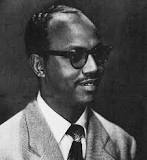
Nica inquired of Adriano Acea what his three wishes would be and he told her:
- “I would like to play music as it should be played.”
- “I’d love to have money to make my family happy. I thinkI could enjoylife from there.”
*Excerpt from Three Wishes: An Intimate Look at Jazz Greats ~ Compiled and Photographed by Pannonica de Koenigswarter

More Posts: baroness,history,instrumental,jazz,music,pannonica,piano,three,wishes
Daily Dose Of Jazz…
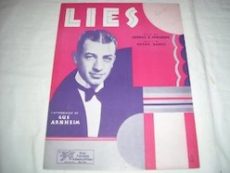
Harry Barris was born on November 24, 1905 in New York City to Jewish parents. Educated in Denver, Colorado. he became a professional pianist at the age of 14. He led a band that toured the Far East at the age of 17.
The same year, he played the piano and occasionally sang in the Paul Ash Orchestra, while Al Rinker and Bing Crosby became members of the Paul Whiteman Orchestra as a singing duo. However, while the duo was appearing at the vast New York Paramount in 1927, sans microphones, they could not be heard by the audience. They were promptly dropped from the bill. However, a band member who knew Barris suggested that they add him to make a trio and The Rhythm Boys was formed in April 1927.
In 1930, The Rhythm Boys left Whiteman and joined Gus Arnheim’s Cocoanut Grove Orchestra. They made one more recording together, Them There Eyes but the boys decided to quit in 1931 agoing their separate ways. Harry however, changed his mind and returned to the Cocoanut Grove to complete his contract. Joining Arnheim’s singing group The Three Ambassadors.
Barris appeared in 57 films between 1931 and 1950, usually as a band member, pianist or singer. Seven of those films had Bing Crosby as the star. In 1932, Barris signed a contract to star in six shorts for Educational Pictures.
During World War II, along with Joe E. Brown, he went overseas to entertain troops. Having a lifelong drinking problem, sustaining a fall that fractured his hip in 1961, and despite a series of operations, he developed a cancerous tumor. Vocalist, pianist, and composer Harry Barris, who was one of the earliest to utilize scat singing in recordings passed away on December 13, 1962 at the age of 57 in Burbank, California.
Share a dose of a New York City composer to inspire inquisitive minds to learn about musicians whose legacy lends their genius to the jazz catalog…
More Posts: composer,history,instrumental,jazz,music,piano,vocal
Daily Dose Of Jazz…
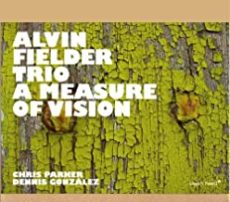
Alvin Leroy Fielder Jr was born November 23, 1935 in Meridian, Mississippi to a mother who played the violin and piano and a father who played the cornet and was a pharmacist by profession. His brother William became a trumpeter. He initially learned the piano as a young child, but stopped and did not regain an interest in music until he was 12 when he heard a Max Roach record. He took drum lessons from Ed Blackwell while studying pharmacology at Xavier University of Louisiana, and then continued his degree at Texas Southern University. He did all this while maintaining his musical development by taking lessons with local drummers and performing at night. He went on to complete his pharmacology studies with a master’s degree from the University of Illinois at Chicago.
In Chicago, Illinois he played with Sun Ra during 1959 and 1960. Encouraged by fellow musicians Muhal Richard Abrams and Beaver Harris, he became more experimental in his playing and went on to be a charter member of the Association for the Advancement of Creative Musicians (AACM). The AACM’s first released recording featured him on Roscoe Mitchell’s Sound. In the mid-to-late 1960s, while working part-time as a pharmacist, Alvin played in his own trio with Fred Anderson and bassist/cellist Lester Lashley.
1969 saw he returned home to Mississippi where he took responsibility for managing the family business, becoming involved in political activism, and continued to pursue his passion for music. In 1971 he met John Reese and helped develop the Black Arts Music Society (BAMS). Fielder was instrumental in bringing many AACM and other musicians to Mississippi. In 1975, he began working with Kidd Jordan in what became the Improvisational Arts band, which featured various musicians over three decades and appeared at the New Orleans Jazz and Heritage Festival every year from 1975 to 2008. In 1995, he participated as a founding faculty member in the Louis “Satchmo” Armstrong Summer Jazz Camp.
He recorded twenty-seven albums with Ahmed Abdullah, Charles Brackeen, Damon Smith, and Dennis Gonzalez, and continued exploring free jazz in the 1990s with Joel Futterman, Kidd Jordan, and others, and toured with Andrew Lamb. He was awarded the Resounding Vision Award by Nameless Sound in Houston, Texas. Drummer Alvin Fielder passed away of complications from congestive heart failure and pneumonia, in Jackson, Mississippi on January 5, 2019.
More Posts: bandleader,drums,history,instrumental,jazz,music