

Daily Dose Of Jazz…
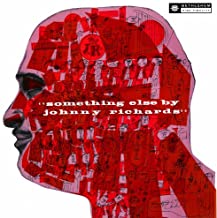
Johnny Richards was born Juan Manuel Cascales on November 2, 1911 in Querétaro, Mexico. His father immigrated to the United States into Laredo, Texas in 1919, the family settling first in Los Angeles, California and then in San Fernando, California where he attended and graduated from San Fernando High School. From there he went to Fullerton College in 1930.
Working in Los Angeles, California from the late 1930s to 1952 when he moved to New York City. He had been arranging for Stan Kenton since 1950 and continued to do so through the mid~Sixties while leading his own bands throughout his career. Additionally, he composed the music for the popular song Young at Heart in 1953, made famous by Frank Sinatra. He recorded nine albums as a leader and as a sideman/arranger working with Charlie Barnet, Harry James, Stan Kenton, and Hugo Lowenstern recorded another eight.
Arranger, composer, and bandleader Johnny Richards, who was a pivotal arranger for some of the more adventurous performances by Stan Kenton’s big band in the 1950s and early 1960, passed away from a brain tumor in New York, New York on October 7, 1968.
More Posts: arranger,bandleader,composer,history,instrumental,jazz,music
Requisites
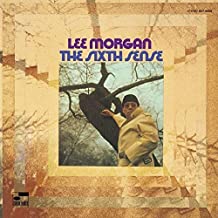
The Sixth Sense ~ Lee Morgan | By Eddie Carter
Mention trumpeter Lee Morgan during his years at Blue Note and one of seven albums usually comes to mind. Blue Train (1957), Art Blakey and The Jazz Messengers (1958), Leeway (1961), The Sidewinder and Search For The New Land (1964), Cornbread (1967), and The Gigolo (1968). All are considered choice selections for any library featuring the talented bandleader and composer. Lee was the youngest musician in Dizzy Gillespie’s orchestra, joining the band at age eighteen and further honed his skills with The Jazz Messengers from 1958 to 1961.
Drug addiction temporarily derailed his career from 1961 to 1963, but he emerged stronger and got his life back on track, recording prolifically as a leader and sideman. The Sidewinder became his biggest-selling album and greatest success, changing all Blue Note releases that followed. The Sixth Sense (Blue Note BST 84335) hit the stores in 1969 featuring one of his best groups. Jackie McLean on alto sax, Frank Mitchell on tenor sax, Cedar Walton on piano, Victor Sproles on bass, and Billy Higgins on drums complete the ensemble. My copy used in this report is the 1969 Liberty Records Stereo album.
The Sixth Sense, the first of four tunes by the leader kicks off Side One with a relaxing drum introduction by Billy, segueing into an intriguing Bossa Nova styled melody led by the front line. Lee solos first, pacing himself at an easy swing with plenty of feeling. Frank displays his inventive ability with a passionately frisky tone next, then Jackie takes flight on a solo full of tasty grooves. Cedar comes next, conveying an abundance of youthful energy, and Billy exchanges a spirited conversation with Lee leading to the ensemble’s closing chorus and fadeout.
Short Count, the second Morgan tune takes an aggressive uptempo approach to the melody vigorously. McLean charges out of the gate, almost stealing the show with incandescent intensity anchored by Lee and Frank on his final verse. Morgan raises the temperature a few more degrees to a level of feisty assertiveness on the next reading. Mitchell applies some high voltage to the third interpretation. Walton delivers the final enthralling statement before the quintet takes the song out.
Morgan’s Psychedelic will set your body in motion and have you dancing from the rhythm section’s leisurely flowing introduction to the infectious theme. Lee establishes the relaxing atmosphere on the opening chorus with bluesy lines. Frank shows some improvisational creativity on the next performance. Jackie takes over for some fine blowing and Cedar keeps things interesting with nimble fingers until the ensemble’s fadeout.
Afreaka is Cedar Walton’s contribution to the album, starting Side Two with an Afrobeat flavor possessing a very interesting rhythm that’s also danceable. Morgan, McLean, Mitchell, and Walton are the principal soloists providing plenty of musical inspiration. Anti-Climax, the final tune from the trumpeter’s pen begins with a brief bass introduction by Victor preceding the sextet’s upbeat theme treatment. Lee opens the first solo with inspired agility, then Jackie charges into the second statement with a dazzling improvisation. Frank infuses the next presentation with strong-lined lyricism, and Cedar finishes with an aggressive reading preceding the ending.
The Cry Of My People by trumpeter Cal Massey ends the album with a gorgeous quartet number by Morgan and the trio. Lee begins the melody with a hauntingly elegant-muted performance, picking up the pace gradually for his exceptionally pretty opening statement. Cedar gets a brief moment to share his thoughts with evocative softness, then Lee returns with so much sensitivity and feeling, it’ll bring tears to your eyes. The sound quality on The Sixth Sense is superb with all six instruments full of body, presence, and a vibrantly, clear sound.
Lee Morgan was an exceptional composer and musician who possessed an exciting, relentless drive. He recorded twenty-five albums for Blue Note as a leader and appeared as a sideman on countless others, elevating each record to something special. But changes were on the way as AllMusic.com reviewer Michael G. Nastos describes. “The appropriate title Sixth Sense presents a transition between one of the most intriguing sextets during the last years of post-bop and Morgan’s final ensembles that saw him reaching higher and higher before, like Icarus, falling from grace”.
Lee would die tragically from a gunshot wound by his common-law wife Helen Morgan on February 19, 1972, after an altercation while performing at jazz club Slug’s Saloon in New York City. He left an incredible body of music also recording for Savoy, Vee-Jay, and Jazzland that still amazes and thrills fans around the world. At just over thirty-nine minutes, The Sixth Sense by Lee Morgan is an excellent album that you’ll play again and again, and a must-have for any Hard-Bop fan’s library!
~ Quote by Michael G. Nastos – Source: AllMusic.com~ Art Blakey and The Jazz Messengers (Blue Note BLP 4003/BST 84003); Blue Train (BLP 1577/BST 81577); Cornbread (BLP 4222/BST 84222); Leeway (BLP 4034/BST 84034); Search For The New Land (BLP 4169/BST 84169); The Gigolo (BLP 4214/BST 84214); The Sidewinder (Blue Note BLP 4157/BST84157) – Source: Discogs.com
~ Lee Morgan, Helen Morgan – Source: Wikipedia.org © 2020 by Edward Thomas Carter
More Posts: choice,classic,collectible,collector,history,instrumental,jazz,music
Daily Dose Of Jazz…
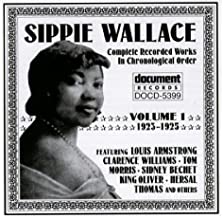
Sippie Wallace was born Beulah Belle Thomas on November 1, 1898 in Plum Bayou, Jefferson County, Arkansas, one of thirteen children. Coming from a musical family, two of her brothers and a niece had prolific music careers. As a child, her family moved to Houston, Texas, and growing up she sang and played the piano in Shiloh Baptist Church but at night she and her siblings would sneak out to tent shows. By her mid-teens, they were playing in those tent shows, performing in various Texas shows, building a solid following as a spirited blues singer.
Along with her brother Hersal, Wallace moved to New Orleans, Louisiana in 1915 and two years later she married Matt Wallace and took his surname. She followed her brothers to Chicago, Illinois in 1923 and worked her way into the city’s bustling jazz scene. Hersal died three years later, but her reputation led to a recording contract with Okeh Records that same year with her first recorded songs, Shorty George and Up the Country Blues, sold well enough to make her a blues star in the early 1920s. Moving to Detroit, Michigan in 1929, she would lose her husband and her brother George in 1936.
For some 40 years, Sippie sang and played the organ at the Leland Baptist Church in Detroit. From 1945 she basically retired from music until launching a comeback in 1966, recording an album, Women Be Wise, on October 31st in Copenhagen, Denmark, with Roosevelt Sykes and Little Brother Montgomery playing the piano. Over the course of her career, she worked with Louis Armstrong, Johnny Dodds, Sidney Bechet, King Oliver, and Clarence Williams.
Singer, songwriter, pianist, and organist Sippie Wallace, who was nominated for a Grammy Award in 1982 and was posthumously inducted into the Michigan Women’s Hall of Fame in 1993, passed away at Sinai Hospital in Detroit, Michigan from complications of a severe stroke suffered post~concert in Germany on November 1, 1986. She was 88.
More Posts: history,instrumental,jazz,music,organ,piano,songwriter,vocal
Daily Dose Of Jazz…
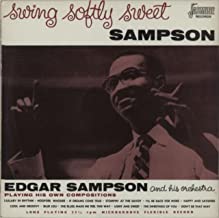
Edgar Melvin Sampson, born October 31, 1907 in New York City, he started playing violin at the age of six and picked up the saxophone in high school. He started his professional career in 1924 with a violin-piano duo with Joe Colman and through the rest of the 1920s and early ’30s, he played with many bands, including those of Charlie “Fess” Johnson, Duke Ellington, Rex Stewart and Fletcher Henderson.
1933 saw him joining Chick Webb’s band. It was during his tenure with Webb that he created his most enduring work as a composer, writing Stompin’ at the Savoy and “Don’t Be That Way“. Leaving the Webb band in 1936 with a reputation as a composer and arranger, he was able to freelance with Benny Goodman, Artie Shaw, Red Norvo, Teddy Hill, Teddy Wilson, and Chick Webb.
Becoming a student of the Schillinger System in the early 1940s, Edgar continued to play saxophone through the late ’40s and led his own band from 1949 to 1951. Through the Fifties, he worked as an arranger for Latin performers Marcelino Guerra, Tito Rodríguez and Tito Puente.
He recorded one album under his own name, Swing Softly Sweet Sampson, in 1956. Due to illness, he stopped working by the late 1960s. Saxophonist, violinist, composer, arranger Edgar Sampson passed away on January 16, 1973 at the age of 65 in Englewood, New Jersey.
More Posts: arranger,composer,history,instrumental,jazz,music,saxophone,violin
Conversations About Jazz & Other Distractions
Conversations About Jazz Features
The Vocalists on October 29
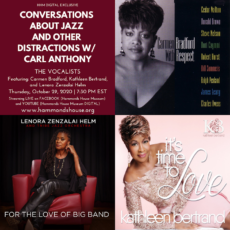
Hammonds House Digital invites you to join us for Conversations about Jazz & Other Distractions hosted by former jazz radio host and founder of Notorious Jazz, Carl Anthony. Every other Thursday, Carl takes audiences on a unique journey through the world of jazz music with artist talks, workshops, and listening sessions.
On October 29 at 7:30 pm (EST), Conversations about Jazz features some of the world’s most talented jazz vocalists. Carl’s guests will be Carmen Bradford, Kathleen Bertrand, & Lenora Zenzalai Helm. This program is for the jazz novice and jazz head alike. It is free, and will stream live on Hammonds House Museum’s Facebook and YouTube.
2019 Grammy Nominee, Carmen Bradford, was born in Austin, Texas and raised in Altadena, California. She is jazz royalty being the daughter of legendary coronetist/composer Bobby Bradford and world-renowned jazz vocalist/composer/author Melba Joyce. Her grandfather Melvin Moore sang with Dizzy Gillespie’s Big Band in the 1940’s and with the Ink Spots, making Bradford the third generation of incredible musicians. At the age of 22, she was discovered and hired by William “Count” Basie and became the featured vocalist in the legendary Count Basie Orchestra. She has since performed and/or recorded with artists and musicians including Wynton Marsalis, Nancy Wilson, Lena Horne, Tony Bennett, James Brown, and Frank Sinatra. Most recently she was featured on the 2019 “All About Basie” album, along with Stevie Wonder, Kurt Elling and Wycliff Gordon. Currently Bradford is a Roots, Jazz, and American Music faculty member at the San Francisco Conservatory of Music. More info HERE.
Multifaceted recording artist and writer Kathleen Bertrand is a native Atlantan and Spelman College graduate, whose performances have ranged from two Olympic Games to performances before two presidents, as well as appearances at jazz festivals world-wide. Bertrand toured and recorded as vocalist with jazz vibraphonist Roy Ayers. This three-octave vocal artist has performed at the Montreux Jazz Festival in Switzerland on three occasions and has made multiple appearances at the Atlanta Jazz Festival, including as headliner in 2012. She has opened for many of America’s finest artists, including Ray Charles, Will Downing, Rachelle Ferrell, Najee, Roy Ayers, and Kenny G. Her fan base includes radio and internet listeners across the globe. Bertrand’s most recent CD, 2017’s It’s Time To Love, has received international airplay. More details HERE.
Throughout her 30+-year span of musical achievements as a Jazz Vocal Musician specializing in classic, traditional standard jazz, Lenora Zenzalai Helm has toured, recorded, and performed with renowned artists around the world. A 2018 inaugural Javett International Scholar in Jazz for the University of Pretoria, she has also earned recognition as a quarter-finalist for the Grammy Music Educator of the Year Award, a Salzburg Global Citizenship Fellow, a UNC Global Educator Fellow, a Fulbright Senior Music Specialist, and is the former US Jazz Ambassador under the State Department and Kennedy Center. She is jazz clinician and vocal musicianship coach, with six solo recordings, including her latest CD, For the Love of Big Band. Helm currently serves as an Assistant Professor in the Department of Music and Jazz Studies Program for the College of Arts and Sciences at North Carolina University (NCCU). More information HERE.
Hammonds House Museum is generously supported by the Fulton County Board of Commissioners, Fulton County Arts and Culture, the City of Atlanta Mayor’s Office of Cultural Affairs, AT&T and WarnerMedia.
Hammonds House Museum‘s mission is to celebrate and share the cultural diversity and important legacy of artists of African descent. The museum is the former residence of the late Dr. Otis Thrash Hammonds, a prominent Atlanta physician and a passionate arts patron. A 501(c)3 organization which opened in 1988, Hammonds House Museum boasts a permanent collection of more than 450 works including art by Romare Bearden, Robert S. Duncanson, Benny Andrews, Elizabeth Catlett, Jacob Lawrence, Hale Woodruff, Amalia Amaki, Radcliffe Bailey and Kojo Griffin. In addition to featuring art from their collection, the museum offers new exhibitions, artist talks, workshops, concerts, poetry readings, arts education programs, and other cultural events throughout the year.
Located in a beautiful Victorian home in Atlanta’s historic West End, Hammonds House Museum is a cultural treasure and a unique venue. During the COVID-19 pandemic, they continue to observe CDC guidelines, but look forward to welcoming in-person visitors soon! For more information about upcoming virtual events, and to see how you can support their mission, visit their website: hammondshouse.org.
MEDIA: For more information, contact Karen Hatchett at Hatchett PR, karen@hatchettpr.com.
More Posts: conversations,history,instrumental,jazz,musicians,vocalists