

Daily Dose Of Jazz…
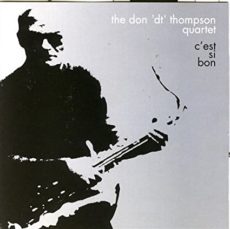
Don D.T. Thompson was born in Drumheller, Alberta on September 19, 1932. He played saxophone and clarinet at twelve and began promoting his own jazz concerts, Jammin’ the Blues, in Edmonton at 17. Moving to Toronto, Canada in 1952, he toured Canada and the United States from 1954 to 1958 with Anne Marie Moss.
Save for a period in 1965 and 1966 with the Lionel Hampton Orchestra in the United States, Thompson was a mainstay of the Toronto jazz scene through the 1960s. During the early 1960s, he led singer Tommy Ambrose in a big band ensemble. He appeared regularly at the First Floor Club with small groups and a big band from 1959 until 1965, and was seen in the NFB’s Toronto Jazz with a quintet.
He performed on many CBC TV pop music shows, Club Six and Music Hop and played in several Toronto studio orchestras. In 1961 he recorded as a member of the Pat Riccio Big Band in Ottawa and 1963 saw him with pianist Wray Downes and trombonist Rob McConnell. He also released a record as part of a quintet that included trumpeter Fred Stone.
After touring for ten years beginning in 1971 and recording with pop singer Anne Murray, he returned to jazz. In 1981 moving away from his early bebop-based style he landed on a simpler, full-toned, melodic approach in the manner of a Stanley Turrentine. D.T. wrote and recorded several jazz themes; his pop-song arrangements appear on albums by Murray, John Allan Cameron and Gordon Lightfoot.
Saxophonist, composer, and arranger Don D.T. Thompson passed away in Vancouver, Canada on March 21, 2004.

More Posts: arranger,composer,history,instrumental,jazz,music,saxophone
Daily Dose Of Jazz…
John L.Thomas was born September 18, 1902 in Louisville, Kentucky, but relocated to Chicago, Illinois as a child, receiving his formal education in the Windy City. Sliding into on-stage trombone performances with the Clarence Miller Orchestra around 1923. Between 1927 and 1928 he worked with Erskine Tate, which led to his entry into Louis Armstrong’s legendary Hot Seven, replacing Kid Ory in Armstrong’s band and also played with Erskine Tate, among others, becoming associated with the Chicago jazz scene.
He was briefly with McKinney’s Cotton Pickers for jobs in the Northeast in the ’30s; in 1937 he was part of a touring revue fronted by pianist and singer Nat King Cole. He was once again with Tate as well as drummer Floyd Campbell’s outfit prior to switching his trombone case for the tool kit of a defense plant worker during the Second World War. That hiatus from playing took place prior to dropping out completely during the ’50s, as he did gig once again in a group led by guitarist Walter Dysett in 1944.
He had a wonderful repertory band led by Franz Jackson with which Thomas performed and recorded through the first half of the ’60s. The ’50s, on the other hand, may have simply depressed the trombonist with its onslaught of rock & roll, because he simply stopped playing completely representing the first major halt in musical action for this performer since his professional activities began in the Roaring Twenties.
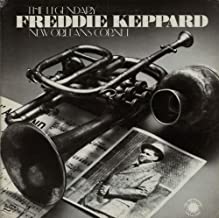
The trombonist continued working with a wide range of classic jazz bandleaders, including trumpeter Freddie Keppard. Preferring to move in and out of groups such as that of the aforementioned Tate and Reuben Reeves, in one lineup and then out of the next. Trombonist John L. Thomas passed away on November 7, 1971 in Chicago, Illinois.
More Posts: history,instrumental,jazz,music,trombone
Daily Dose Of Jazz…
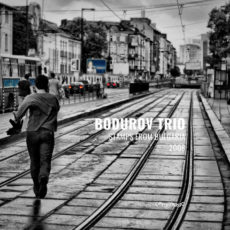
Dimitar Bodurov was born on September 17, 1979 in Bulgaria and studied at the Conservatory of Sofia and the Rotterdam Conservatory, where he graduated in 2004 jazz piano and in 2006 jazz composition.
In 2000 Dimitar moved to Amsterdam, Netherlands and began performing throughout the country and Europe. He recorded his debut recording as a leader in 2004 titled Melatonic on the Acoustic Records label followed by his live sophomore release the same year titled Resumption Suite. He would go on to record solo and trio albums on both Dutch and Norwegian labels.
Bodurov ventured into composing for theater, opera, and orchestra. He has received several jazz awards, receiving a mention at the Martial Solal Jazz Solo Piano Competition in Paris. He has released a number of CD and digital albums as a leader, producer, and guest for Dutch and Norwegian labels. In 2012 he founded his own label Optomusic.
As an active event organizer, Dimitar has initiated several events: Jazz and Vino ~ a series of concerts with charity purpose in Varna, Bulgaria; Keys and Stix Festival ~ celebrating duets of piano and drums in collaboration with Bimhuis, Amsterdam & Unterfahrt, Münich; and since 2013, he has been the artistic leader of Radar Festival, Varna, Bulgaria.
Pianist and composer Dimitar Bodurov, who has worked with Randy Brecker, Didier Lockwood, Theodosii Spassov, Claron Mcfadden and Svetlin Rouseev, continues to compose, perform and record.
More Posts: bandleader,composer,history,instrumental,jazz,music,piano
Daily Dose Of Jazz…
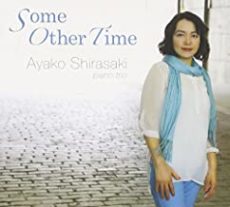
Ayako Shirasaki was born on September 16, 1969 in Tokyo, Japan and started classical piano lessons at age five, and was intrigued by her father’s professional trombone-playing. By age twelve she began her professional career playing gigs at the “J” jazz club in Tokyo.
After attending the Tokyo Metropolitan High School for Arts, Shirasaki majored in classical music at the Tokyo National University of Fine Arts and Music and gave concerts as a classical pianist for several years after graduating before returning to play jazz.
Her 1997 move to New York City saw her pursuing a master’s degree at the Manhattan School of Music, studying with pianist Kenny Barron. Landing in the Park Slope neighborhood of Brooklyn, Ayako operates the Brooklyn location of the Sakura Music School, which specializes in teaching music to small children with an emphasis on those of Japanese ancestry.
Performing regularly in the New York area, she tours internationally, in addition to recording. Her debut trio album Existence brought drummer Lewis Nash and bassist Marco Panascia together in 2003. She has since recorded four addition albums, has been featured on Marian McPartland’s National Public Radio show Piano Jazz, and was a finalist in the Mary Lou Williams Women In Jazz Piano Competition in 2005 and 2006 and the Great American Jazz Piano Competition in 2004, 2005 and 2006. Pianist and educator Ayako Shirasaki continues to perform, tour, record, and teach.
More Posts: bandleader,educator,history,instrumental,jazz,music,piano
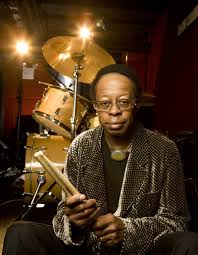
Three Wishes
When Nica asked Louis Hayes if he had three wishes what would they be he said his three wishes would be:
-
-
“To stay here until I get tired of being here.”
-
“To be free.”
- “To be loved.”
-
*Excerpt from Three Wishes: An Intimate Look at Jazz Greats ~ Compiled and Photographed by Pannonica de Koenigswarter

More Posts: baroness,drums,history,instrumental,jazz,music,pannonica,three,wishes