

Daily Dose Of Jazz…
Rubin “Zeke” Zarchy was born on June 12, 1915 in New York City. He first learned the violin, but after a stint as a bugler with his Boy Scout troop, he switched permanently to trumpet while in his early teens.
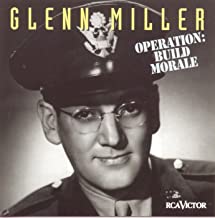
In 1935 Zarchy was working with the Joe Haymes Orchestra, followed by Benny Goodman, and then Artie Shaw. He went on to work through the end of the decade with Bob Crosby and Red Norvo, Tommy Dorsey, and Glenn Miller.
Between 1942 and 1945 he played in US Army bands: he was part of what became Miller’s Army Air Force Band (officially, the 418th Army Band), playing lead trumpet as Master First Sergeant. Zeke’s trumpet can be heard on recordings as Benny Goodman’s Bugle Call Rag, Glenn Miller’s Moonlight Cocktail, and Bob Crosby’s South Rampart Street Parade.
After the war, Frank Sinatra invited Zarchy to move to Los Angeles, California where he became a first-call studio musician. He played on numerous recordings, including those led by Boyd Raeburn, Jerry Gray, Sarah Vaughan, and Frank Capp. He appeared in film in The Glenn Miller Story in 1954.
During the 1960s and 1970s, Zeke played in the CBS house bands of several television variety shows, including The Smothers Brothers Comedy Hour, The Danny Kaye Show and The Jonathan Winters Show, and was a member of the NBC Staff Orchestras in New York and Los Angeles.
In his later years, he made many music tours of Europe, South America, and Australia, as well as thirty-two concert trips to Japan. He tutored several young trumpet players who became successful performers and studio musicians. Trumpeter Zeke Zarchy passed away in Irvine, California, on April 11, 2009.

More Posts: history,instrumental,jazz,music,trumpet
Daily Dose Of Jazz…
Bob Gordon was born in St. Louis, Missouri on June 11, 1928. Moving to Los Angeles, California in 1948 he studied at Westlake College of Music. Becoming a part of the West Coast jazz scene he was best known as a sideman for musicians like Stan Kenton, Shelly Manne, Chet Baker, Maynard Ferguson, Shorty Rogers, Spud Murphy, Red Norvo, Bill Holman, Dave Pell, Herbie Harper, and Jack Montrose.
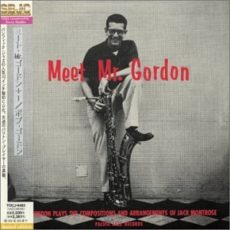
In May 1954, only a few weeks before the sessions with Clifford Brown, Gordon recorded as a leader for Pacific Jazz titled Meet Mr. Gordon. As a co-leader, he recorded another five during his short career,
Cool jazz baritone saxophonist Bob Gordon passed away in a car accident on his way to playing at a Pete Rugolo concert in San Diego, California on August 28, 1955. He was 27.
More Posts: bandleader,history,instrumental,jazz,music,saxophone
Daily Dose Of Jazz…
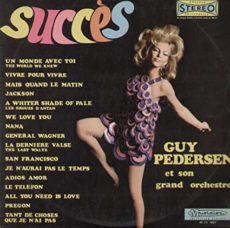
Guy Eugène Hilarion Pedersen was born on June 10, 1930 in Grand-Fort-Philippe, France. Coming from a family of popular musicians all members of his maternal family are fiddlers and his great-grandfather composed the jazz standard Tiger Rag.
At the age of 13 he started music theory in 1943, taking free lessons at the Roubaix Conservatory until 1952. In 1950, he won the prize for the best double bassist in the Brussels competition, then that of Jazz Hot in Paris, and then decided to become a musician. Already passionate about jazz, he listened to radio broadcasts by Hugues Panassié and bought his first American records by Charlie Parker, Thelonious Monk, and Lee Konitz at Deruyck in Roubaix.
He began working in Paris with singer Fats Edward, then played with pianist Henri Renaud and drummer Jean-Louis Viale at Tabou, and at Ringside founded by boxing champ Sugar Ray Robinson. He went on to work with Jacques Hélian and then Claude Bolling with whom he learned the large orchestra profession. From 1955 to 1966, he was a member with drummer Daniel Humair of the most famous trio led by Martial Solal, recording the historic Jazz à Gaveau in 1962.
Guy Pedersen and Daniel Humair then joined the Swingle Singers to record the second disc. They will travel around the world in their company, even passing through the White House in 1966.
From 1973 Guy toured with Baden Powell, recording more than a dozen records with him. Between 1973 and 1980, he recorded seven albums and toured frequently with Jean-Christian Michel.
During that time, Pedersen led an active career as a studio musician, appeared in variety shows on television, accompanying the group Les Troubadours. The late 1960s saw him composing, writing a lot of music for short films. Some of his recordings on the musical illustration labels Tele Music and Montparnasse 2000 are today cult, especially in the disc jockeys world.
In 1977 a serious cardiac accident forced him to withdraw from the world of music. He then became an antique dealer. Bassist Guy Pedersen passed away on January 4, 2005 at the age of 74.
More Posts: bandleader,bass,history,instrumental,jazz,music
Three Wishes
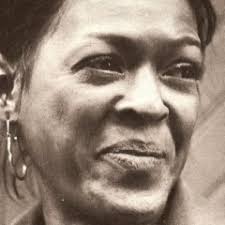
During girl talk with Shirley Scott, Nica asked her if she was given three wishes what would they be, and she replied:
-
-
“I wish my children could have everything. Anything that would be good for them.”
-
“Good health for my husband’s family and for mine.”
-
“Happiness.”
-
*Excerpt from Three Wishes: An Intimate Look at Jazz Greats ~ Compiled and Photographed by Pannonica de Koenigswarter

More Posts: baroness,history,instrumental,jazz,music,organ,pannonica,three,wishes
Daily Dose Of Jazz…
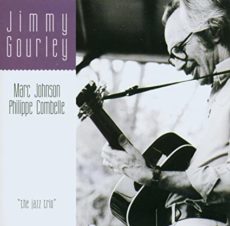
James Pasco Gourley, Jr. was born on June 9, 1926 in St. Louis, Missouri. He met saxophonist Lee Konitz in Chicago, Illinois when both were members of the same high school band, crediting Konitz with encouraging him to become a serious musician.
Jimmy’s father started the Monarch Conservatory of Music in Hammond, Indiana, and though he didn’t teach, he bought him his first guitar. Taken his first guitar classes at the school. He became interested in jazz while listening to the radio, enjoying in particular Nat King Cole. For his first professional experience as a performer, he dropped out of high school to play with a jazz band in Oklahoma City, Oklahoma.
From 1944 to 1946, Gourley served in the U.S. Navy then returned to Chicago, where he met guitarist Jimmy Raney and wanted to play like him. He worked in bars and clubs with Jackie Cain & Roy Kral, Anita O’Day, Sonny Stitt, and Gene Ammons. Through the G.I. Bill, he received tuition for three years to any college in the world.
By 1951, he spent the rest of his life in France, working with Henri Renaud, Lou Bennett, Kenny Clarke, Richard Galliano, Stéphane Grappelli, Bobby Jaspar, Eddy Louiss, Martial Solal, and Barney Wilen. He played with American musicians who were passing through, including Bob Brookmeyer, Clifford Brown, Stan Getz, Gigi Gryce, Roy Haynes, Bud Powell, Zoot Sims, Lucky Thompson, Lester Young and his friend Lee Konitz. Guitarist Jimmy Gourley passed away on December 7, 2008 in Villeneuve-Saint-Georges, France at the age of 82.
More Posts: bandleader,guitar,history,instrumental,jazz