

Daily Dose Of Jazz…
Errol Leslie Buddle was born on April 29, 1928 and raised in Adelaide, Australia. He first learned the banjo and mandolin and began learning jazz after listening to a Bobby Limb performance in 1944. He attended the Elder Conservatorium of Music as well as the Sydney Conservatorium of Music.
Influenced by the sound of the bassoon in Igor Stravinsky’s The Rite of Spring and The Firebird, he began playing the instrument. Over the course of his career, Buddle played fourteen reed instruments and several others. Moving to Melbourne in 1946 he began playing the radio circuit.
Relocating to Sydney by 1951 and performed weekly at the nightclub Chequers’. Another move to Windsor, Ontario in 1952 had him joining the Windsor Symphony Orchestra.
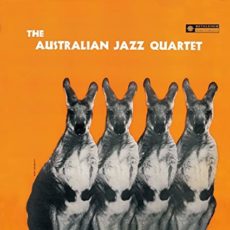
Often performing in Detroit, Michigan, he met and collaborated with Elvin Jones and Johnnie Davis. Errol performed at the jazz club Klein’s and eventually led what later became the Errol Buddle Quartet. He also founded The Australian Jazz Quartet with Jack Brokensha, Bryce Rohde and Dick Healey. The group served as the backing band to several musicians and later played throughout North America before touring Australia in 1958, then disbanded.
He also put together a quintet in various configurations with Bryce Rohde, piano; Dick Healy, flute and alto sax; Jack Brokensha, vibes; Jimmy Gannon, bass; and Frank Capp, drums. After 1958 he performed occasionally.
Bassoon and tenor saxophonist Errol Buddle, who over the course of his career played fourteen reed instruments and several others, passed away at his home in Potts Point, New South Wales on February 22, 2018, aged 89.

More Posts: bandleader,bassoon,history,instrumental,jazz,music,saxophone
Three Wishes
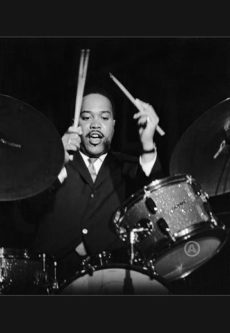
Frankie Dunlop told Pannnica that his three wishes would be:
-
-
“I wish I was rich.”
-
“Did you see that little girl I was talking to over at the bar? I sure wish we could get together.”
-
“I hope my jazz-pantomime act will make a big boom all over the nation.”
-
*Excerpt from Three Wishes: An Intimate Look at Jazz Greats ~ Compiled and Photographed by Pannonica de Koenigswarter

More Posts: baroness,drums,history,instrumental,jazz,music,pannonica,three,wishes
Daily Dose Of Jazz…
Everett Barksdale, born April 28, 1910 in Detroit, Michigan, played bass and banjo before settling on guitar. During early 1930 he moved to Chicago, Illinois where he joined Erskine Tate’s band. He recorded for the first time with violinist Eddie South in 1931, who he remained with until 1939.
A move to New York City saw Everett become a member of the Benny Carter Big Band. Around that same time, he recorded with Sidney Bechet and during the 1940s, he worked for CBS as a session musician.
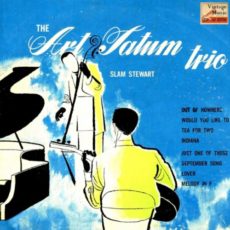
As a sideman, Barksdale played guitar in many genres, working with vocalists Dean Barlow, Maxine Sullivan, the Blenders, and the Clovers. He played on the hit Love Is Strange by Mickey & Sylvia, was the music director for the Ink Spots, and beginning in 1949, he worked with pianist Art Tatum until Tatum died in 1956.
During the Fifties and Sixties, he was part of the ABC house band and played on recordings with a who’s who list of vocalists and musicians not limited to Lena Horne, Sammy Davis Jr., Dinah Washington, Sarah Vaughan, Milt Hinton, Buddy Tate, Chet Baker, Red Allen, Harold Vick, Oscar Brown Jr., J. J. Johnson, Clark Terry, Kai Winding, Louis Armstrong, The Drifters and Ben E. King. He also played guitar in the studio for pop and soul musicians such as.
Guitarist and session musician Everett Barksdale retired from active performance in the 1970s, moved to the West Coast and passed away in Inglewood, California on January 29, 1986.
More Posts: guitar,history,instrumental,jazz,music

Daily Dose Of Jazz…
Krzysztof Komeda was born Krzysztof Trzciński on April 27, 1931 in Poznań, Poland and grew up in Częstochowa and Ostrów Wielkopolski. He took music lessons from early childhood and became a member of the Poznań conservatorium at the age of eight, but World War II thwarted his plans. He explored the theory of music, and learned to play piano during this period.
While attending the Liceum for Boys, where he graduated from in 1950, he participated in the Music and Poetry Club. After high school he entered the Medical Academy in Poznań to study medicine. He finished his six-year-long studies and obtained a medical doctor diploma in 1956. He chose to specialize as a head and neck surgeon.
Komeda was interested in light and dance music and met Witold Kujawski, a graduate of the same school and already a well-known swinging bass player. He introduced him to jazz and took him to Kraków where the romantic period of Polish jazz, called the catacombs, was in the spotlight. Jam sessions with famous musicians as Matuszkiewicz, Borowiec, Walasek, and Kujawski took place in Witold’s legendary small apartment in Kraków.
Fascinated with be-bop performed by Andrzej Trzaskowski, his fascination with jazz and the friendship with famous musicians strengthened his connections with the music. He worked for some time with the first, postwar, pioneer Polish jazz band called Melomani. Later, he played with various pop groups, a Dixieland band before turning his attention to modern jazz and the creation of the Komeda Sextet.
Trzciński used the stage name ‘Komeda’ for the first time to protect his medical profession from the scutiny of those of Polish society who regarded jazz as a cheap suspicious music of night clubs. The sextet became the first Polish jazz group playing modern jazz, and its pioneering performances opened the way for jazz in Poland. He played jazz that related to European traditions and which was the synthesis of the two most popular groups at that time: The Modern Jazz Quartet and the Gerry Mulligan Quartet.
He would go on to tour Moscow, Grenoble, Paris, Copenhagen, Stockholm, Prague, Blend, Koenigsberg, Bulgaria and both West and East Germany. He was a part of a show called Jazz and Poetry, began scoring films and overall, Komeda composed more than 70 soundtracks. While staying in Los Angeles, California in 1968 he composed the film music for Roman Polanski’s Rosemary’s Baby and Kulik’s The Riot.
In 1968, in Los Angeles, while having a friendly rough-and-tumble with writer Marek Hłasko he was pushed over an escarpment and suffered a haematoma of the brain. Medical treatment in the US hospital did not save his life. After being transported home to Poland in a coma and in a terminal state. Pianst Krzysztof Komeda, who is credited with creating an original style, often described as the Polish school of jazz, hung on until passing away on April 23, 1969 at the age of 37.
More Posts: bandleader,composer,history,instrumental,jazz,music,piano
Requisites
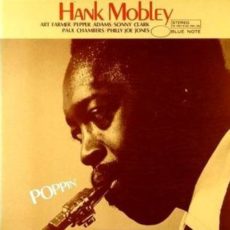
Poppin’ ~ Hank Mobley | By Eddie CarterUp next from the library is a recent acquisition by a member of The Jazz Messengers and a superb tenor saxophonist of the first order. Hank Mobley steps into the spotlight with his 2020 release Poppin’ (Blue Note Tone Poet Series B0030597-01). It was the third of four dates Hank recorded that year and he leads an outstanding sextet consisting of Art Farmer on trumpet; Pepper Adams on baritone sax; Sonny Clark on piano; Paul Chambers on bass and Philly Joe Jones on drums. The title tune by Mobley kicks off Side One with a vigorously energetic melody in unison. Sonny is up first, delivering each note with radiant heat, illustrating he was maturing and developing the style that would make him one of Blue Note’s most frequently recorded musicians. Pepper steps in next, building each verse with zestful virtuosity, then Art attacks the next solo with great relish. Hank executes a knockout performance next and Philly closes with propelling force ahead of the reprise and coda.
Darn That Dream, written in 1939 by Jimmy Van Heusen and Eddie De Lange made its debut in the Broadway musical Swingin’ The Dream that premiered that year. The sextet opens with a brief introduction by the trio and a pensive opening chorus led by Mobley who begins with a softly expressive interpretation. Farmer also gives a voluptuously pretty muted performance revealing his intimate feelings. Adams follows with a reading exhibiting sensual beauty, then Clark takes the final spot on a deeply enticing solo leading to Hank’s poignantly affecting ending. Getting’ Into Something, also by the leader ends Side One with the ensemble presenting a lively melody. Hank goes first with a vibrant performance that starts the listener’s finger-snapping and foot-tapping. Art follows with a dazzling display of fireworks, then Pepper takes over for a captivating presentation of creative excitement and Sonny caps the solos with electrifying enthusiasm driving straight into the closing chorus.
Tune-Up by Miles Davis starts Side Two, giving everyone a chance for extensive solos starting with a brief introduction by Jones leading the way into the sextet’s collective melody. Miles wrote it in 1953 and it originally appeared on the ten-inch LP, Miles Davis Quartet a year later. Farmer brings the heat on a fiery hot opening solo, then Pepper takes flight next proceeding swiftly through an exhilarating statement. Clark fills the next spot of a hard-driving performance with a spontaneous lyricism that burns brightly and strongly. Paul heats up the fourth solo, walking briskly with blazing bass lines, then Hank raises the temperature a few degrees higher on the next solo with electrical energy. Philly puts the exclamation point on the song with a short statement of ferocious intensity leading to the summation. Hank’s East of Brooklyn closes the album with a soulful Latin flavor on the melody by the sextet. The leader starts the solos with a charismatic performance, then Art steps up next to spread a little joy on the second statement. Pepper displays his remarkable gift for straight-ahead bop on a gorgeous reading next, and Sonny reveals the hands of a master in a splendid interpretation that’s a treat to hear. Paul provides the perfect ending in a nicely conceived, well-executed presentation that says something succinctly before the ensemble’s reprise and exit.
Hank Mobley was also a prolific and gifted composer, whether he wrote tender ballads or torrid uptempo tunes, each work is so eminently enjoyable to listen to and several have become jazz standards. He recorded a total of twenty albums for Blue Note from 1955 to 1970, and also made records for Prestige, Roulette, Savoy and one LP for Cobblestone as co-leader of The Cedar Walton-Hank Mobley Quintet. His time with The Jazz Messengers, Miles Davis, Horace Silver and as a leader served him well as one of the best and most sought-after tenor saxophonists in Hard-Bop and Soul-Jazz during the sixties and early seventies. Lung problems from smoking would force Hank to retire in the mid-seventies. He worked only two more times performing once in 1985 and an engagement a few months before his death from pneumonia at the age of fifty-five on May 30, 1986.
The music on Poppin’ was exquisitely recorded by Rudy Van Gelder and the sound quality is simply breathtaking. The album was analog remastered by Kevin Gray at Cohearent Audio from the original master tapes, and the reissue was supervised by Joe Harley of Music Matters Jazz. The result is the sextet emerges from your speakers with superb detail and fidelity from each of the instruments as if they’re playing right in front of you. Like their MMJ cousins, the Blue Note Tone Poet Series reissues utilize 180-gram audiophile vinyl, are plated and pressed at RTI, and come in deluxe gatefold packaging with photos worthy of hanging on your listening room wall. The three-horn lineup of Pepper Adams, Art Farmer, and the leader make a formidable front line together and are all excellent soloists. The music swings throughout each selection with the superb ensemble work provided by Sonny Clark, Paul Chambers, and Philly Joe Jones. In short, Poppin’ by Hank Mobley is a stellar fifties session that I not only recommend but feel will be welcomed in the libraries of any new or seasoned jazz fan!
~ Miles Davis Quartet (Prestige PRLP-161); The Complete Blue Note Hank Mobley Fifties Sessions (Mosaic Records MQ10-181) – Source: Discogs.com
~ Darn That Dream, Swingin’ The Dream – Source: JazzStandards.com
~ RTI is the abbreviation for Record Technologies, Inc.
~ Hank Mobley – Source: Wikipedia.org
Poppin’ is an album recorded in 1957 by saxophonist Hank Mobley but wasn’t released on Blue Note Japan until 1980. Track List | 40:18 All compositions by Hank Mobley except as indicated- Poppin’ ~ 6:33
- Darn That Dream (DeLange, VanHeusen) ~ 6:10
- Gettin’ Into Something ~ 6:33
- Tune-Up (Davis) ~ 10:53
- East Of Brooklyn ~ 10:09
- Hank Mobley – tenor saxophone
- Art Farmer – trumpet
- Pepper Adams – baritone saxophone
- Sonny Clark – piano
- Paul Chambers – bass
- Philly Joe Jones – drums

More Posts: choice,classic,collectible,collector,history,instrumental,jazz,music,saxophone